About this artwork
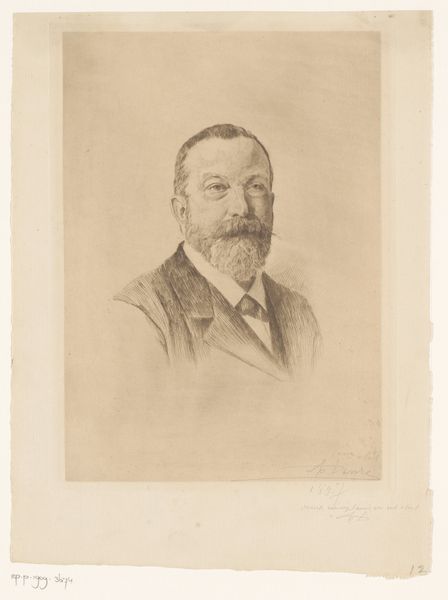
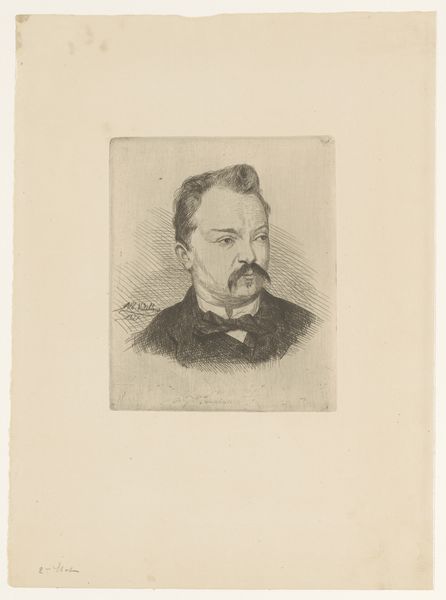
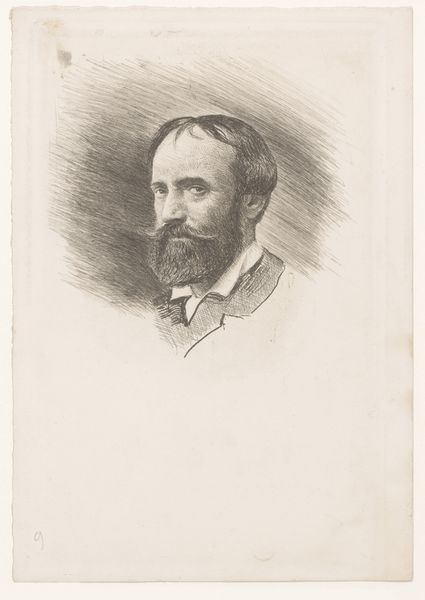
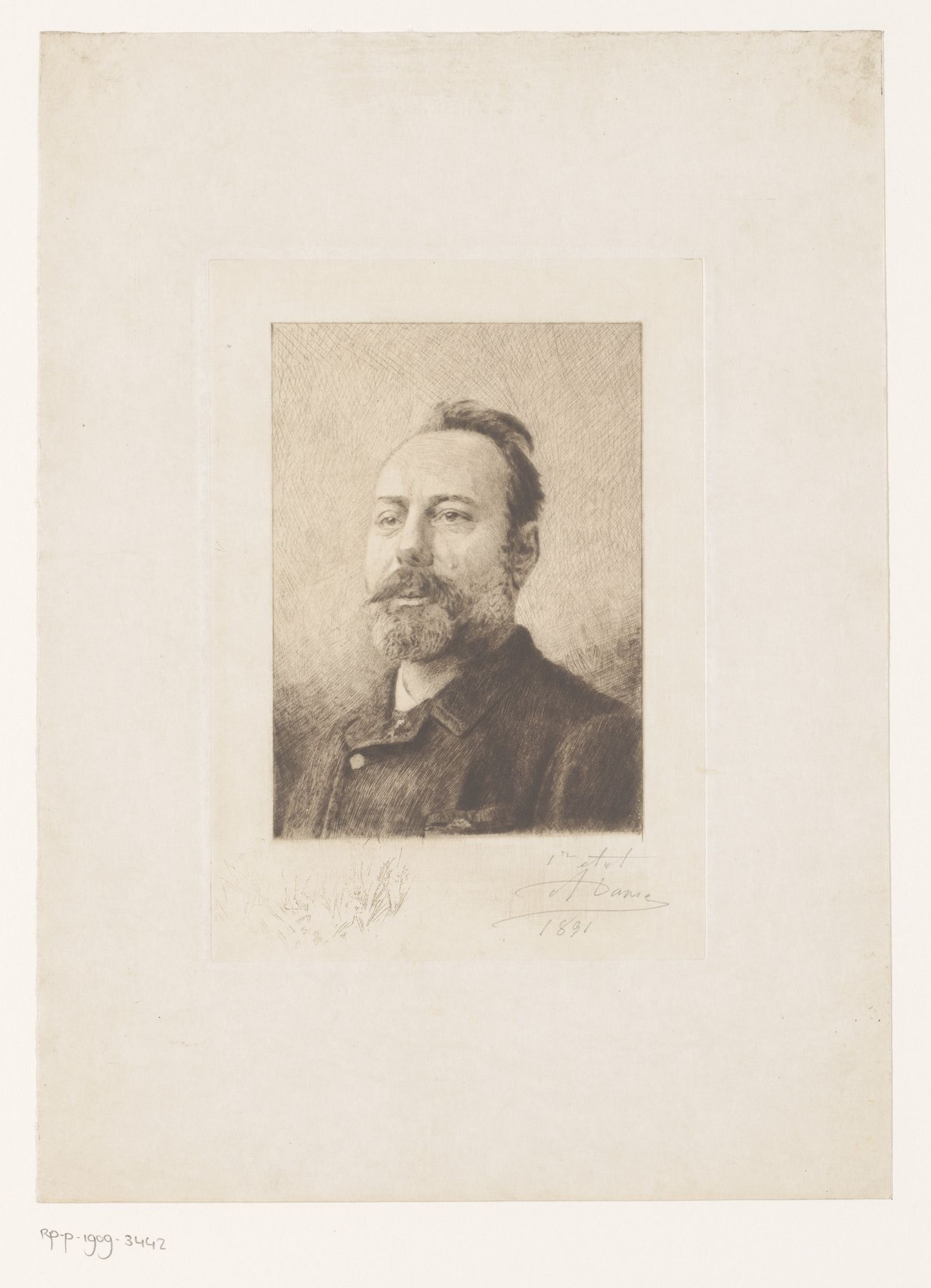
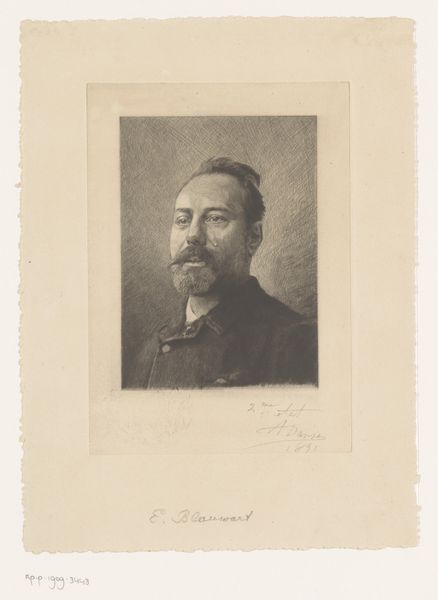
This is an etching by Auguste Danse titled "Portret van een onbekende man, mogelijk E. Blauwart," which translates to "Portrait of an unknown man, possibly E. Blauwart." The portrait, made in 1891, reflects the late 19th-century European interest in portraiture. Danse, who lived through significant social and political change, was a privileged white male. He had the ability to represent individuals from his social sphere, like the man in this print. The identity of the sitter remains uncertain, inviting questions about representation and visibility. Is it Blauwart? What stories might be intertwined with his presence, or absence, from historical records? The man’s gaze, though fixed, carries an emotional depth. We are left to contemplate the stories he might tell if his identity were known. The etching invites viewers to consider the complexities of identity and representation in art. It encourages you to think about the narratives that shape both the artwork and our understanding of history.
Portret van een onbekende man, mogelijk E. Blauwart
1891
Auguste Danse
1829 - 1929Location
RijksmuseumArtwork details
- Medium
- drawing, print, etching
- Dimensions
- height 196 mm, width 137 mm
- Location
- Rijksmuseum
- Copyright
- Rijks Museum: Open Domain
Tags
Comments
Share your thoughts
About this artwork
This is an etching by Auguste Danse titled "Portret van een onbekende man, mogelijk E. Blauwart," which translates to "Portrait of an unknown man, possibly E. Blauwart." The portrait, made in 1891, reflects the late 19th-century European interest in portraiture. Danse, who lived through significant social and political change, was a privileged white male. He had the ability to represent individuals from his social sphere, like the man in this print. The identity of the sitter remains uncertain, inviting questions about representation and visibility. Is it Blauwart? What stories might be intertwined with his presence, or absence, from historical records? The man’s gaze, though fixed, carries an emotional depth. We are left to contemplate the stories he might tell if his identity were known. The etching invites viewers to consider the complexities of identity and representation in art. It encourages you to think about the narratives that shape both the artwork and our understanding of history.
Comments
Share your thoughts