About this artwork
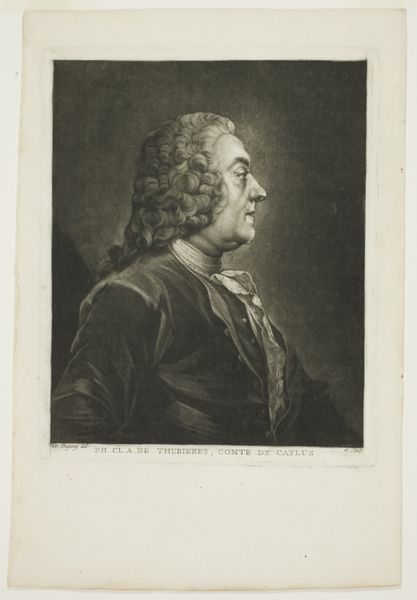
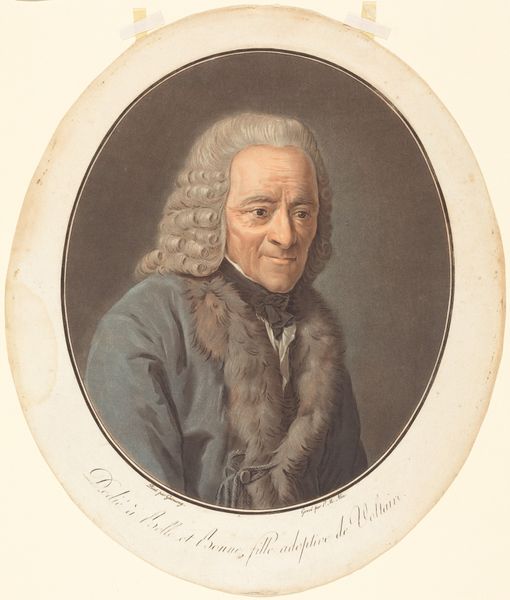
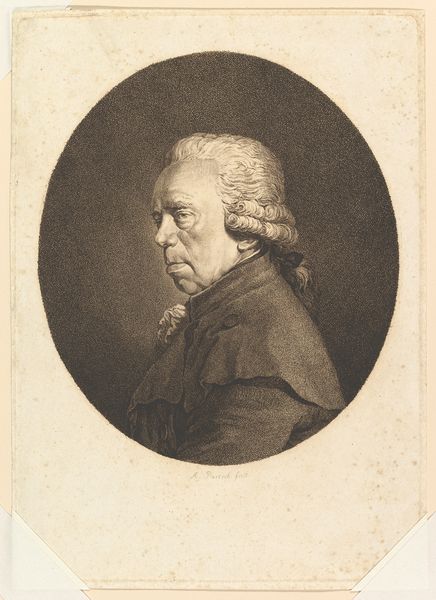
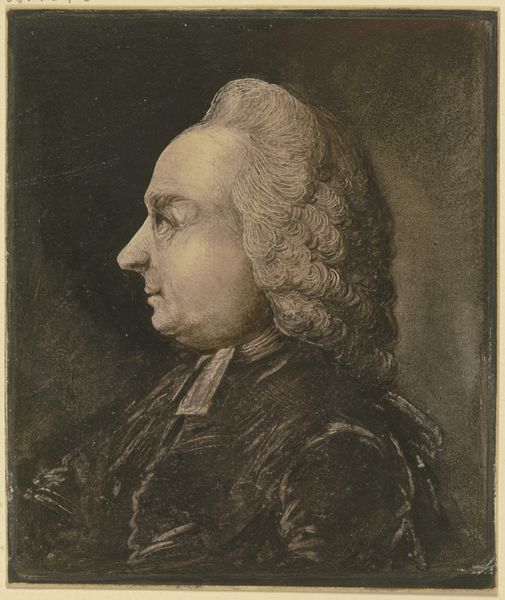
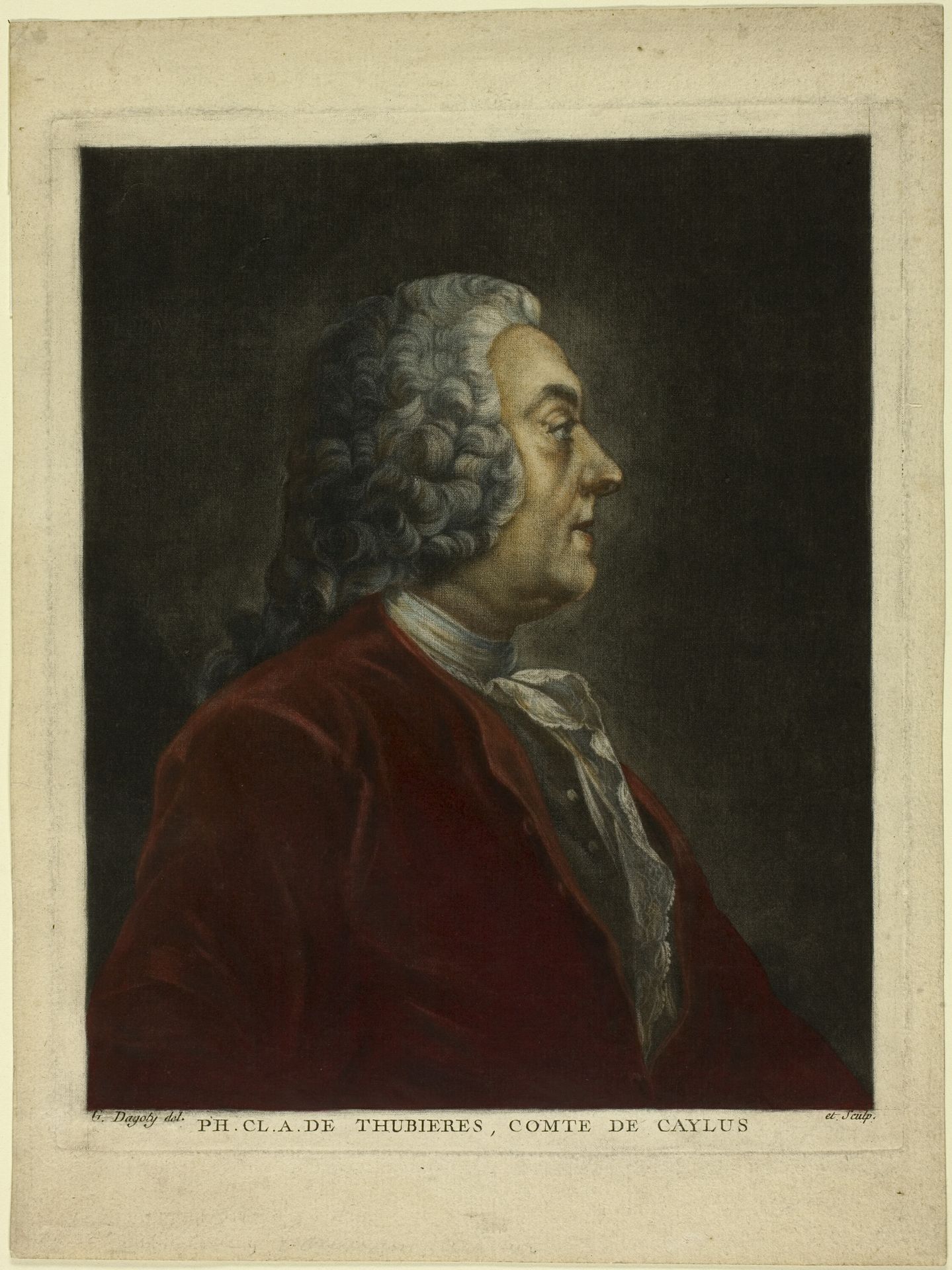
This print, depicting Philippe Claude André de Thubières, Comte de Caylus, was made in the 1700s by Jean Baptiste André Gautier d'Agoty, using a color mezzotint. The Comte de Caylus, a renowned antiquarian, is presented in profile, his powdered wig and rich coat conveying his aristocratic status. The mezzotint technique, involving the careful roughening and smoothing of a metal plate, allows for subtle gradations of tone and color. Look closely, and you will notice how the velvety texture of the print enriches the overall visual experience. Gautier d'Agoty was one of the first to develop a color printing process using multiple plates, each inked with a different color. This labor-intensive method speaks to the value placed on refined craftsmanship in the 18th century. By understanding the materials and making processes, we appreciate how this portrait extends beyond mere representation, to embody the social values of its time.
Portrait of Philippe Claude André de Thubières, Comte de Caylus n.d.

Jean Baptiste André Gautier d'Agoty
1740 - 1786
The Art Institute of Chicago
The Art Institute of ChicagoArtwork details
- Medium
- drawing, print, paper, engraving
- Dimensions
- 236 × 192 mm (image); 255 × 207 mm plate); 305 × 228 mm (sheet)
- Location
- The Art Institute of Chicago
- Copyright
- Public Domain
Tags
portrait
drawing
baroque
paper
engraving
Comments
No comments
About this artwork
This print, depicting Philippe Claude André de Thubières, Comte de Caylus, was made in the 1700s by Jean Baptiste André Gautier d'Agoty, using a color mezzotint. The Comte de Caylus, a renowned antiquarian, is presented in profile, his powdered wig and rich coat conveying his aristocratic status. The mezzotint technique, involving the careful roughening and smoothing of a metal plate, allows for subtle gradations of tone and color. Look closely, and you will notice how the velvety texture of the print enriches the overall visual experience. Gautier d'Agoty was one of the first to develop a color printing process using multiple plates, each inked with a different color. This labor-intensive method speaks to the value placed on refined craftsmanship in the 18th century. By understanding the materials and making processes, we appreciate how this portrait extends beyond mere representation, to embody the social values of its time.
Comments
No comments