About this artwork
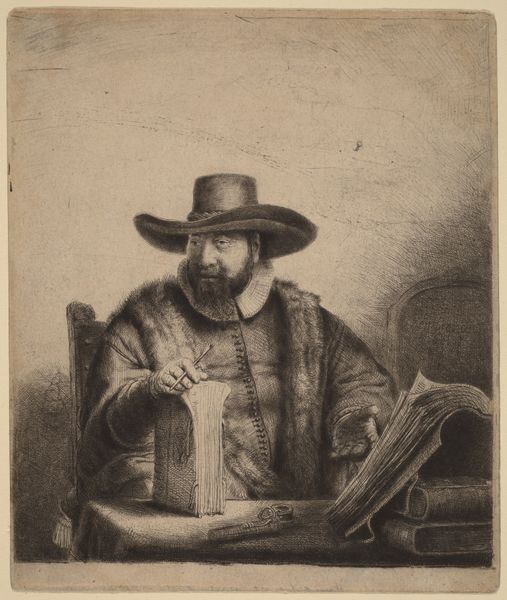
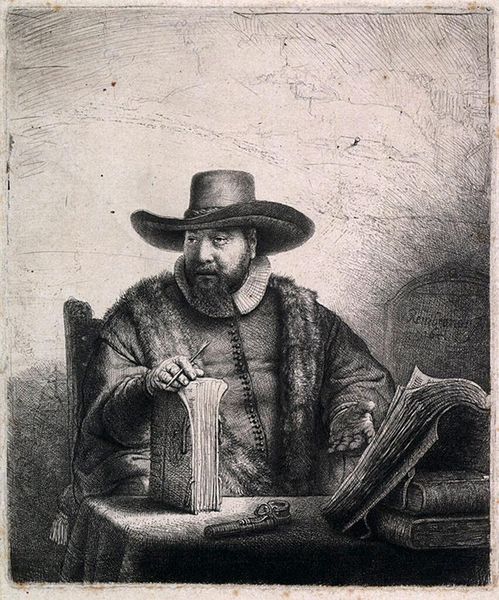
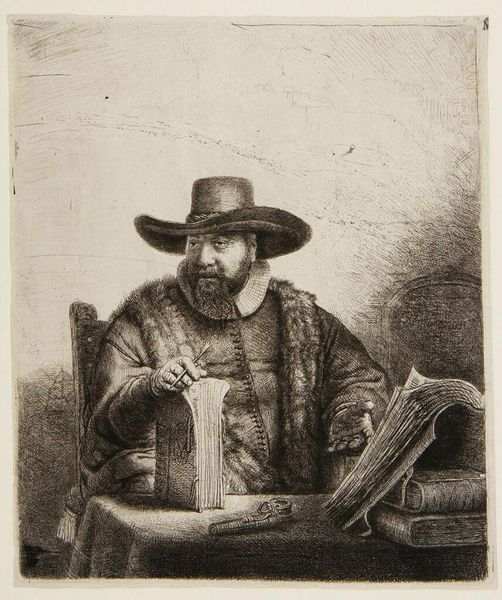
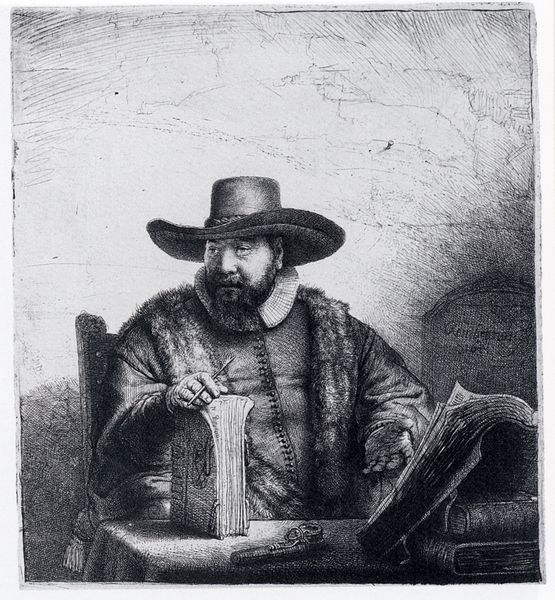
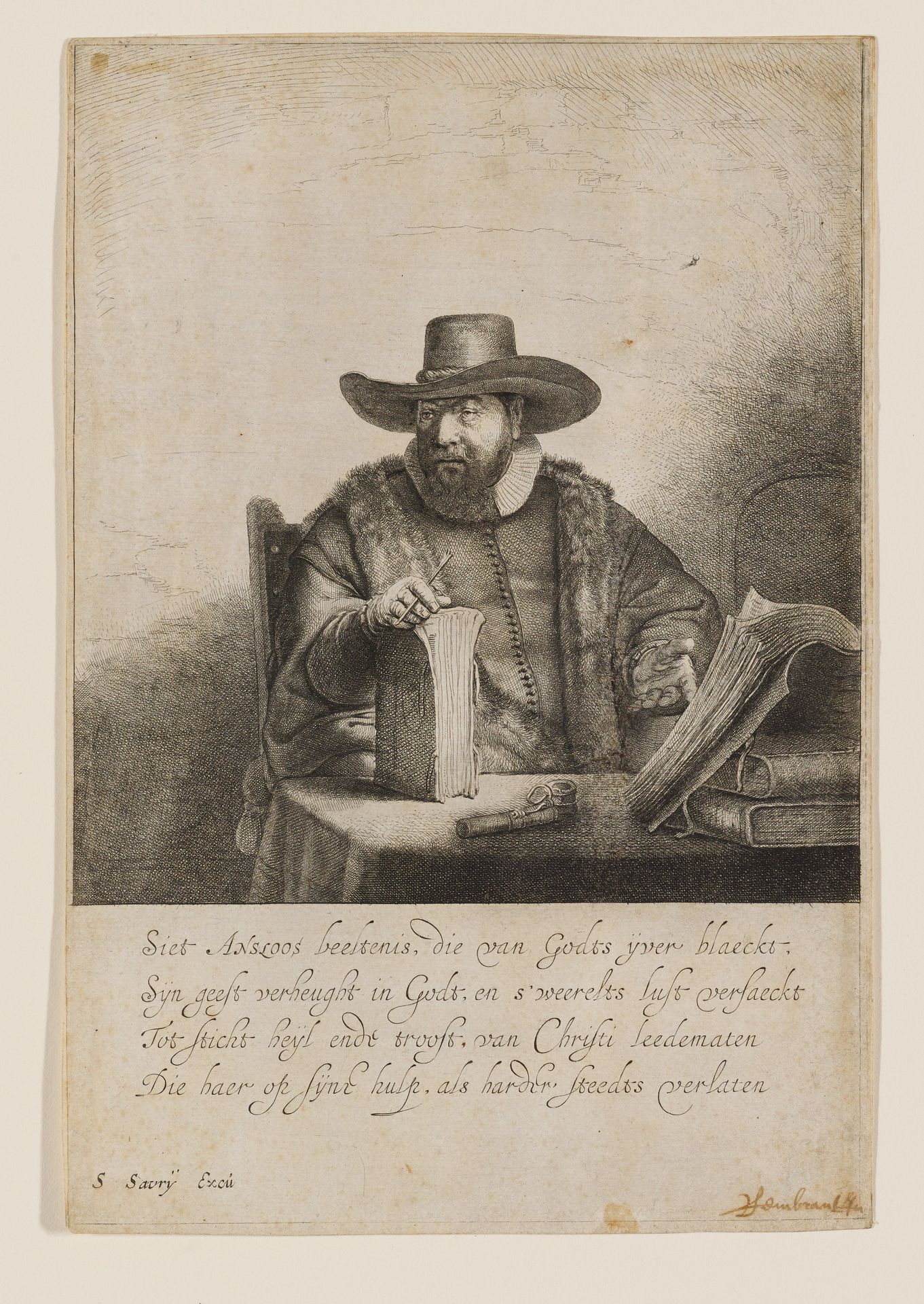
Solomon Savary etched this portrait of Cornelis Claez Anslo in the Dutch Republic, likely during the 17th century. Anslo was a prominent Mennonite preacher in Amsterdam, a group that, like other dissenting Protestant sects, emphasized a personal relationship with God over institutional authority. Savary’s image creates meaning through the cultural references of its time. Anslo’s dark clothing and simple surroundings signal his commitment to a modest lifestyle, while the books indicate his learning and devotion to scripture. The text below the image reinforces this impression, emphasizing Anslo's piety. The Dutch Republic was characterized by its relative religious tolerance and commercial vibrancy, factors that sustained a thriving market for portraiture like this. Historians turn to period documents, religious pamphlets, and economic records to understand better the social conditions that shaped both Anslo’s life and Savary’s art. Art gives enduring form to such historical processes.
Cornelis Claez Anslo
c. 17th century


Artwork details
- Medium
- print, etching
- Dimensions
- 10 7/16 x 7 in. (26.51 x 17.78 cm) (plate)
- Location
- Minneapolis Institute of Art
- Copyright
- Public Domain
Tags
portrait
narrative-art
baroque
etching
Comments
Be the first to share your thoughts about this work.
About this artwork
Solomon Savary etched this portrait of Cornelis Claez Anslo in the Dutch Republic, likely during the 17th century. Anslo was a prominent Mennonite preacher in Amsterdam, a group that, like other dissenting Protestant sects, emphasized a personal relationship with God over institutional authority. Savary’s image creates meaning through the cultural references of its time. Anslo’s dark clothing and simple surroundings signal his commitment to a modest lifestyle, while the books indicate his learning and devotion to scripture. The text below the image reinforces this impression, emphasizing Anslo's piety. The Dutch Republic was characterized by its relative religious tolerance and commercial vibrancy, factors that sustained a thriving market for portraiture like this. Historians turn to period documents, religious pamphlets, and economic records to understand better the social conditions that shaped both Anslo’s life and Savary’s art. Art gives enduring form to such historical processes.
Comments
Be the first to share your thoughts about this work.