About this artwork
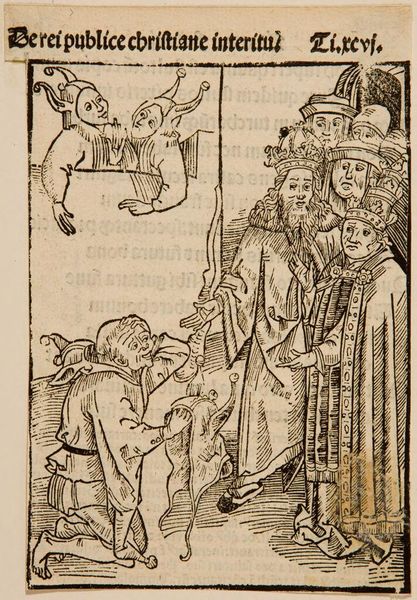
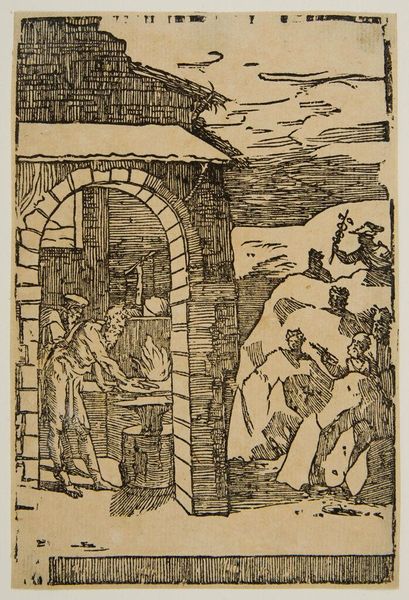
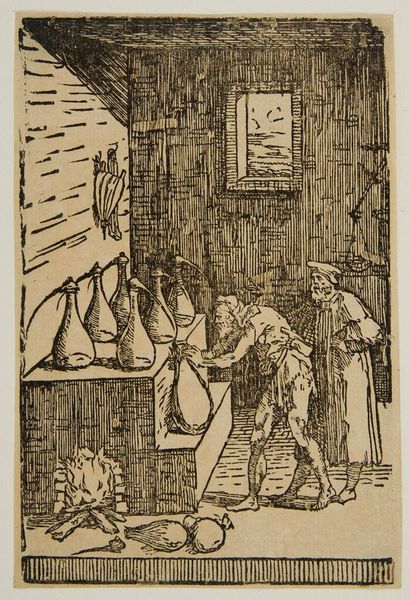
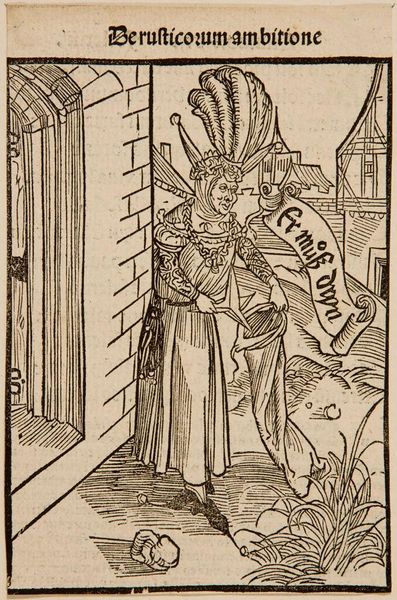
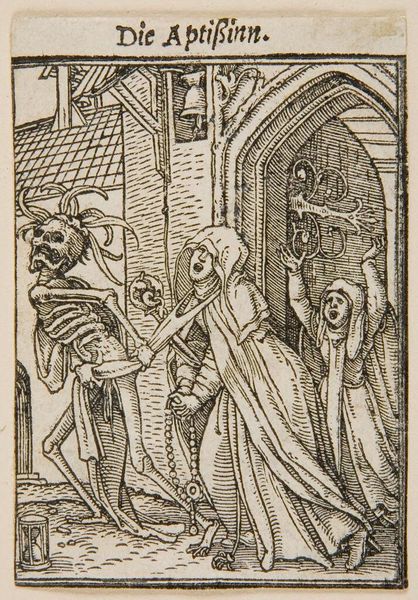
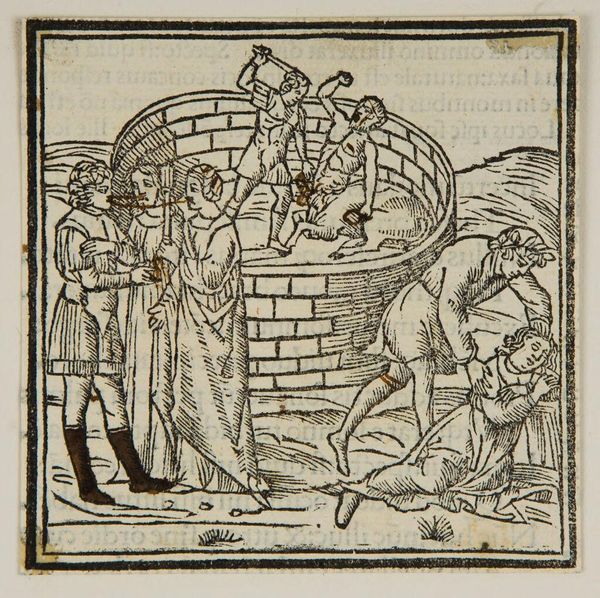
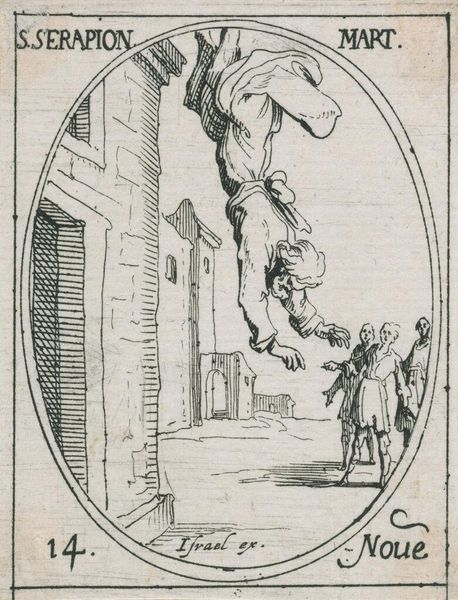
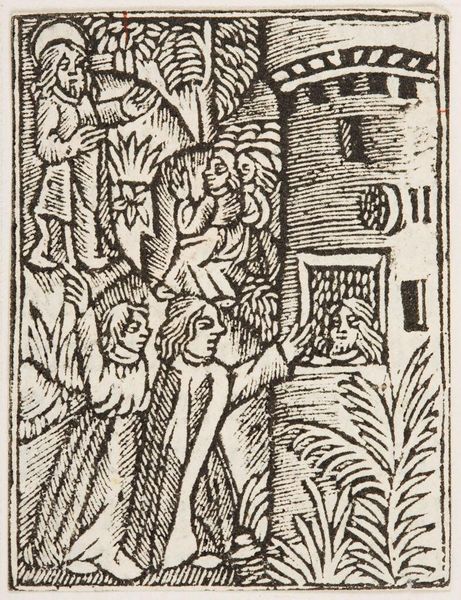
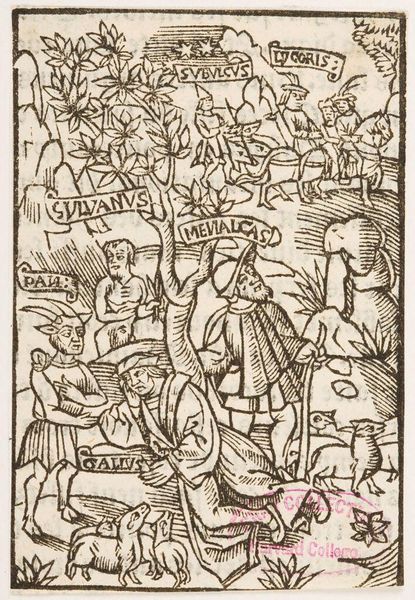
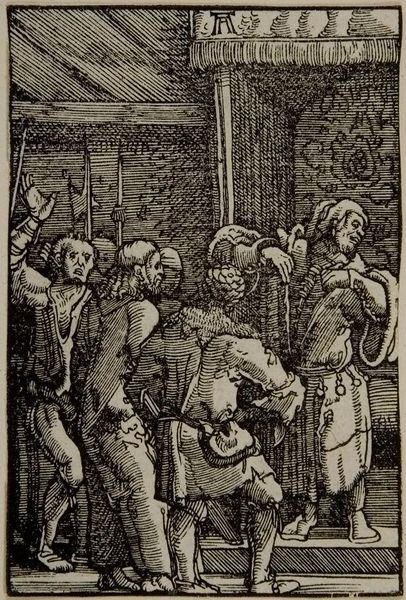
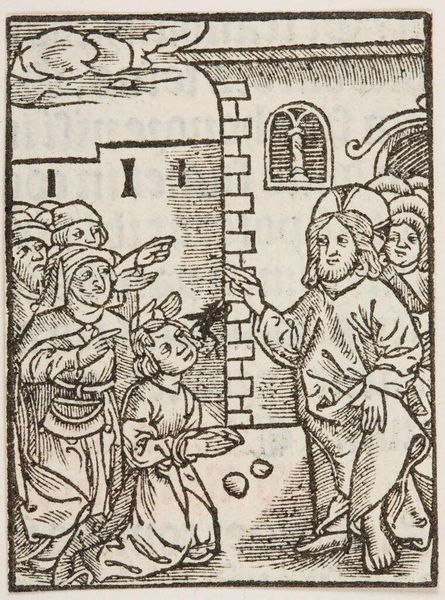
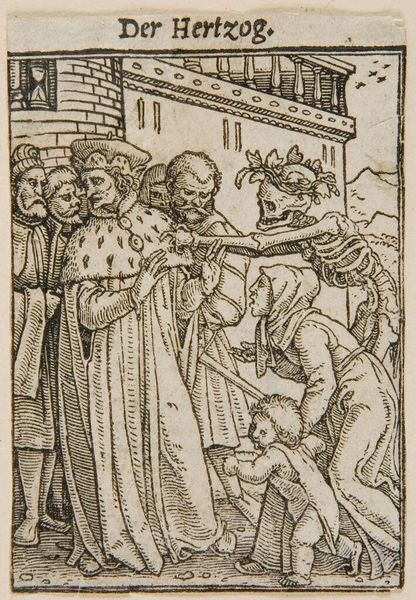
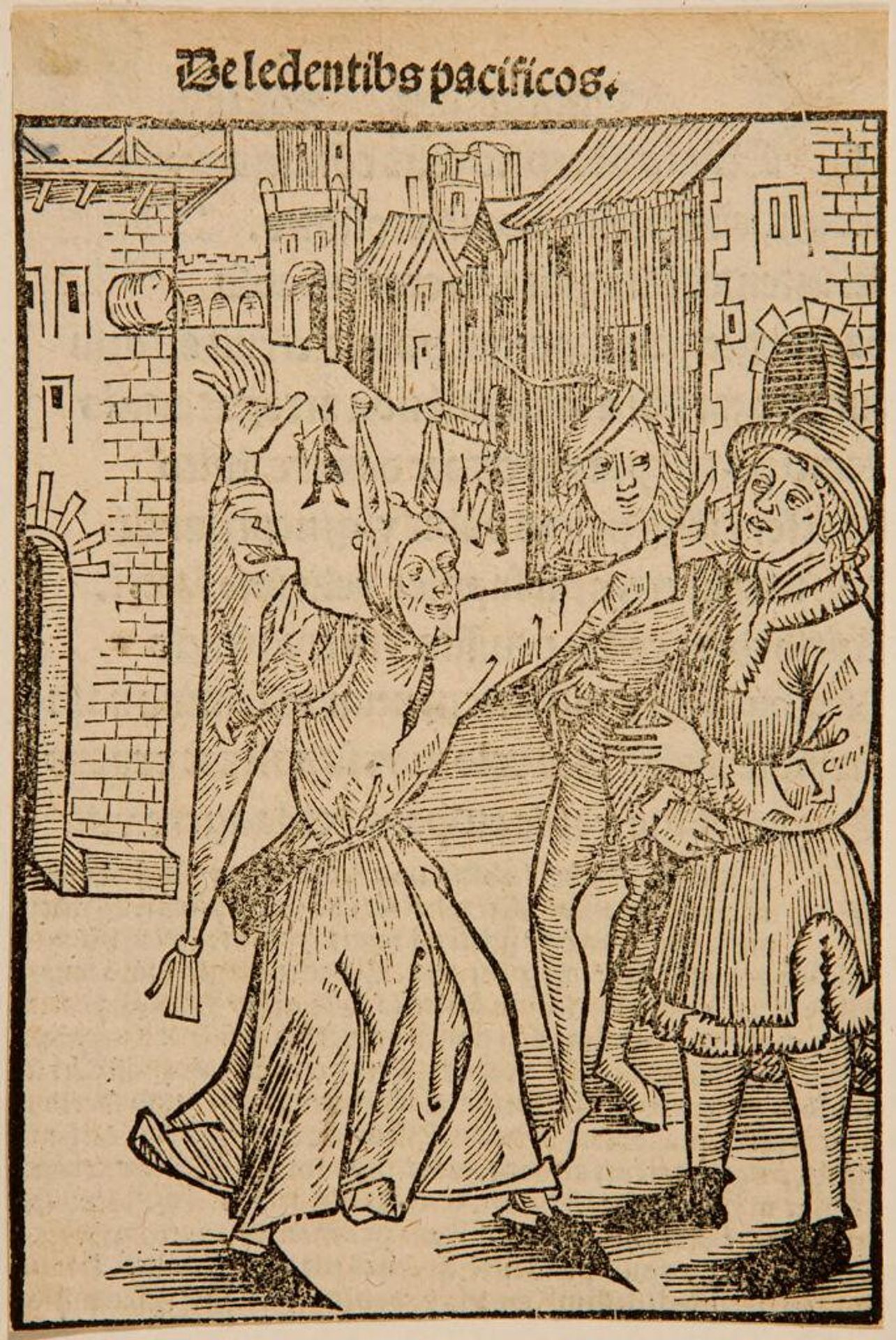
Curator: What a wonderfully strange scene! It’s like a dream… or perhaps a nightmare. The lines are so stark, and yet the composition has a bizarre sort of energy. Editor: This is an illustration from Brant's *Navis Stultifera*, or *Ship of Fools*, a late 15th-century satire. It critiques societal norms through the lens of folly, depicting various "fools" and their vices. Curator: Ah, that explains the central figure in the jester's hat! He definitely has a manic energy about him, doesn’t he? Like he's trying to pull us into his world of absurdity. Editor: Exactly! The anonymous artist uses the woodcut medium effectively to convey the chaos and moral decay Brant critiques. Note how the architectural setting almost leans in on the figures. Curator: It feels like a stage, doesn't it? We’re all players in this comedy – or tragedy – of errors. Perhaps that's why it resonates even today; we’re all a little foolish sometimes. Editor: Indeed, the work taps into the timeless human condition, inviting us to reflect on our own follies and the societal structures that perpetuate them. The critique lives on!
Illustration from Brant, Navis Stultifera
15th-16th century


Artwork details
- Location
- Harvard Art Museums
- Copyright
- CC0 1.0
Comments
Share your thoughts
About this artwork
Curator: What a wonderfully strange scene! It’s like a dream… or perhaps a nightmare. The lines are so stark, and yet the composition has a bizarre sort of energy. Editor: This is an illustration from Brant's *Navis Stultifera*, or *Ship of Fools*, a late 15th-century satire. It critiques societal norms through the lens of folly, depicting various "fools" and their vices. Curator: Ah, that explains the central figure in the jester's hat! He definitely has a manic energy about him, doesn’t he? Like he's trying to pull us into his world of absurdity. Editor: Exactly! The anonymous artist uses the woodcut medium effectively to convey the chaos and moral decay Brant critiques. Note how the architectural setting almost leans in on the figures. Curator: It feels like a stage, doesn't it? We’re all players in this comedy – or tragedy – of errors. Perhaps that's why it resonates even today; we’re all a little foolish sometimes. Editor: Indeed, the work taps into the timeless human condition, inviting us to reflect on our own follies and the societal structures that perpetuate them. The critique lives on!
Comments
Share your thoughts