About this artwork
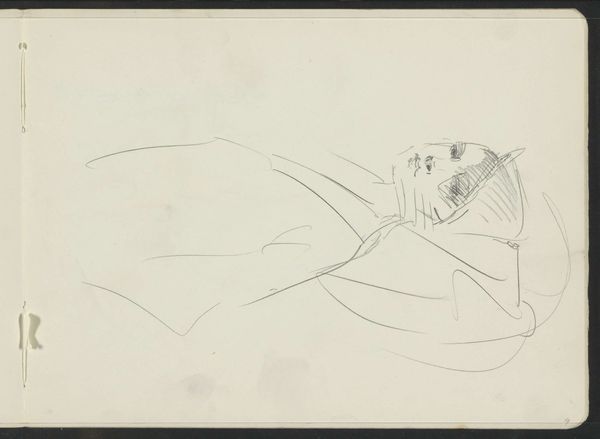
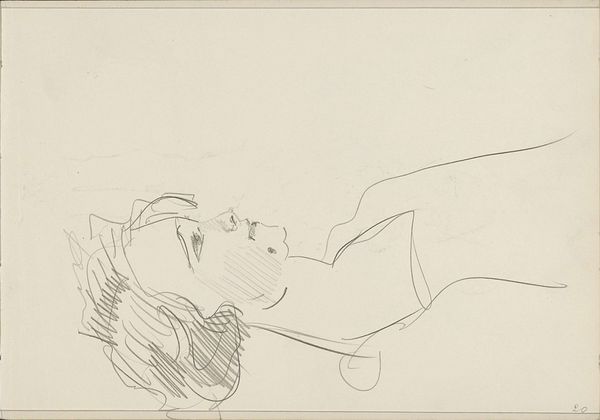
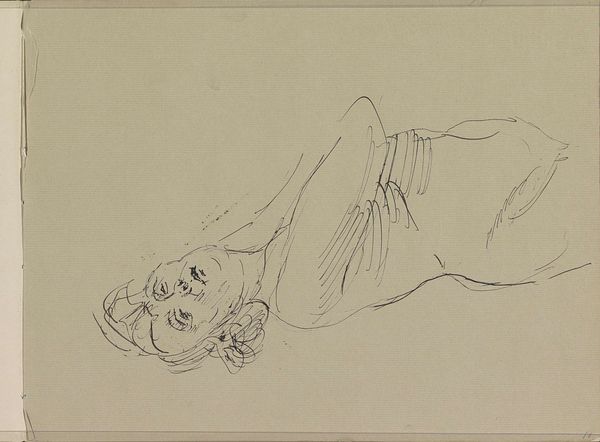
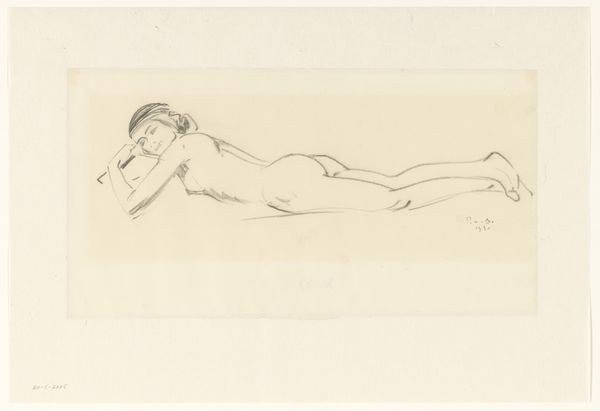
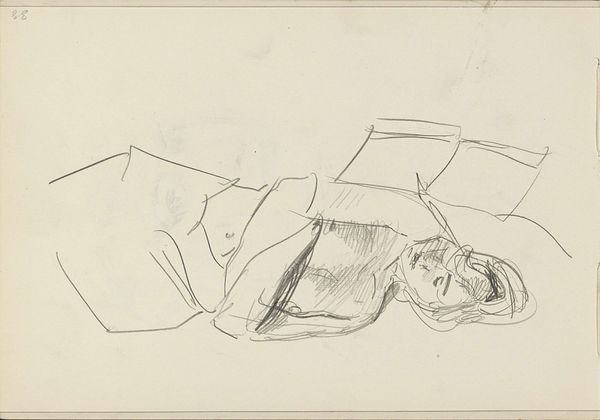
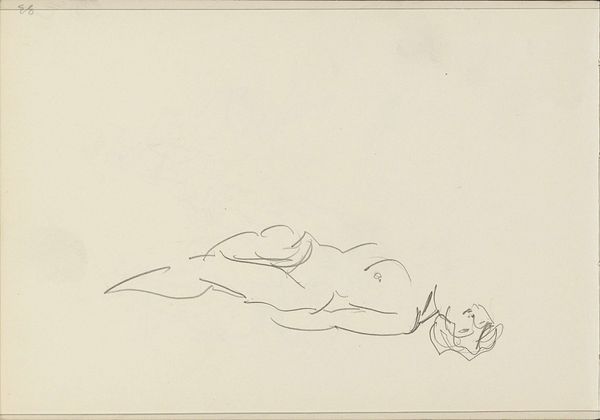
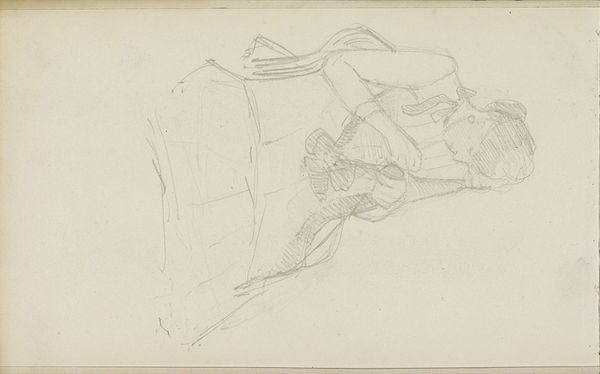
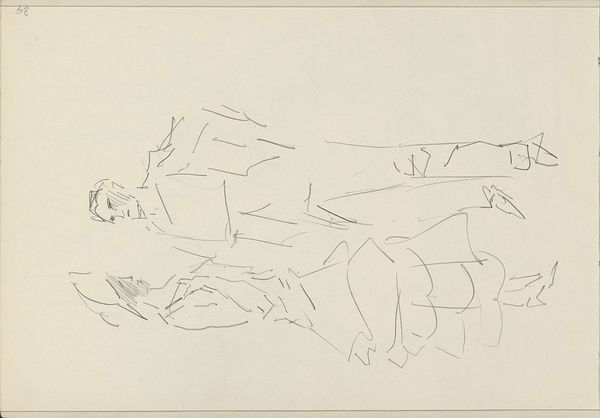
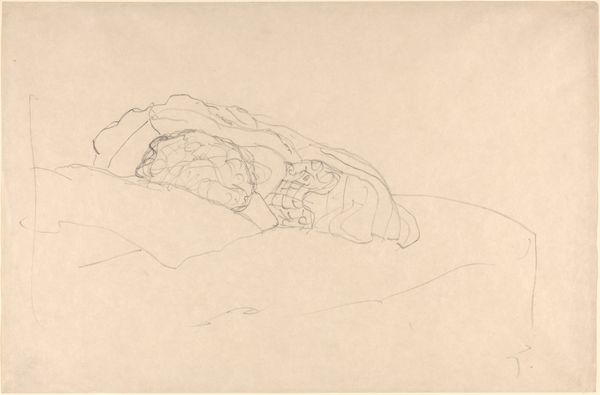
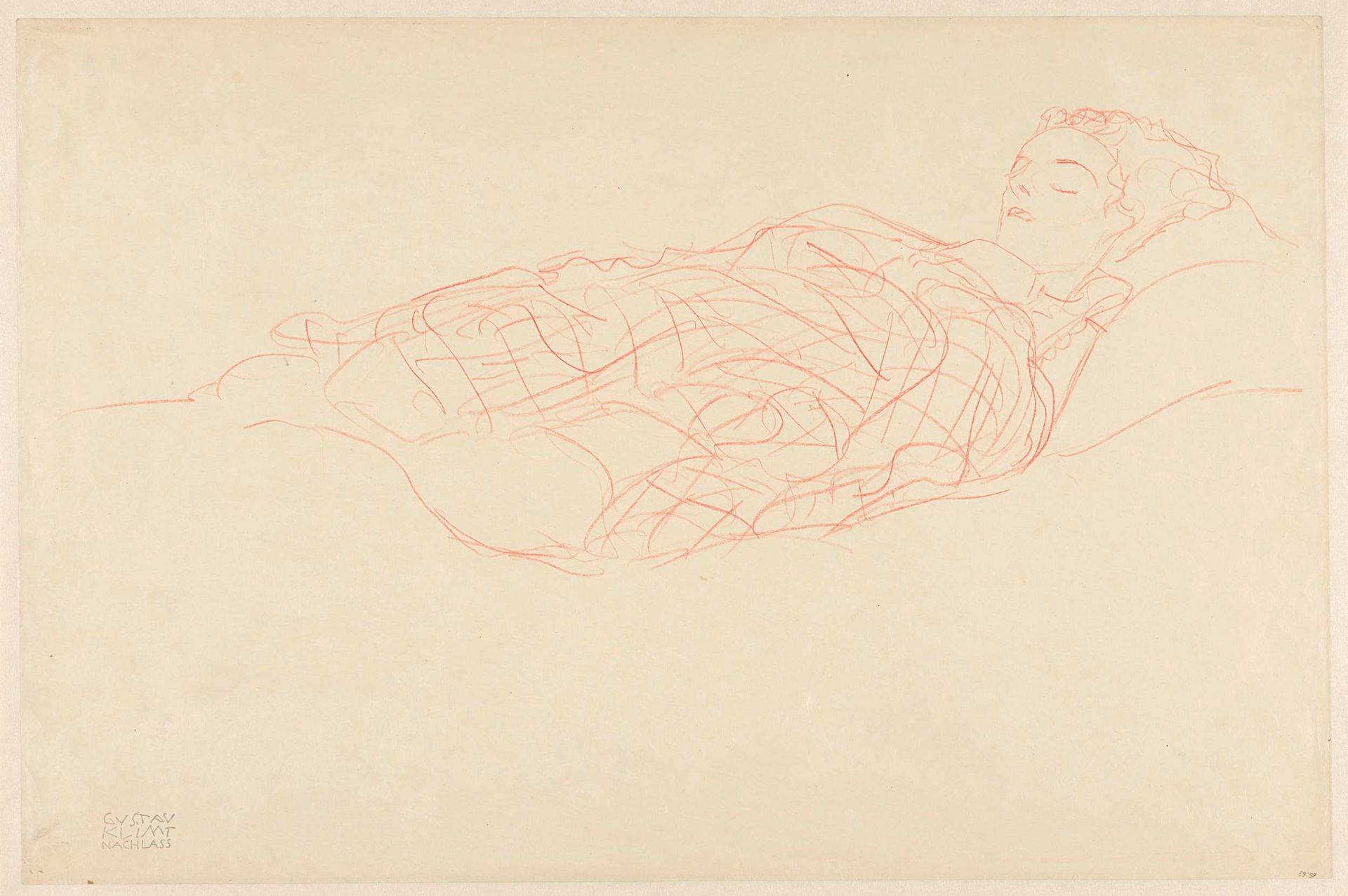
Gustav Klimt made this drawing of a resting woman wrapped in a plaid, rendered in red chalk on paper. The delicate lines trace the contours of the figure, creating a composition where the negative space surrounding the subject is as crucial as the drawn elements themselves. The plaid, suggested by a network of intersecting lines, contrasts with the smoother rendering of the woman's face and hair. Klimt masterfully uses line to convey form and texture. The drawing reflects broader artistic concerns of Klimt's time, particularly the exploration of the human form and the expressive potential of line. There is a semiotic interplay here: the red chalk not only defines shape but also evokes warmth, intimacy and vulnerability, inviting viewers to decode the signs within the composition. Ultimately, the power of this drawing lies in how Klimt destabilizes the traditional boundaries between representation and abstraction, challenging fixed perspectives on art. The drawing encourages an ongoing interpretation of form, emotion, and representation.
Studie van een in een plaid gewikkelde, rustende vrouw
1872 - 1918

Gustav Klimt
1862 - 1918Location
RijksmuseumArtwork details
- Medium
- drawing, pencil
- Dimensions
- height 373 mm, width 540 mm
- Location
- Rijksmuseum
- Copyright
- Rijks Museum: Open Domain
Tags
portrait
drawing
art-nouveau
intimism
pencil
Comments
Be the first to share your thoughts about this work.
About this artwork
Gustav Klimt made this drawing of a resting woman wrapped in a plaid, rendered in red chalk on paper. The delicate lines trace the contours of the figure, creating a composition where the negative space surrounding the subject is as crucial as the drawn elements themselves. The plaid, suggested by a network of intersecting lines, contrasts with the smoother rendering of the woman's face and hair. Klimt masterfully uses line to convey form and texture. The drawing reflects broader artistic concerns of Klimt's time, particularly the exploration of the human form and the expressive potential of line. There is a semiotic interplay here: the red chalk not only defines shape but also evokes warmth, intimacy and vulnerability, inviting viewers to decode the signs within the composition. Ultimately, the power of this drawing lies in how Klimt destabilizes the traditional boundaries between representation and abstraction, challenging fixed perspectives on art. The drawing encourages an ongoing interpretation of form, emotion, and representation.
Comments
Be the first to share your thoughts about this work.