About this artwork
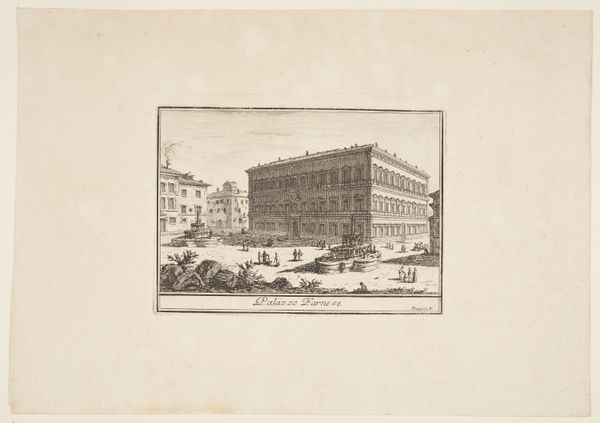
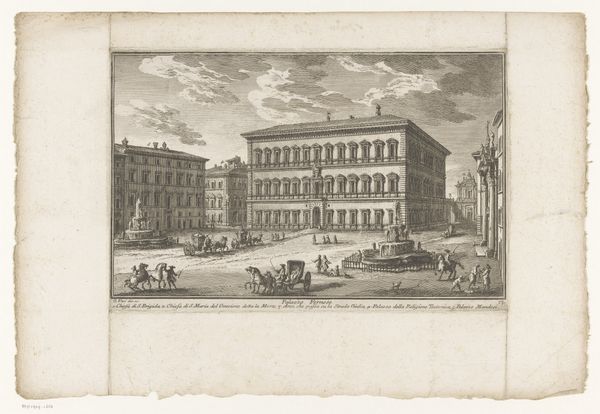
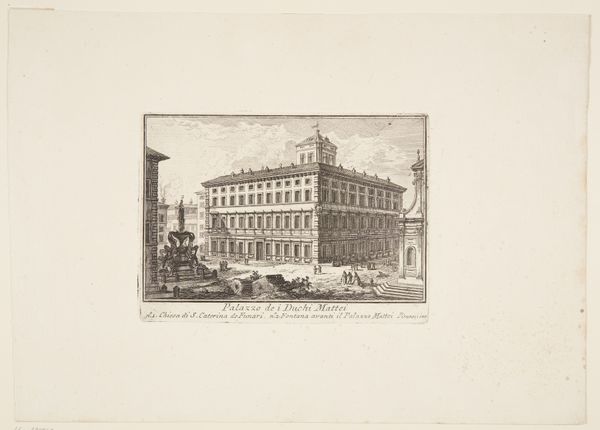
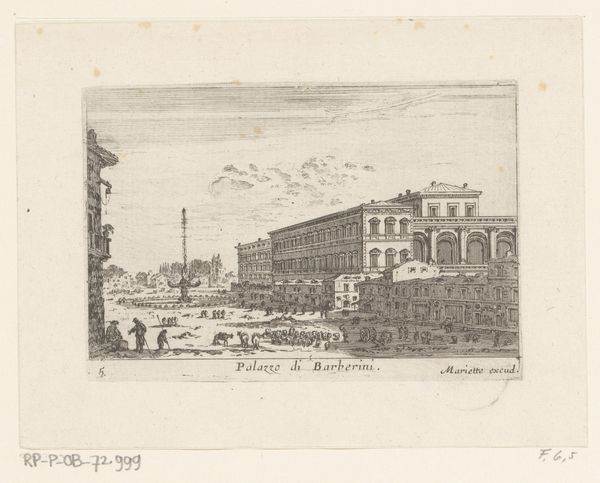
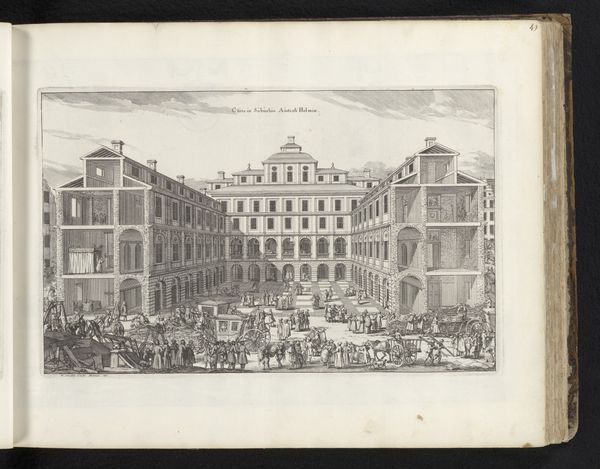
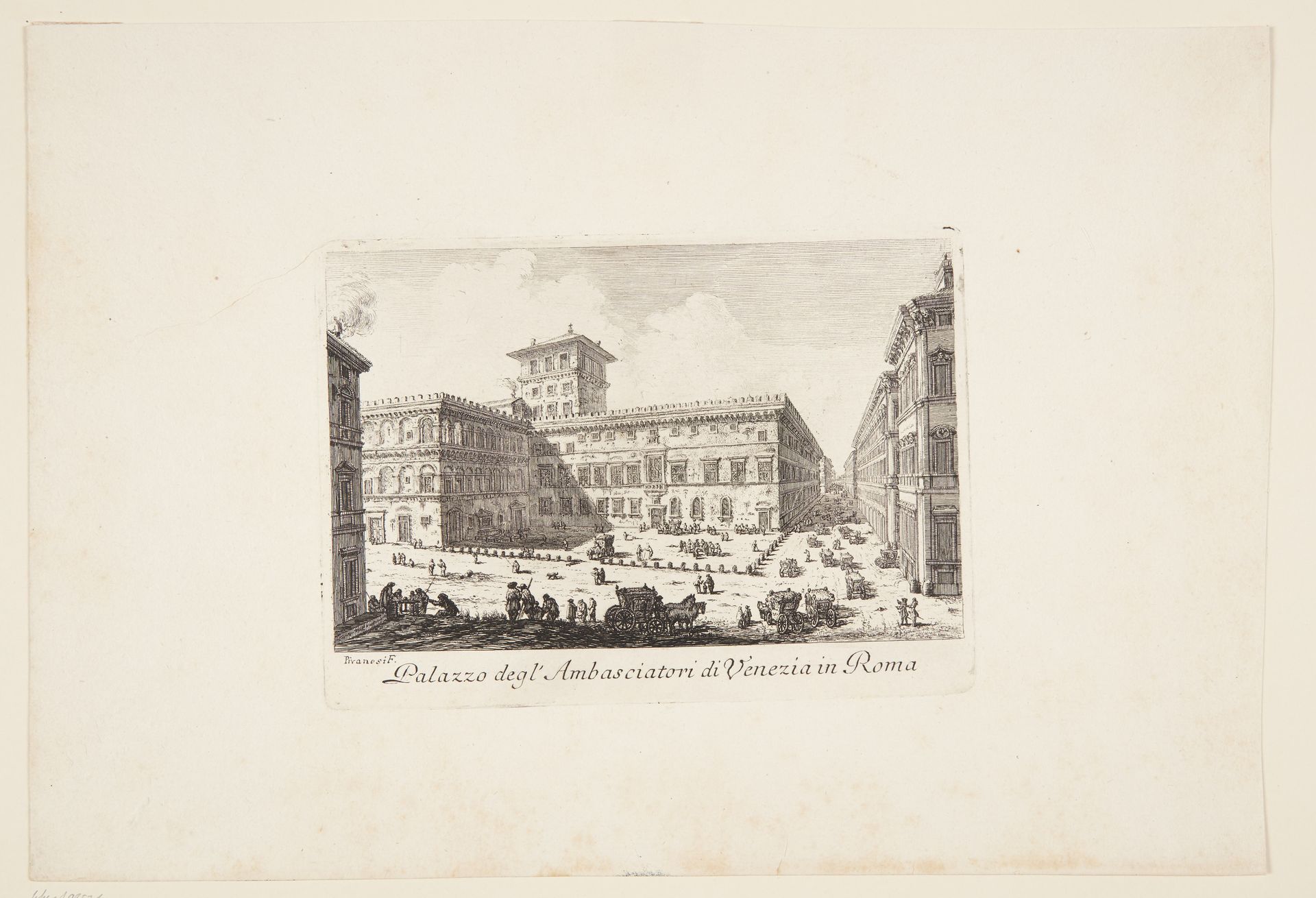
Giovanni Battista Piranesi created this print of the Palazzo of the Venetian Ambassadors in Rome using etching. The composition is dominated by the imposing architectural structures, rendered with remarkable precision and detail. The etching technique allows for fine lines that define the buildings' facades, windows, and decorative elements. Piranesi masterfully uses linear perspective to create a sense of depth, drawing the viewer's eye into the urban landscape. The figures and carriages populating the foreground add a sense of scale. This print illustrates how architectural forms embody cultural values and power structures. Here, the stark contrast between light and shadow not only accentuates the three-dimensionality of the buildings but also evokes a sense of drama and grandeur. It also serves to enhance the architectural volumes, rendering them legible as symbols of civic and cultural importance.
Palazzo of the Venetian A,bassadors in Rome
1741 - 1748


Artwork details
- Medium
- print, etching, engraving
- Dimensions
- 116 mm (height) x 181 mm (width) (plademaal)
- Location
- SMK - Statens Museum for Kunst
Tags
Comments
Share your thoughts
About this artwork
Giovanni Battista Piranesi created this print of the Palazzo of the Venetian Ambassadors in Rome using etching. The composition is dominated by the imposing architectural structures, rendered with remarkable precision and detail. The etching technique allows for fine lines that define the buildings' facades, windows, and decorative elements. Piranesi masterfully uses linear perspective to create a sense of depth, drawing the viewer's eye into the urban landscape. The figures and carriages populating the foreground add a sense of scale. This print illustrates how architectural forms embody cultural values and power structures. Here, the stark contrast between light and shadow not only accentuates the three-dimensionality of the buildings but also evokes a sense of drama and grandeur. It also serves to enhance the architectural volumes, rendering them legible as symbols of civic and cultural importance.
Comments
Share your thoughts