About this artwork
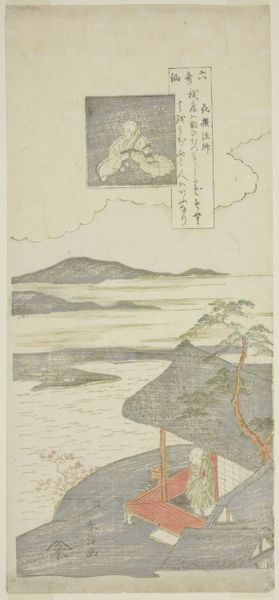
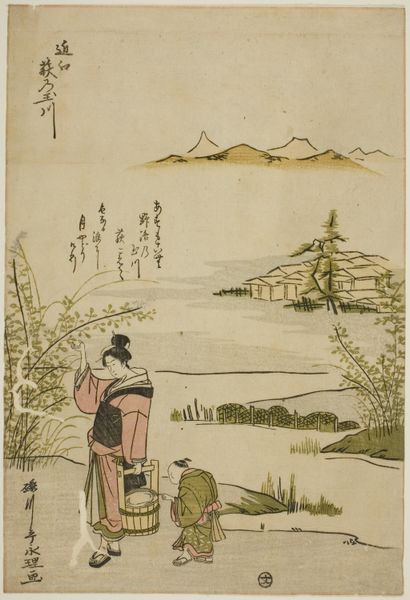
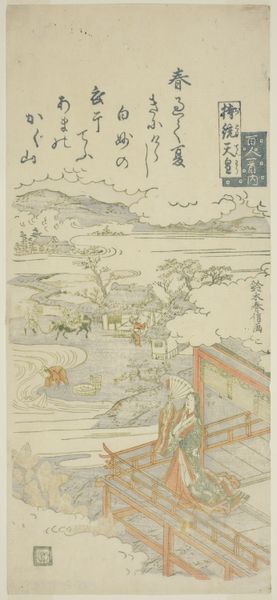
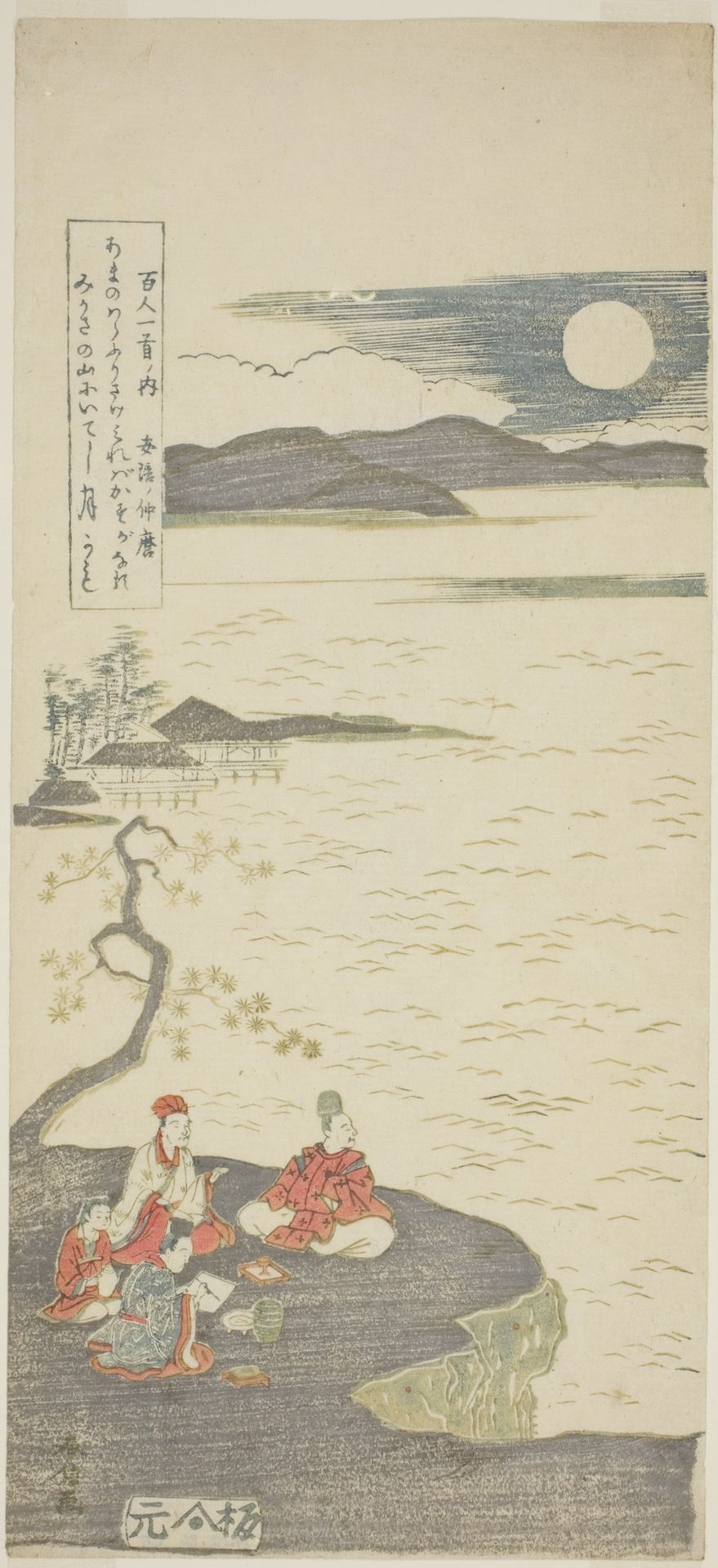
Suzuki Harunobu created this woodblock print, "The Poet Nakamaro," as part of the series "One Hundred Poems by One Hundred Poets," sometime in the mid-18th century. At this time, Japan was under the rule of the Tokugawa shogunate, a period marked by relative peace, economic growth, and a flourishing of the arts and culture. But this era also had rigid social hierarchies and isolationist policies. Here, we see a group of figures gathered on a rocky shore, gazing out at a full moon over the water. The figure representing the poet Nakamaro, a historical figure known for his longing for his homeland while in exile in China, wears traditional court robes, while the others appear to be women or children in brightly colored kimonos. The print evokes a sense of longing, introspection, and the complex emotions tied to cultural identity and belonging, which is interesting given the historic isolationist policies. It speaks to universal human experiences while also commenting on the constraints and expectations placed on individuals within a particular cultural and historical context.
The Poet Nakamaro (Abe no Nakamaro), from the series "One Hundred Poems by One Hundred Poets (Hyakunin isshu no uchi)" c. 1763 - 1764


Artwork details
- Medium
- print, woodblock-print
- Dimensions
- 12 3/8 × 5 5/8 in.
- Location
- The Art Institute of Chicago
- Copyright
- Public Domain
Tags
portrait
aged paper
toned paper
narrative-art
asian-art
landscape
ukiyo-e
japan
woodblock-print
Comments
No comments
About this artwork
Suzuki Harunobu created this woodblock print, "The Poet Nakamaro," as part of the series "One Hundred Poems by One Hundred Poets," sometime in the mid-18th century. At this time, Japan was under the rule of the Tokugawa shogunate, a period marked by relative peace, economic growth, and a flourishing of the arts and culture. But this era also had rigid social hierarchies and isolationist policies. Here, we see a group of figures gathered on a rocky shore, gazing out at a full moon over the water. The figure representing the poet Nakamaro, a historical figure known for his longing for his homeland while in exile in China, wears traditional court robes, while the others appear to be women or children in brightly colored kimonos. The print evokes a sense of longing, introspection, and the complex emotions tied to cultural identity and belonging, which is interesting given the historic isolationist policies. It speaks to universal human experiences while also commenting on the constraints and expectations placed on individuals within a particular cultural and historical context.
Comments
No comments