1885 - 1891
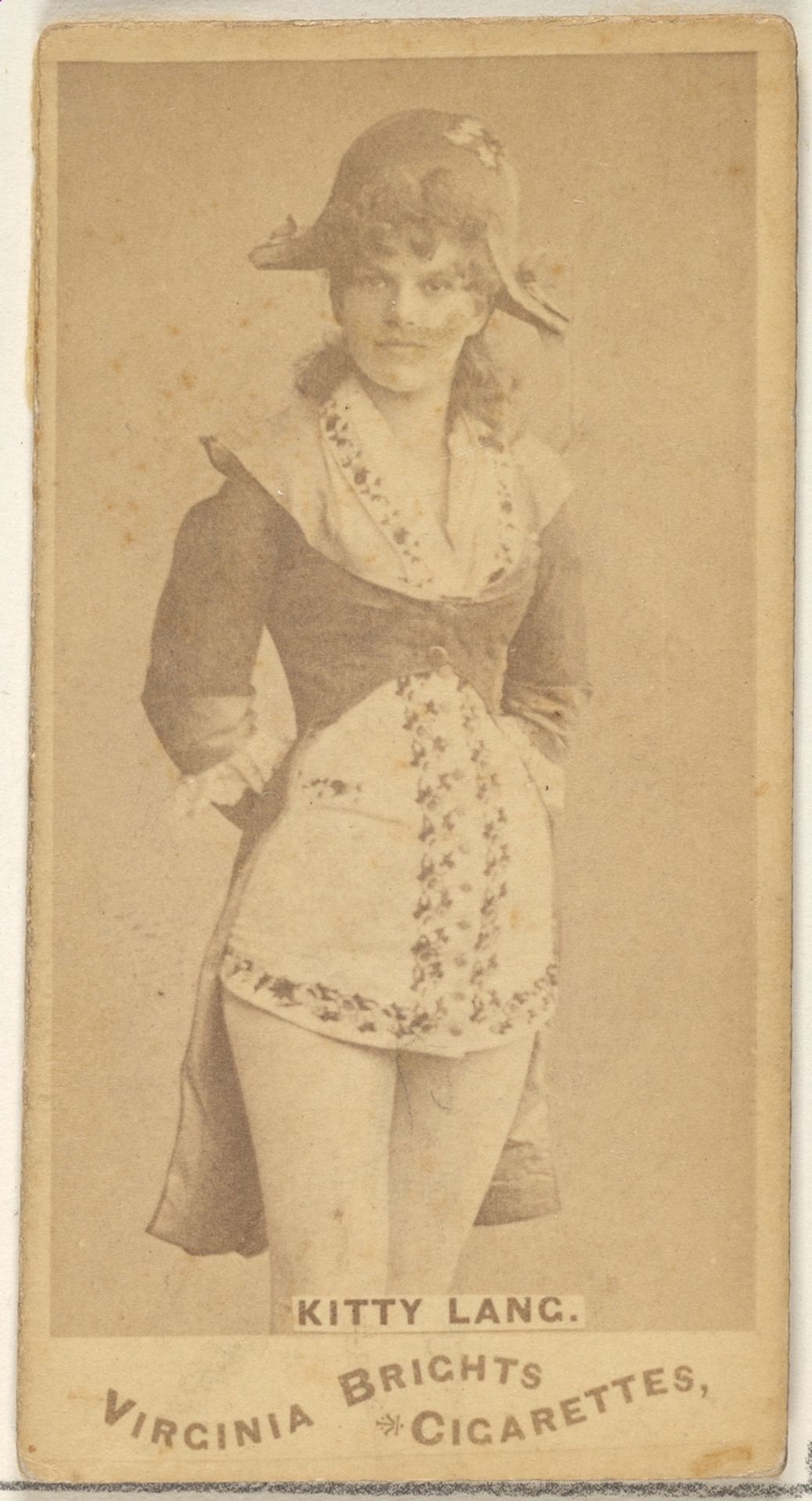
Kitty Lang, from the Actors and Actresses series (N45, Type 1) for Virginia Brights Cigarettes


Listen to curator's interpretation
Curatorial notes
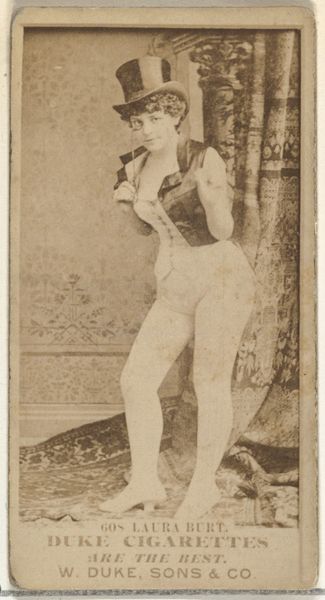
Editor: Here we have "Kitty Lang," a trade card from the Actors and Actresses series, created between 1885 and 1891 by Allen & Ginter, now residing at the Metropolitan Museum of Art. It’s…interesting! What symbolic narratives do you see embedded within this small portrait? Curator: It is small, yes, yet teeming with cultural echoes! Consider the Japonisme influence visible in the floral pattern. These exotic motifs would signal refined taste to consumers. But what do those patterns overlaid on this actress suggest about her commodification in the budding advertisement industry? Editor: So, the florals aren’t *just* decorative? Curator: Precisely. Flowers often symbolize transient beauty and ephemeral pleasures. Coupled with her theatrical pose and placement on a cigarette card, they tell us about the fleeting nature of fame, beauty, and, dare I say, the ephemeral nature of life itself, underscored by tobacco consumption. Does this interplay create a dialogue between indulgence and mortality? Editor: I hadn't considered that. It's almost like a miniature memento mori. Is her slightly androgynous clothing typical? Curator: Not traditionally, but that is not a purely masculine cut of cloth. What effect does that gender ambiguity create within this era’s societal expectations of women performers? Does that signal a breaking of barriers, an unconventional route toward celebrity status? Editor: It does present an intriguing counterpoint, playing with established conventions. I'll definitely look at trade cards differently now. Curator: Exactly, by viewing artifacts like texts we illuminate the stories they try to say.