c. 1764 - 1765
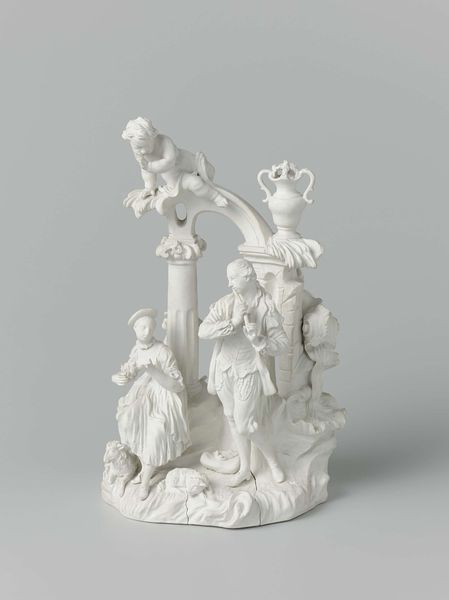
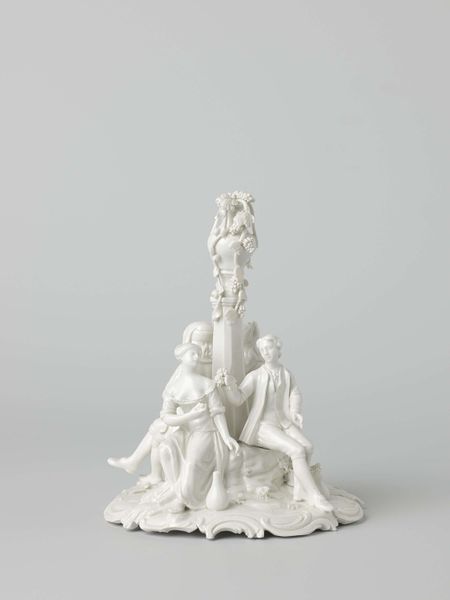
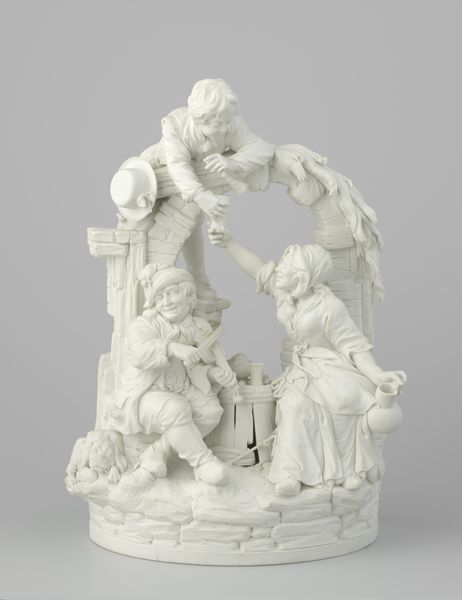
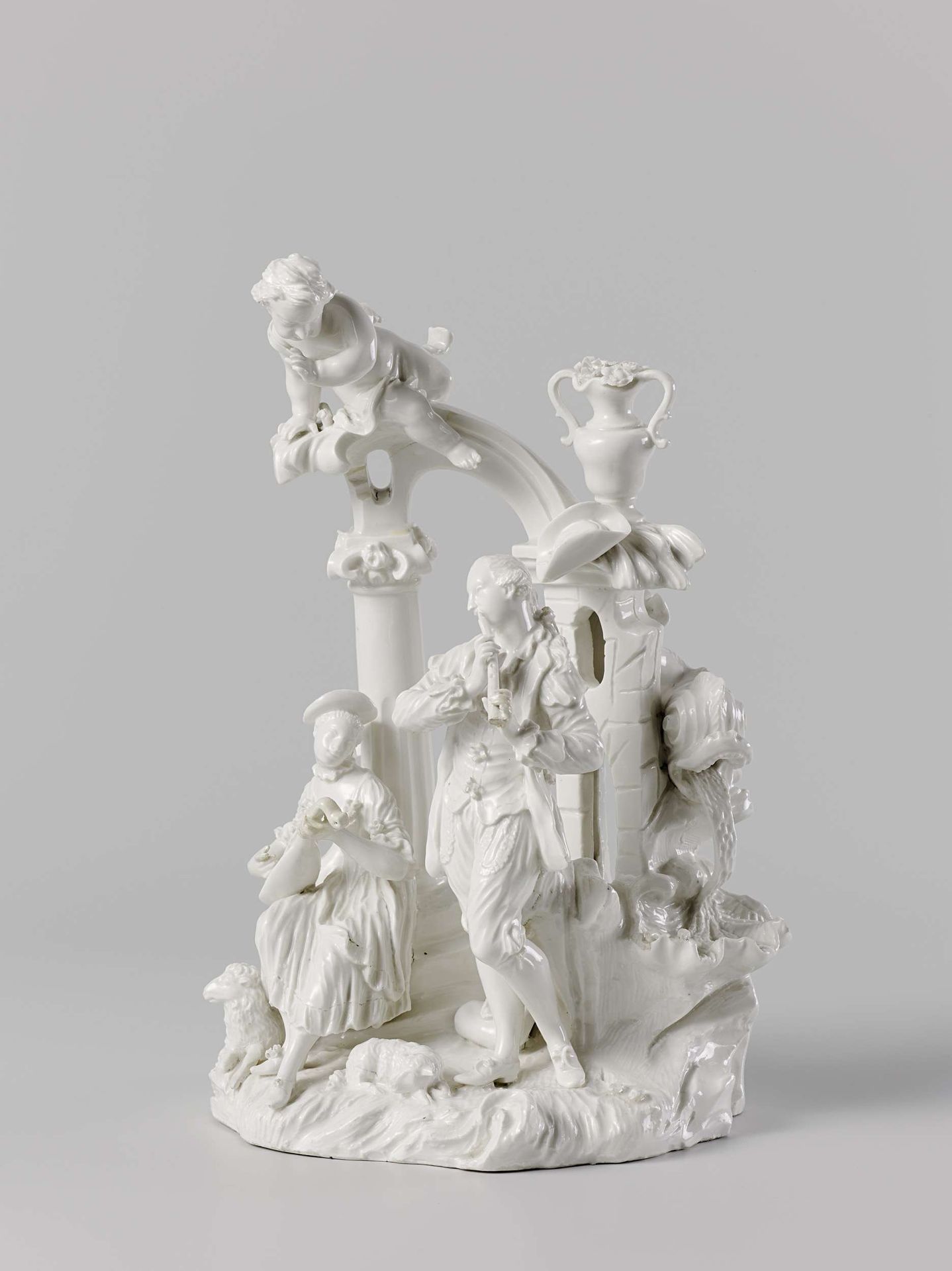
Een herder en een herderin bij een ruïne

Listen to curator's interpretation
Curatorial notes
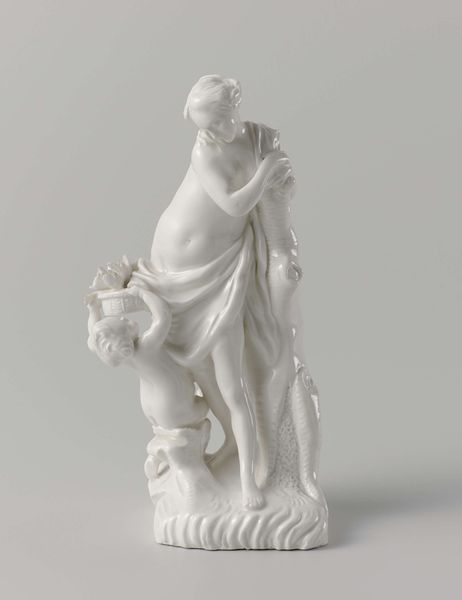
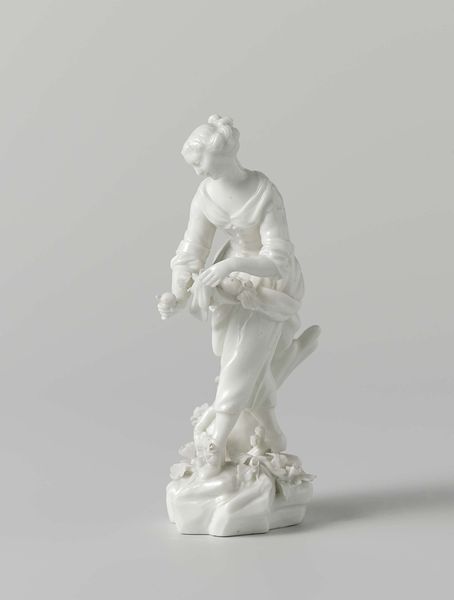
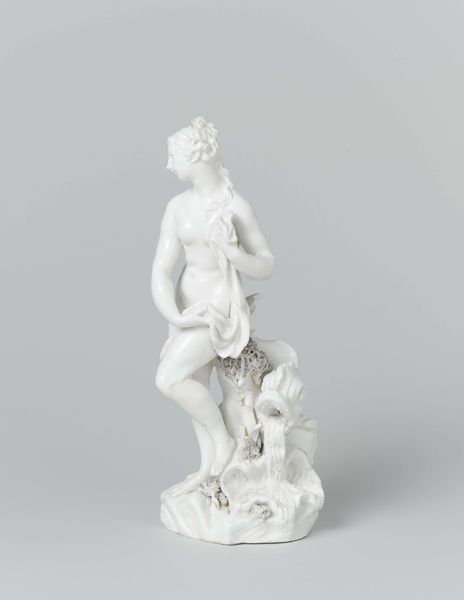
Editor: Here we have “A Shepherd and Shepherdess near a Ruin,” a porcelain sculpture made around 1764-1765 by the Weesper porcelain factory. The stark white color really draws my attention. What can you tell me about this piece? Curator: Considering the Weesper factory, let's look at the materials. Porcelain wasn't just a medium, but a symbol of status and refinement in the 18th century. Its production was labor-intensive and linked to global trade networks. How do you think this impacts our reading of the sculpture? Editor: It’s interesting to think about luxury and labor in the same breath. Does the fact that this is porcelain affect the subject matter, these humble shepherds? Curator: Absolutely. This idyllic scene contrasts sharply with the industrial reality behind the porcelain production. The very act of representing pastoral simplicity in such a precious material speaks volumes about the complex relationship between aristocracy and idealized country life. Do you see a connection here between "high art" and "craft" due to the porcelain medium? Editor: I do. It almost feels like these figures are play-acting, like they're porcelain dolls in a rich person's game. I wouldn't have thought about that if it were, say, a quick sketch on paper. Curator: Precisely. The materiality of the work is the message of the work. This piece prompts us to think about production and social context. Editor: It certainly makes you question the elite's romanticized view of rural life. I’ll definitely look at porcelain differently now!