About this artwork
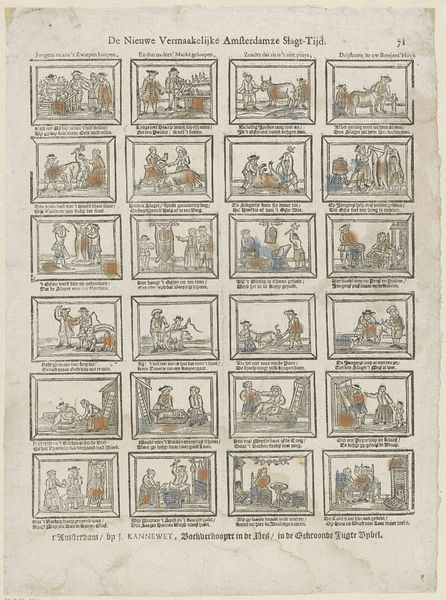
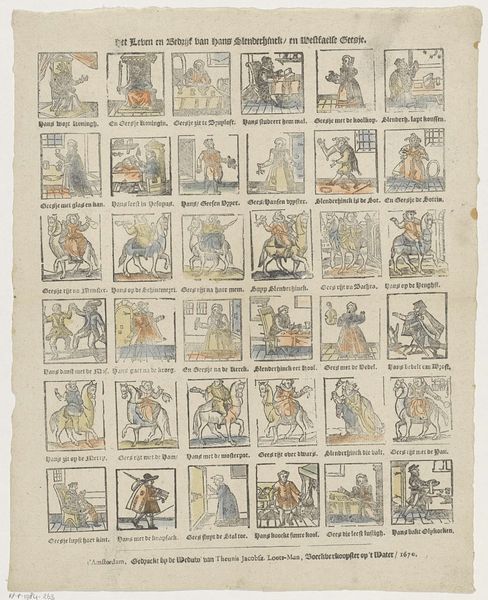
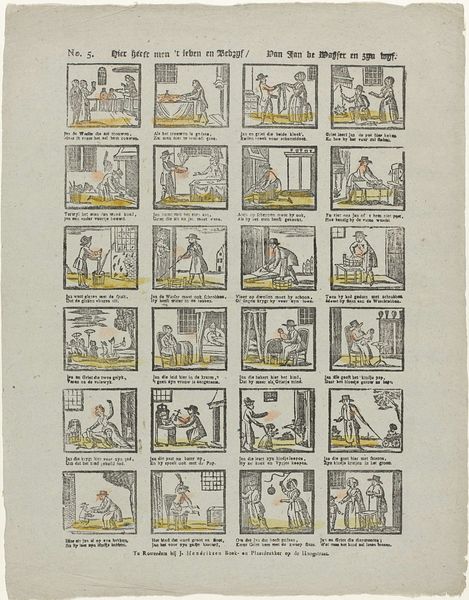
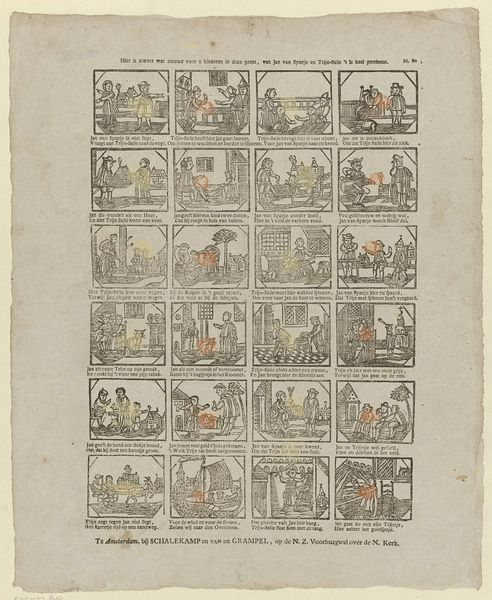
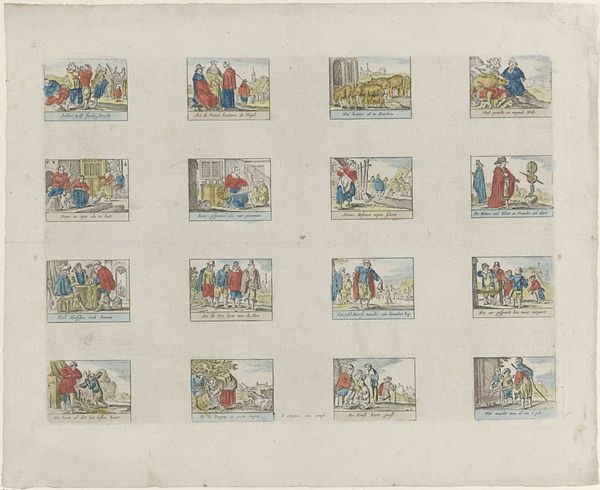
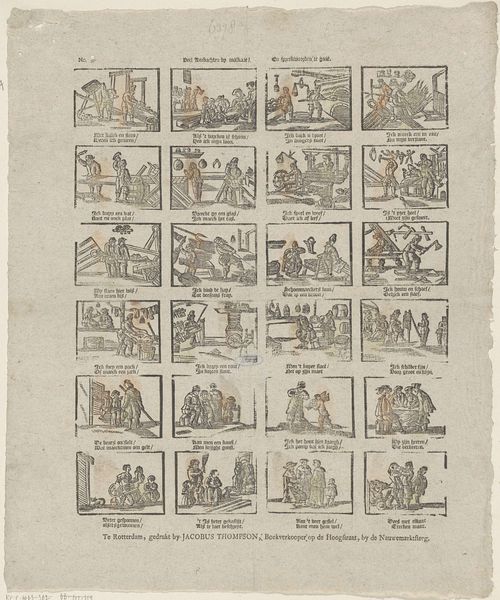
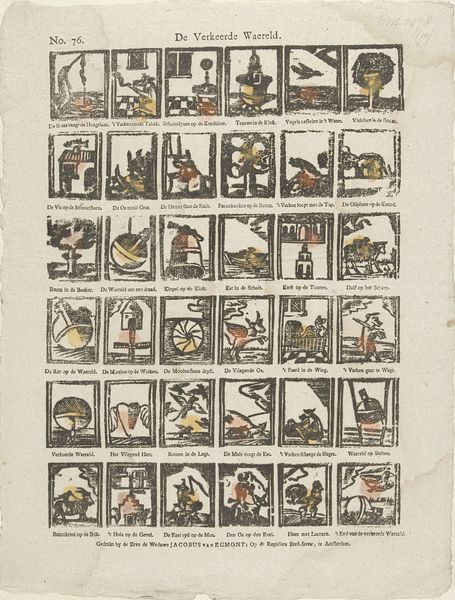
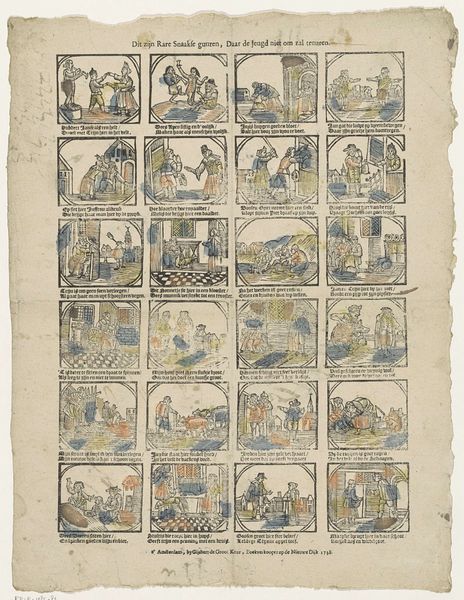
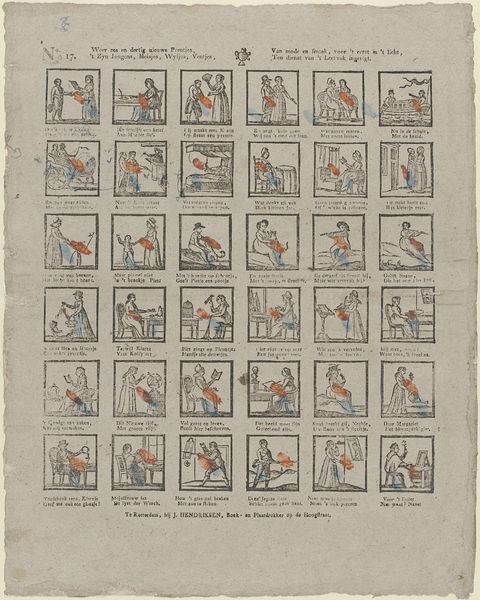
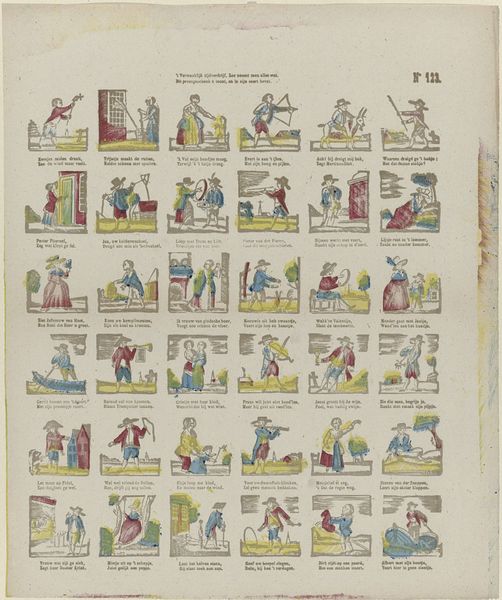
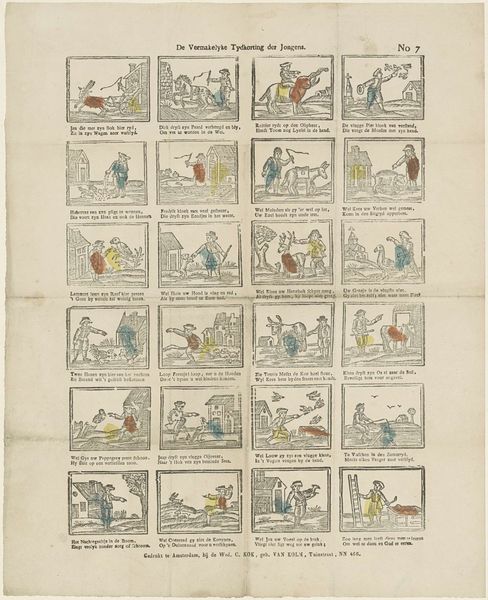
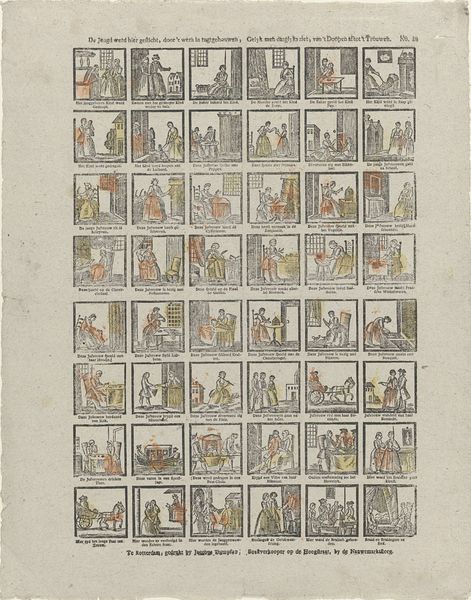
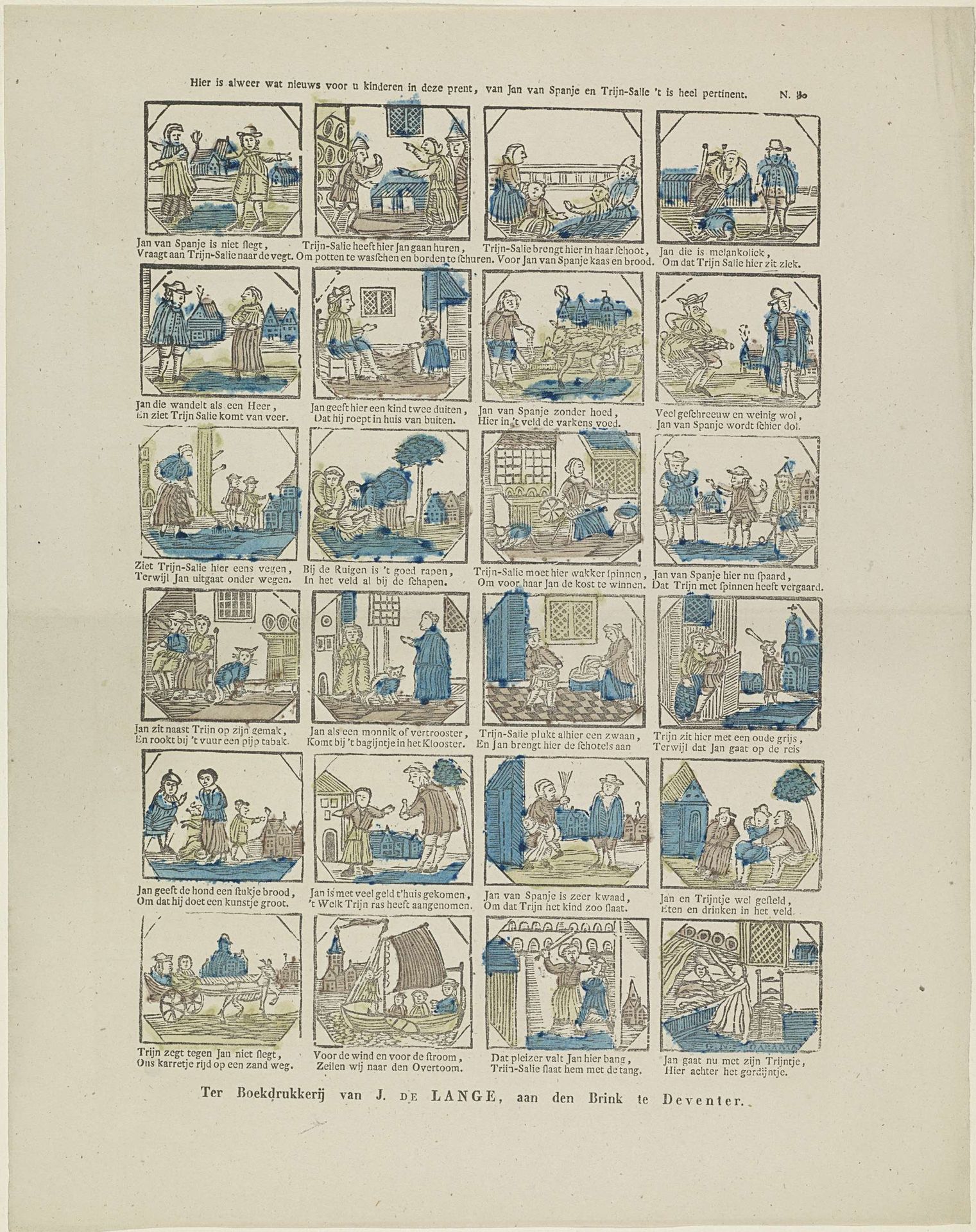
This print, whose artist is G.N. Garama, presents a series of small scenes, organized in a grid-like structure, reminiscent of early comic strips. The limited color palette, primarily blues, greens, and browns, gives a muted, almost dreamlike quality to the imagery. The simplicity of the lines and the somewhat naive rendering of the figures suggest a folk art sensibility. Structurally, the grid imposes a sense of order, but within each cell, a chaotic narrative unfolds. Are we looking at a form of proto-cinematic storytelling, where each frame captures a fragment of a larger story? The ordering and presentation invite us to decode a sequence of events, but in what order should we decode this? Is there a specific method? Ultimately, the charm of this print lies in its raw simplicity, as well as how it simultaneously invites and resists easy interpretation. By fragmenting narrative into a series of discrete images it destabilizes notions of linear storytelling, prompting questions about narrative, structure and our own interpretative agency.
Hier is alweer wat nieuws voor u kinderen in deze prent, van Jan van Spanje en Trijn-Salie 't is heel pertinent 1822 - 1849

G.N. Garama
@gngaramaLocation
RijksmuseumArtwork details
- Medium
- graphic-art, print, paper, engraving
- Dimensions
- height 411 mm, width 323 mm
- Location
- Rijksmuseum
- Copyright
- Rijks Museum: Open Domain
Tags
graphic-art
narrative-art
ukiyo-e
paper
folk-art
comic
genre-painting
engraving
Comments
No comments
About this artwork
This print, whose artist is G.N. Garama, presents a series of small scenes, organized in a grid-like structure, reminiscent of early comic strips. The limited color palette, primarily blues, greens, and browns, gives a muted, almost dreamlike quality to the imagery. The simplicity of the lines and the somewhat naive rendering of the figures suggest a folk art sensibility. Structurally, the grid imposes a sense of order, but within each cell, a chaotic narrative unfolds. Are we looking at a form of proto-cinematic storytelling, where each frame captures a fragment of a larger story? The ordering and presentation invite us to decode a sequence of events, but in what order should we decode this? Is there a specific method? Ultimately, the charm of this print lies in its raw simplicity, as well as how it simultaneously invites and resists easy interpretation. By fragmenting narrative into a series of discrete images it destabilizes notions of linear storytelling, prompting questions about narrative, structure and our own interpretative agency.
Comments
No comments