About this artwork
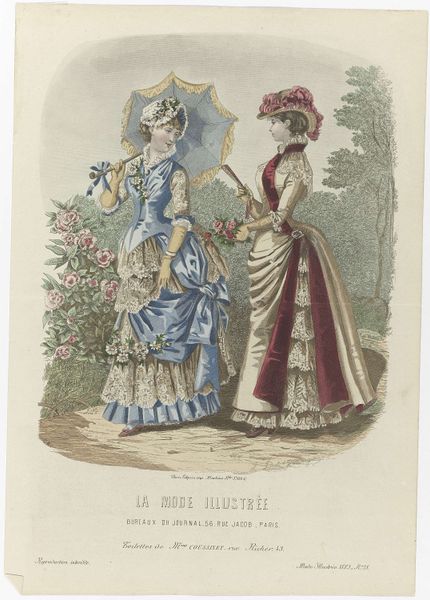
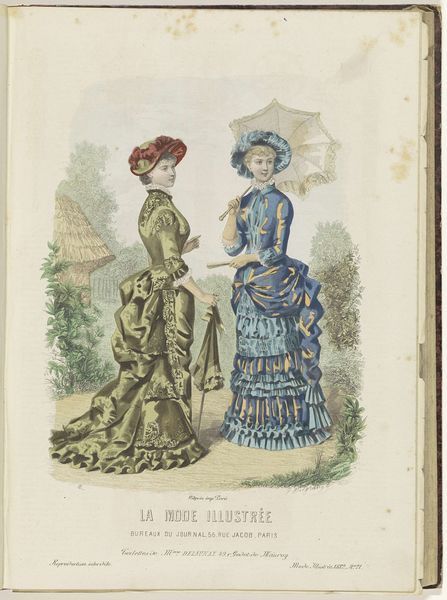
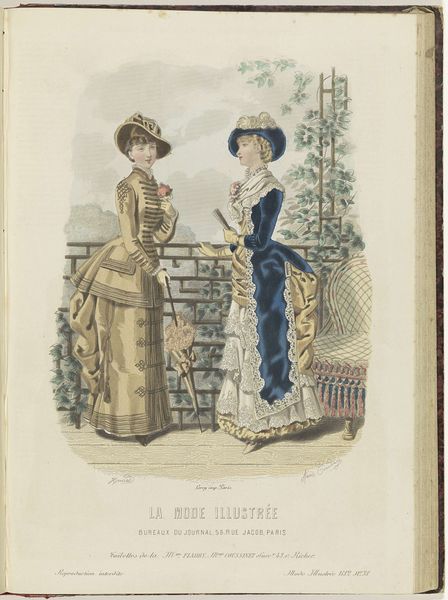
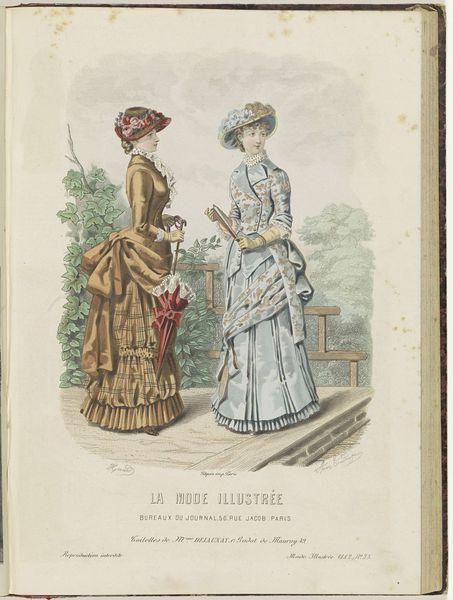
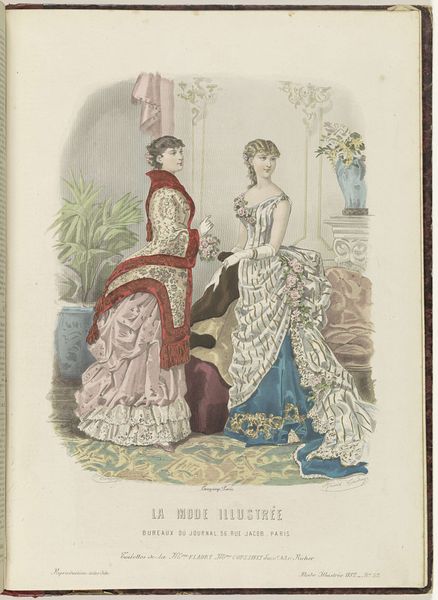
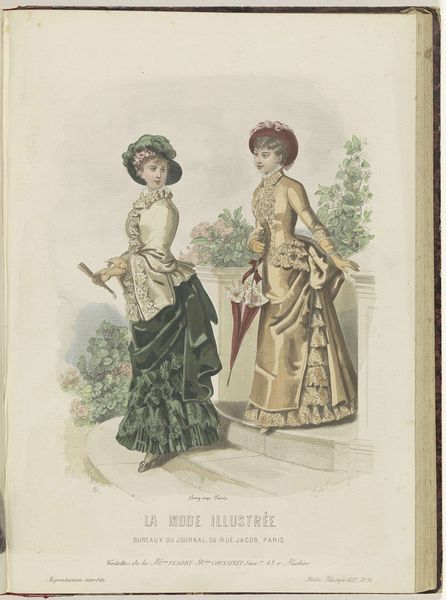
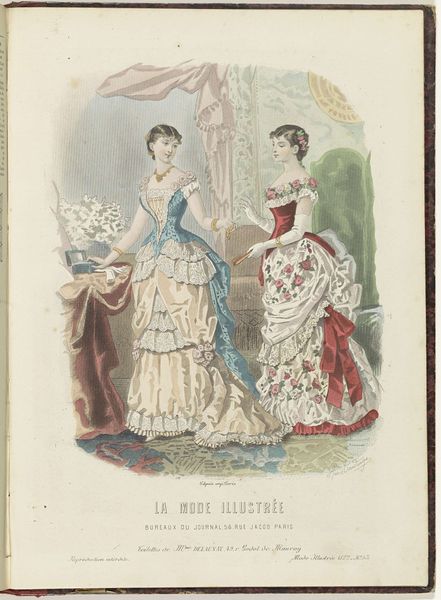
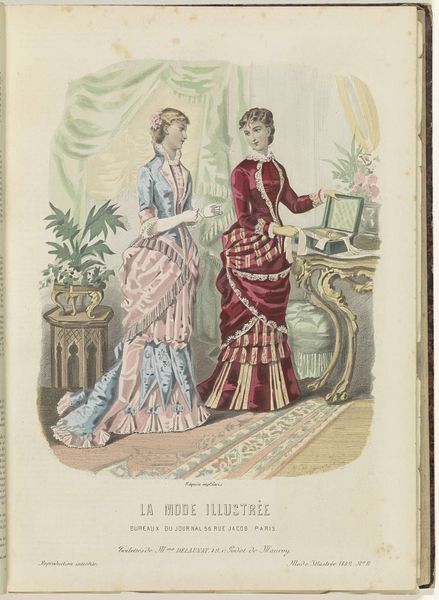
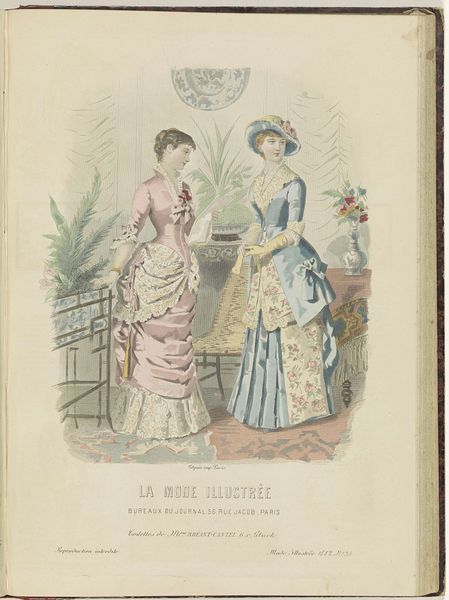
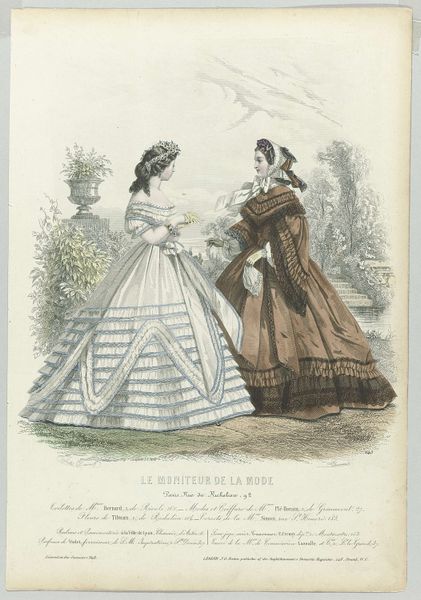
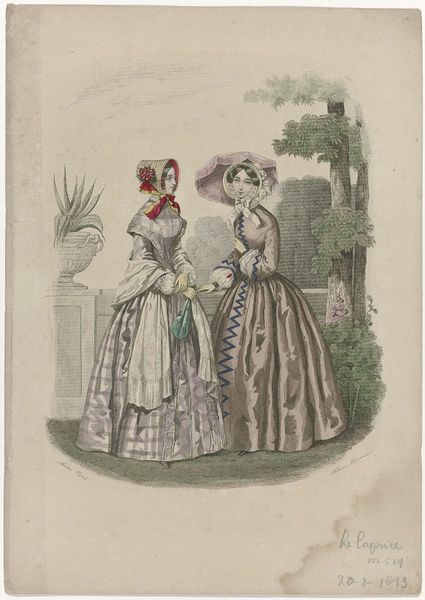
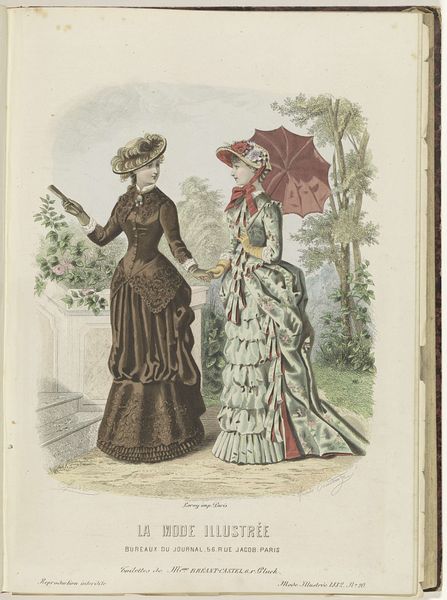
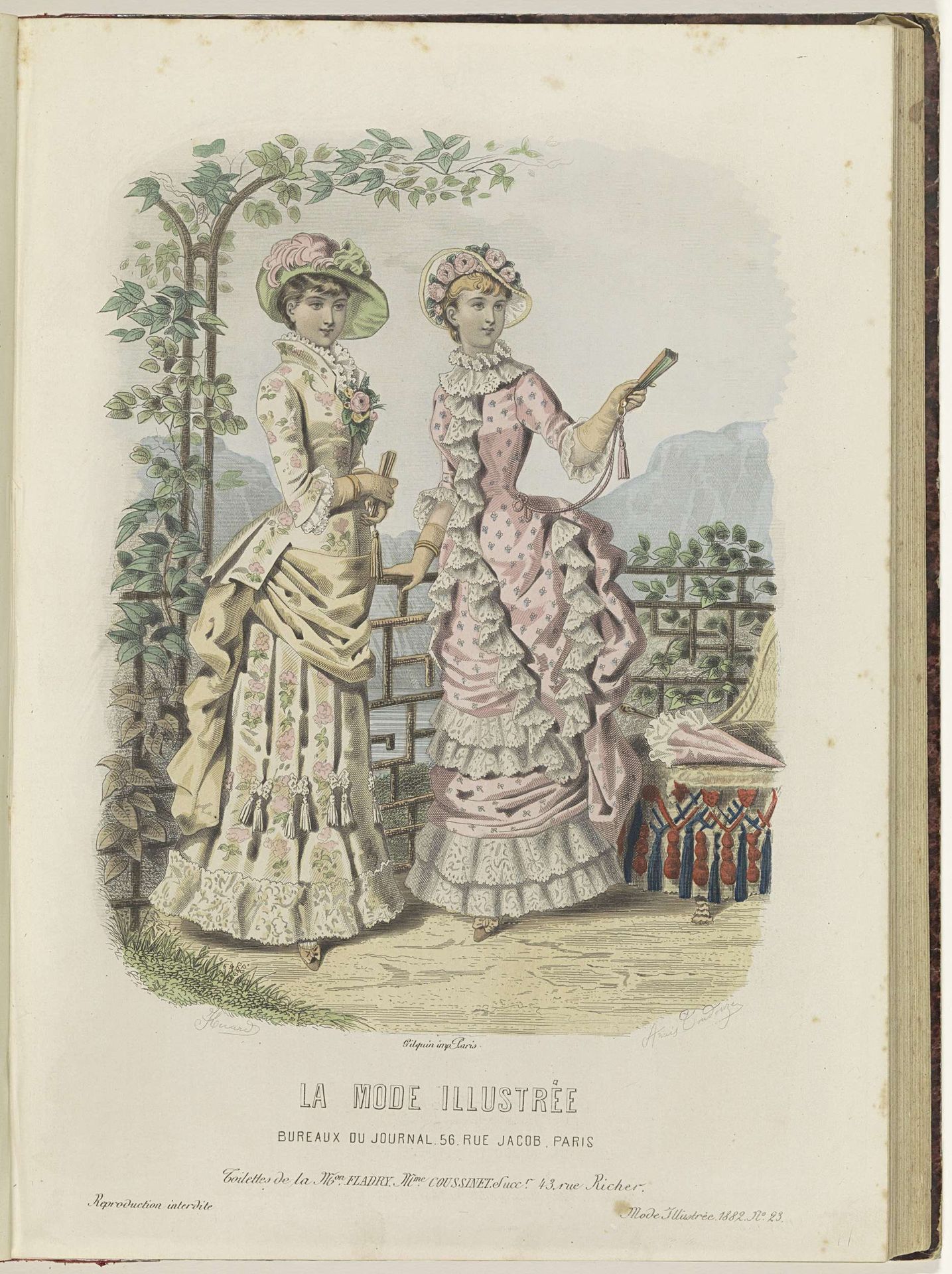
This is a print from La Mode Illustrée, Journal de la Famille, made by Firmin-Didot & Cie in 1882. The print offers a glimpse into the fashion and social values of the French upper class during the late 19th century. The journal itself functioned as a cultural institution, shaping the tastes and aspirations of its readers. Visual codes are abundant, from the elaborate dresses, hats and accessories to the leisurely poses of the women, all conveying status, leisure, and adherence to social norms. The setting is suggestive of a private garden, reinforcing the idea of domesticity and privilege. France in the 1880s was a society marked by distinct class divisions, and publications like La Mode Illustrée played a role in reinforcing those divisions. These images also reflect the economic structures of the time, with the fashion industry catering to the demands of a wealthy elite. By examining such sources, along with other printed matter, archives, and social histories, we can gain a deeper understanding of the complex interplay between art, fashion, and society in 19th-century France.
La Mode Illustrée, Journal de la Famille, 1882 1882

Firmin-Didot & Cie
@firmindidotcieLocation
RijksmuseumArtwork details
- Medium
- drawing, print, paper, ink
- Dimensions
- height mm, width mm, thickness mm
- Location
- Rijksmuseum
- Copyright
- Rijks Museum: Open Domain
Tags
portrait
drawing
paper
ink
coloured pencil
Comments
No comments
About this artwork
This is a print from La Mode Illustrée, Journal de la Famille, made by Firmin-Didot & Cie in 1882. The print offers a glimpse into the fashion and social values of the French upper class during the late 19th century. The journal itself functioned as a cultural institution, shaping the tastes and aspirations of its readers. Visual codes are abundant, from the elaborate dresses, hats and accessories to the leisurely poses of the women, all conveying status, leisure, and adherence to social norms. The setting is suggestive of a private garden, reinforcing the idea of domesticity and privilege. France in the 1880s was a society marked by distinct class divisions, and publications like La Mode Illustrée played a role in reinforcing those divisions. These images also reflect the economic structures of the time, with the fashion industry catering to the demands of a wealthy elite. By examining such sources, along with other printed matter, archives, and social histories, we can gain a deeper understanding of the complex interplay between art, fashion, and society in 19th-century France.
Comments
No comments