print, etching
#
baroque
# print
#
etching
#
figuration
#
history-painting
Dimensions: height 138 mm, width 101 mm
Copyright: Rijks Museum: Open Domain
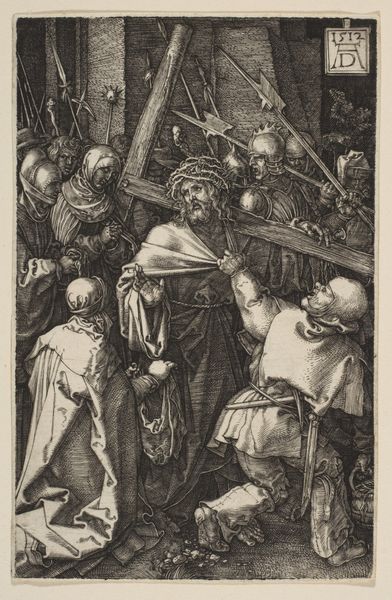
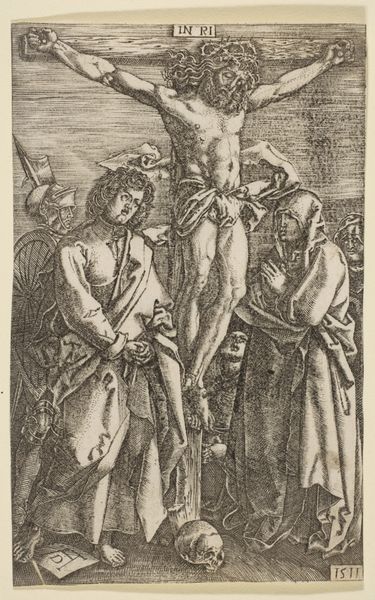
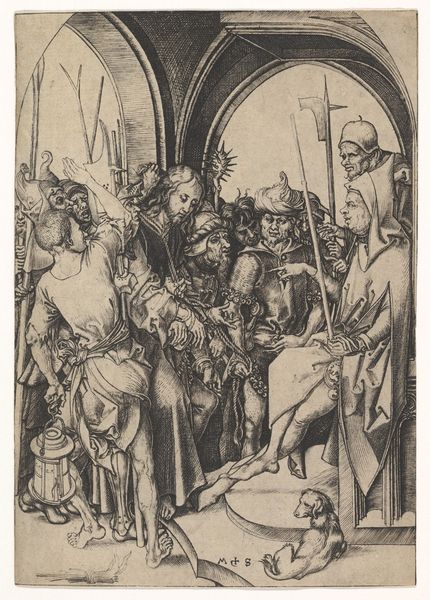
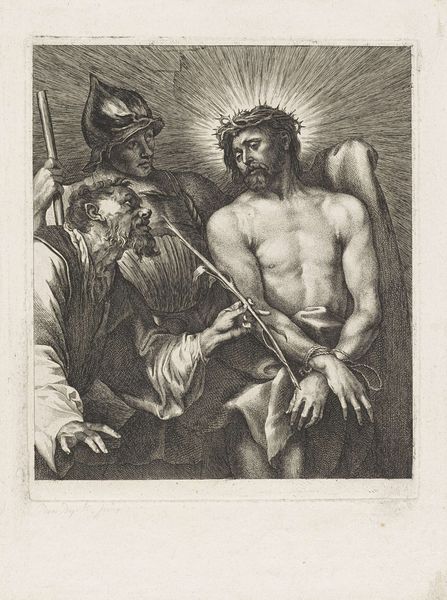
Pieter Rottermondt's etching, Ecce Homo, presents us with a scene dominated by stark contrasts of light and shadow, achieved through densely layered lines. This immediately evokes a somber, contemplative mood. The composition is tightly packed, forcing our attention onto the central figure of Christ, who is framed by surrounding figures and the looming cross. Rottermondt uses the medium of etching to great effect here, creating deep blacks that intensify the emotional weight of the subject matter. We can read the etching as a semiotic system of signs, where each element contributes to the narrative's meaning: the crown of thorns, the cross, and the faces of the onlookers. Consider how Rottermondt challenges conventional religious iconography by emphasizing the physical and emotional vulnerability of Christ. The artist prompts us to reflect on the intersection of power, suffering, and representation within a theological context. The dense network of lines and shadows in the etching serves not merely as an aesthetic choice but also as a means of conveying complex philosophical ideas.
Comments
No comments
Be the first to comment and join the conversation on the ultimate creative platform.
 Collect
 React
React Comment
More like this