About this artwork
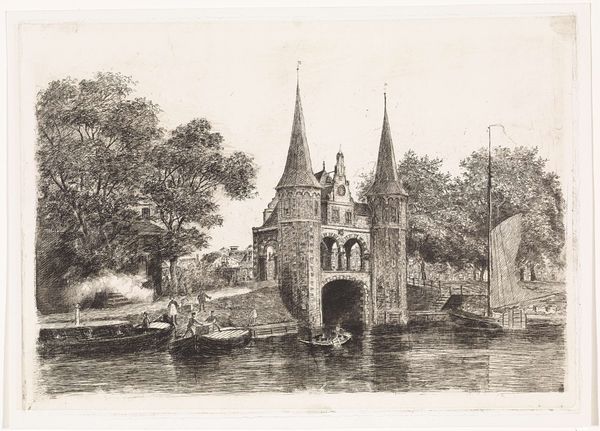
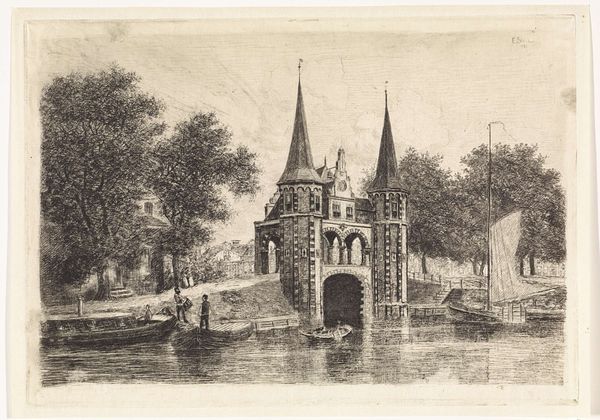
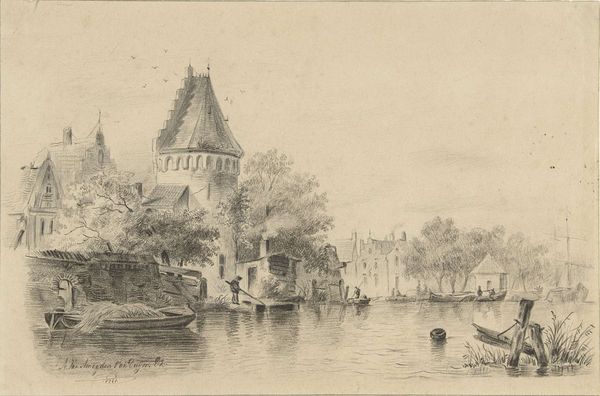
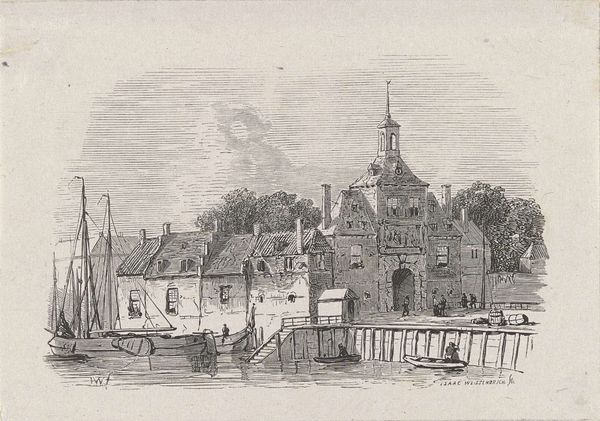
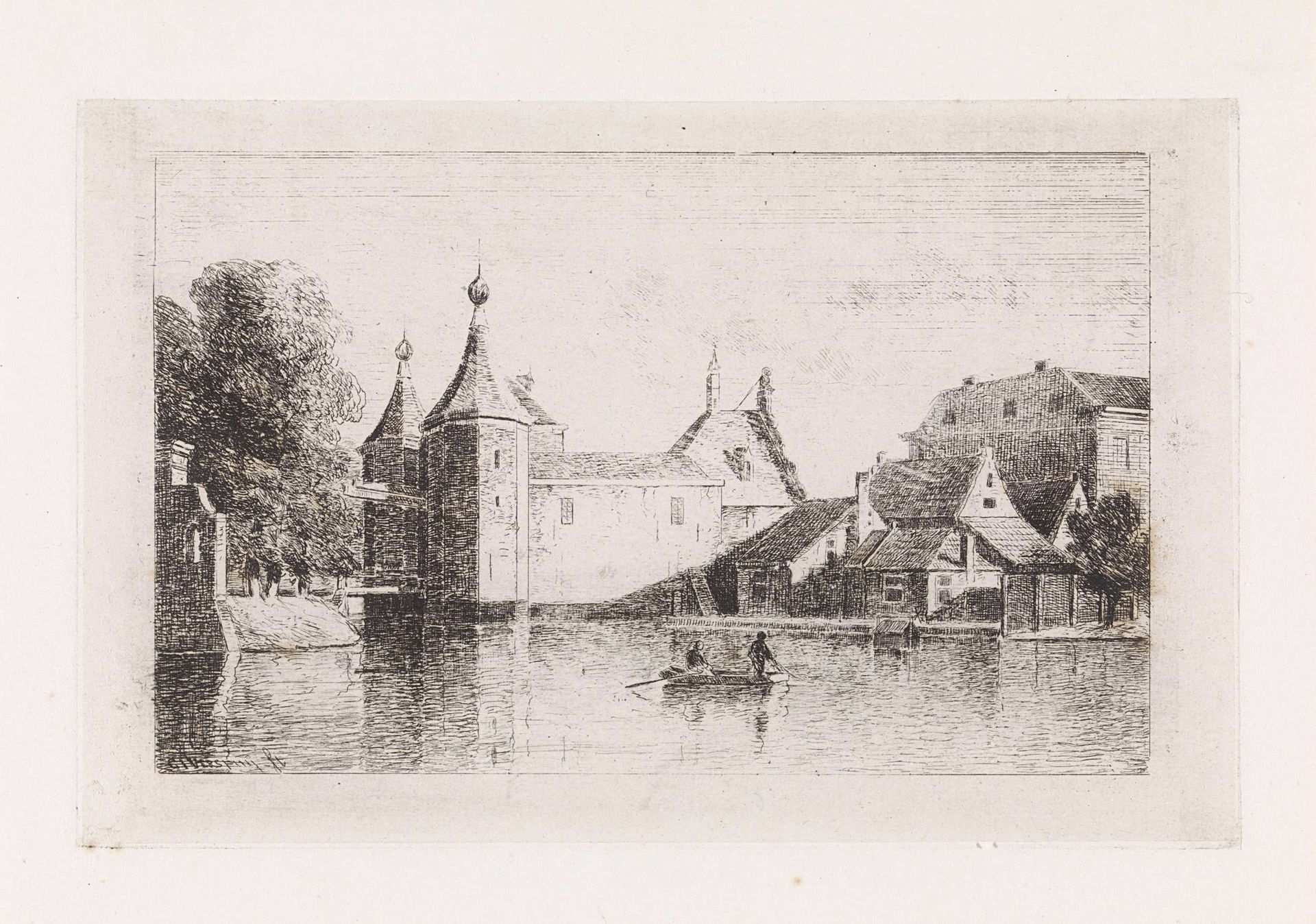
Gijsbertus Johannes Verspuy created this print, "Two figures in a boat by a city gate," during the 19th century. Notice the city gate: it is a potent symbol, historically representing not only physical defense but also civic identity and trade. Gates like this hearken back to antiquity, seen in ancient Egyptian and Roman cities, acting as liminal spaces—points of transition between safety and the unknown. Throughout the medieval period, city gates evolved into fortified structures, as depicted here. Their function as checkpoints influenced social interactions, controlling the flow of people and goods, and thereby shaping the city's economic and cultural life. The city gate reminds us of the walls of Troy, representing both exclusion and protection. Looking at this image, one might ponder the symbolic and psychological implications of boundaries. It embodies a collective desire for security, and, simultaneously, a longing for the outside world. It’s a duality rooted deeply in the human psyche. As we gaze upon this image, we reflect upon the cyclical nature of human endeavor, where past fortifications evolve into future gateways.
Twee figuren in een boot bij een stadspoort
1833 - 1862

Gijsbertus Johannes Verspuy
1823 - 1862Location
RijksmuseumArtwork details
- Medium
- drawing, etching
- Dimensions
- height 126 mm, width 196 mm
- Location
- Rijksmuseum
- Copyright
- Rijks Museum: Open Domain
Tags
drawing
etching
landscape
romanticism
cityscape
Comments
Be the first to share your thoughts about this work.
About this artwork
Gijsbertus Johannes Verspuy created this print, "Two figures in a boat by a city gate," during the 19th century. Notice the city gate: it is a potent symbol, historically representing not only physical defense but also civic identity and trade. Gates like this hearken back to antiquity, seen in ancient Egyptian and Roman cities, acting as liminal spaces—points of transition between safety and the unknown. Throughout the medieval period, city gates evolved into fortified structures, as depicted here. Their function as checkpoints influenced social interactions, controlling the flow of people and goods, and thereby shaping the city's economic and cultural life. The city gate reminds us of the walls of Troy, representing both exclusion and protection. Looking at this image, one might ponder the symbolic and psychological implications of boundaries. It embodies a collective desire for security, and, simultaneously, a longing for the outside world. It’s a duality rooted deeply in the human psyche. As we gaze upon this image, we reflect upon the cyclical nature of human endeavor, where past fortifications evolve into future gateways.
Comments
Be the first to share your thoughts about this work.