About this artwork
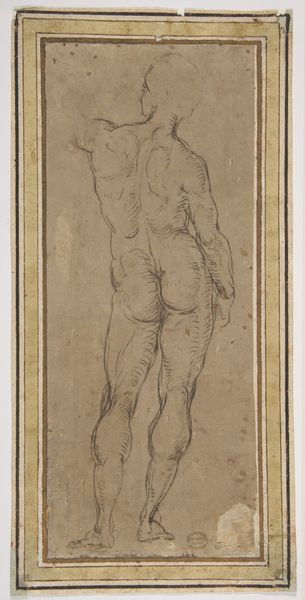
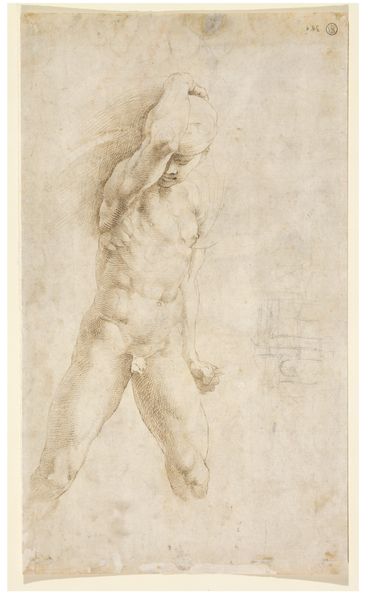
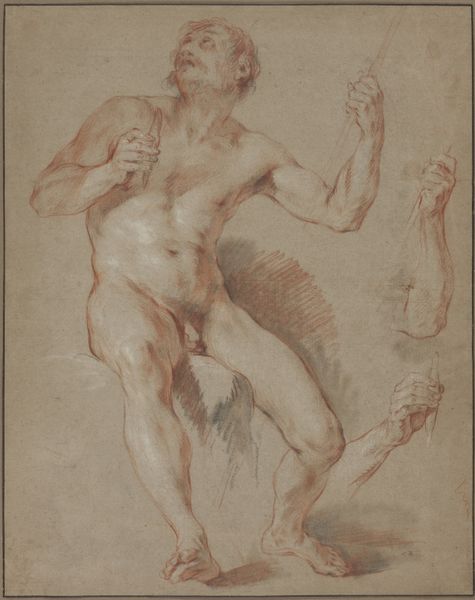
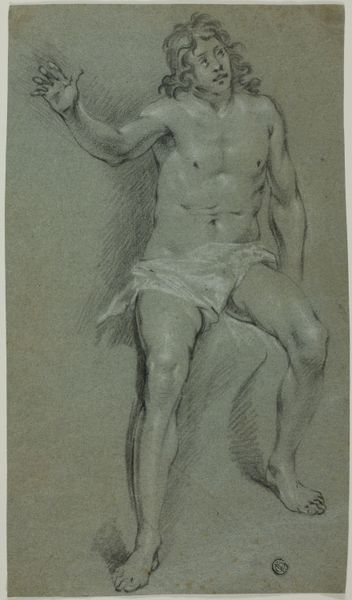
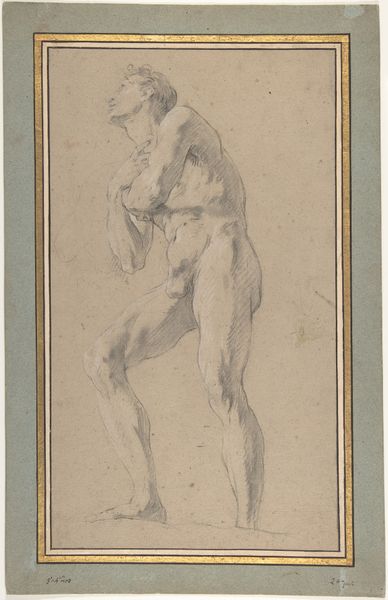
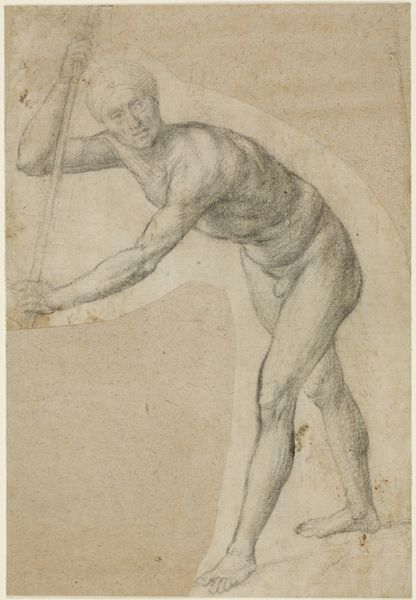
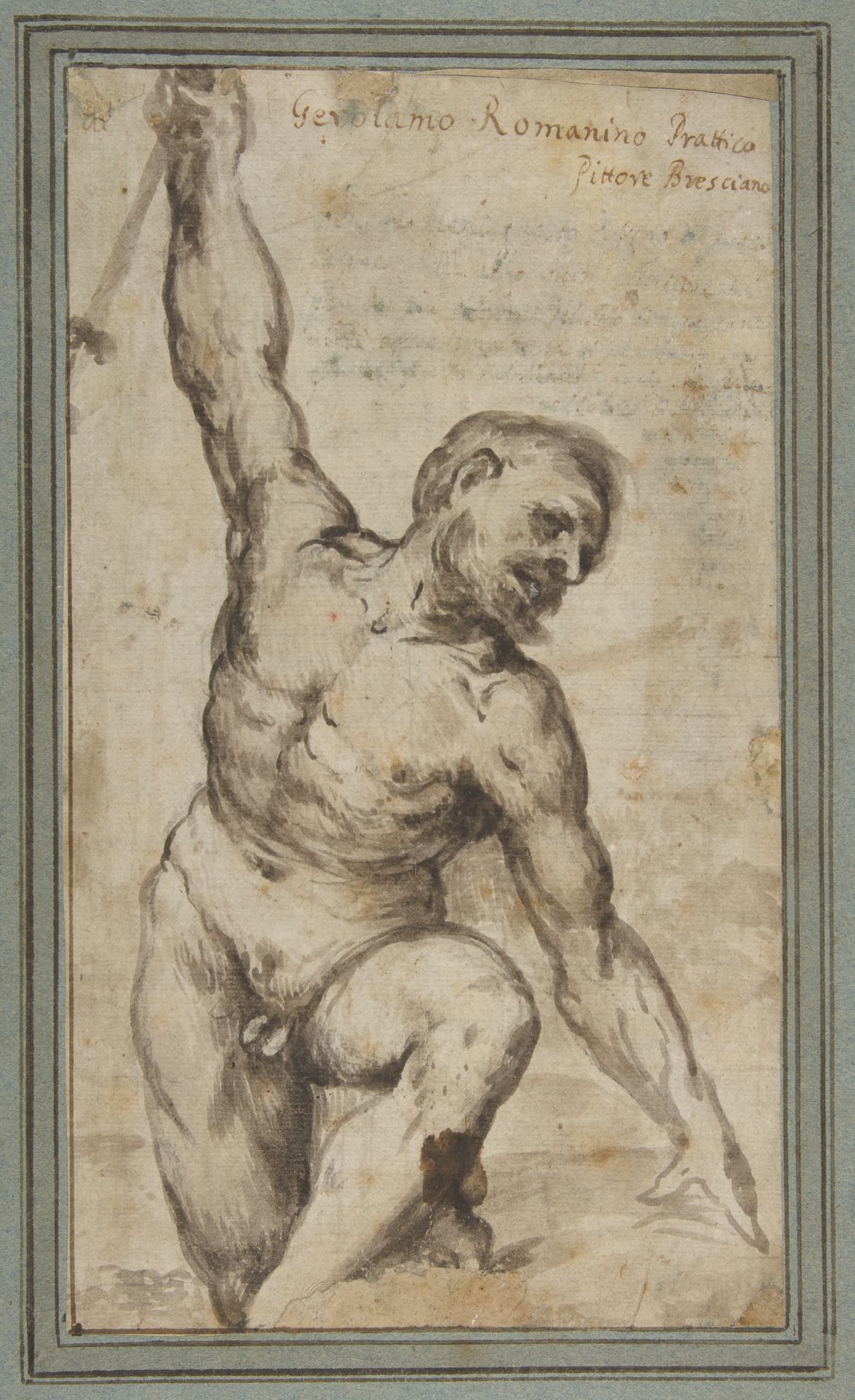
Girolamo Romanino made this drawing of a nude male figure with pen and brown ink with brown wash on paper, sometime in the 16th century. It's a quick study, made with very fluid strokes. The artist freely manipulates the wash to suggest the fall of light across the man's body. Look closely, and you'll see how much of the figure is actually left undefined. Patches of bare paper stand in for the figure's contours. Drawings like this were part of a larger production process. In Romanino’s time, even a relatively modest painting required extensive planning. He may have made this sketch in preparation for a painting, fresco, or even a print. It’s easy to overlook drawings in favor of more “finished” works of art, but they offer unique insight into an artist’s process. They remind us that even the most polished paintings begin with a simple, direct engagement with materials. They are also products of much labor, and an important commodity of artistic production.
Nude Male Figure with Upraised Right Arm
1550 - 1560


Artwork details
- Medium
- drawing, paper, ink, charcoal
- Dimensions
- 11-5/8 x 6-9/16 in. (29.5 x 16.7 cm)
- Location
- Metropolitan Museum of Art, New York, NY
- Copyright
- Public Domain
Tags
drawing
charcoal drawing
figuration
paper
11_renaissance
ink
charcoal
history-painting
italian-renaissance
male-nude
Comments
Be the first to share your thoughts about this work.
About this artwork
Girolamo Romanino made this drawing of a nude male figure with pen and brown ink with brown wash on paper, sometime in the 16th century. It's a quick study, made with very fluid strokes. The artist freely manipulates the wash to suggest the fall of light across the man's body. Look closely, and you'll see how much of the figure is actually left undefined. Patches of bare paper stand in for the figure's contours. Drawings like this were part of a larger production process. In Romanino’s time, even a relatively modest painting required extensive planning. He may have made this sketch in preparation for a painting, fresco, or even a print. It’s easy to overlook drawings in favor of more “finished” works of art, but they offer unique insight into an artist’s process. They remind us that even the most polished paintings begin with a simple, direct engagement with materials. They are also products of much labor, and an important commodity of artistic production.
Comments
Be the first to share your thoughts about this work.