About this artwork
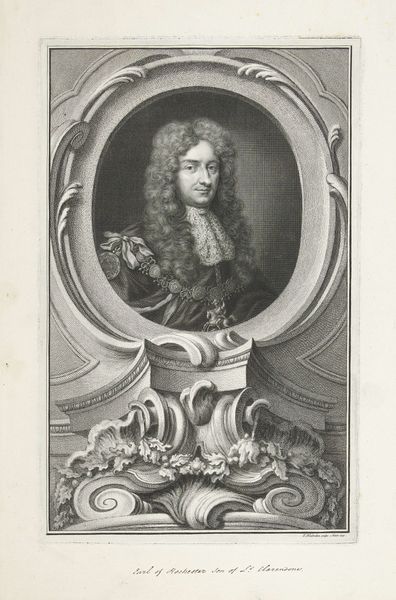
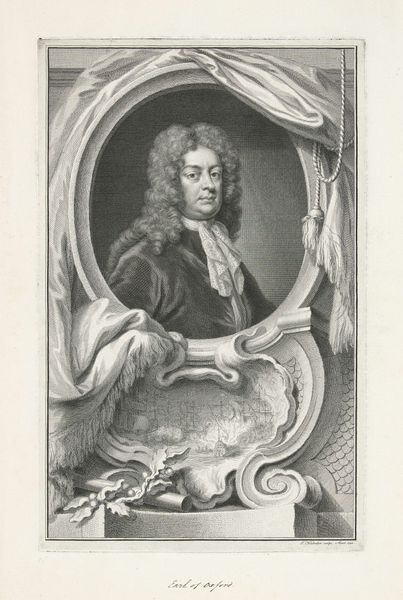
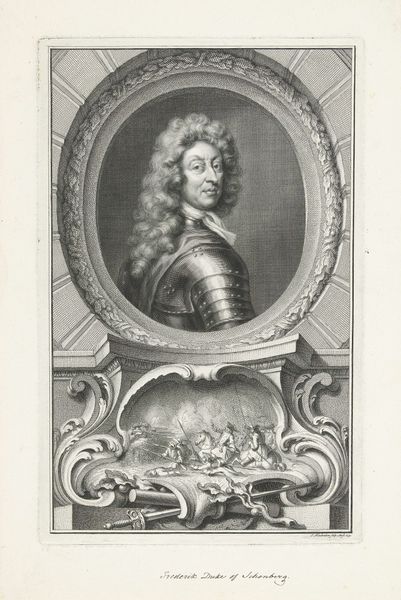
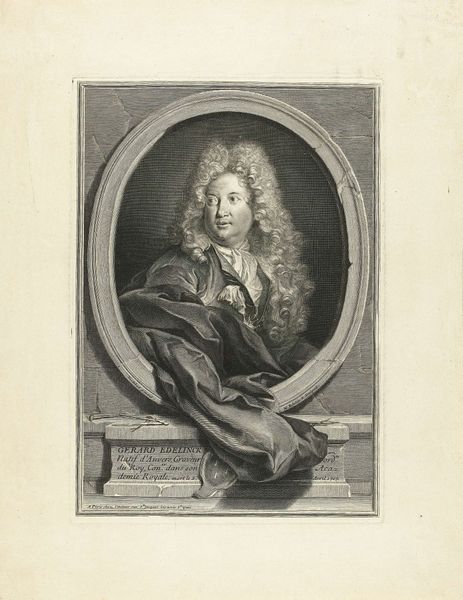
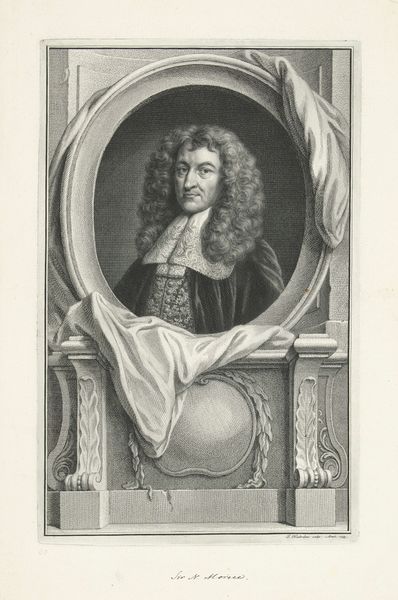
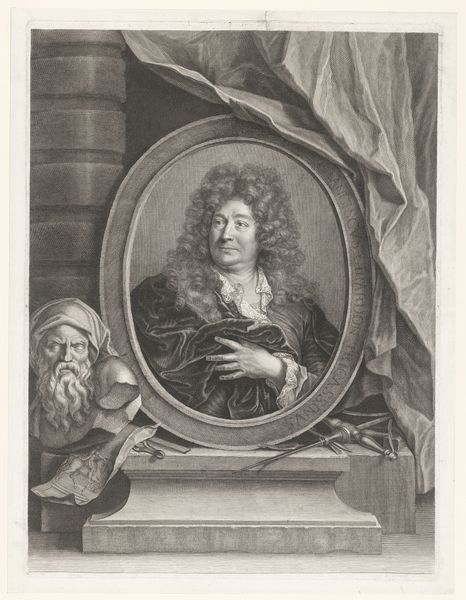
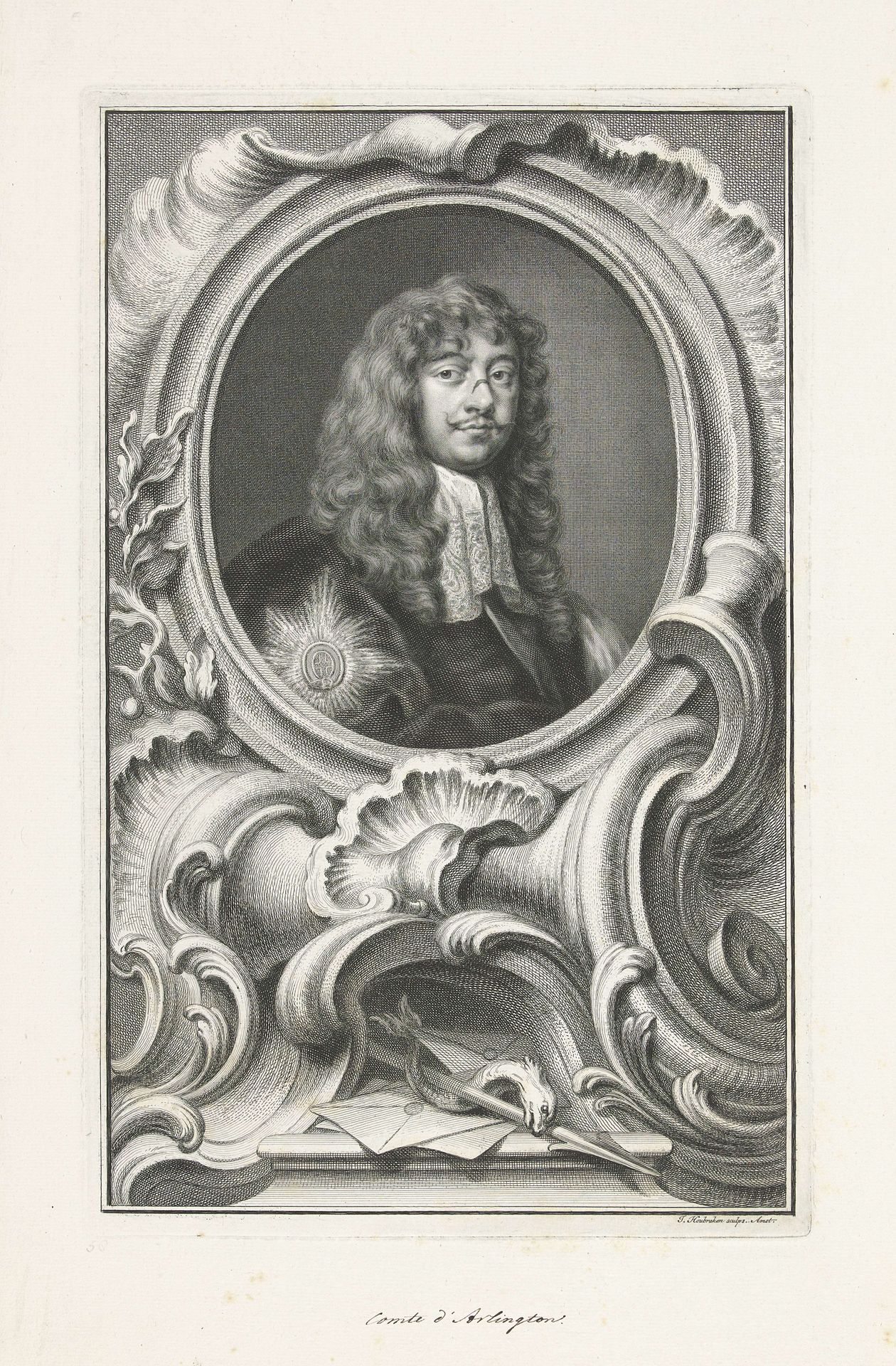
Curator: This engraving at the Rijksmuseum depicts Henry Bennett, the first Earl of Arlington, crafted between 1737 and 1739 by Jacob Houbraken. It presents an interesting character study. Editor: Yes, it is immediately striking for the meticulous detail considering the medium, particularly within that ornate oval frame. One is drawn in by the textures and light and shadow interplay; the man's expression seems almost...distant. Curator: Distance might be an apt reading. Arlington was a significant figure in the court of Charles II, a member of the Cabal ministry – a group not particularly known for openness or warmth. The Baroque frame feels somewhat self-consciously decorative, almost a shield around the man. Note the star of the Order of the Garter emblazoned on his chest – emblems were significant during that period, showing not only status, but allegiance. Editor: It makes you wonder about the actual labour invested. The engraver's skill involved transferring an image, maybe a painting, through a very physical, labour-intensive act, where tiny carved lines brought out someone's place in society. Curator: And in doing so, elevating him further. It's almost as if Houbraken is recasting him for a new, visually literate audience, ensuring the Earl's continued place in the cultural memory of the Dutch Republic, using those very specific codes. Engravings made these images broadly accessible. Editor: Accessible, yet still steeped in the process, in the skilled labor required. These lines that define Arlington's features, each etched one by one… it’s a beautiful and potent act of both preservation and production. Curator: I agree. He becomes, through that labor, something more than just a nobleman. An icon. Editor: A very interesting encounter – it does give you a moment to contemplate the person, the material effort and what this reveals about both 17th-century England and the 18th-century Dutch Republic.
Portret van Henry Bennett 1ste graaf van Arlington
1737 - 1739

Jacob Houbraken
1698 - 1780Location
RijksmuseumArtwork details
- Medium
- engraving
- Dimensions
- height 372 mm, width 235 mm
- Location
- Rijksmuseum
- Copyright
- Rijks Museum: Open Domain
Tags
Comments
Share your thoughts
About this artwork
Curator: This engraving at the Rijksmuseum depicts Henry Bennett, the first Earl of Arlington, crafted between 1737 and 1739 by Jacob Houbraken. It presents an interesting character study. Editor: Yes, it is immediately striking for the meticulous detail considering the medium, particularly within that ornate oval frame. One is drawn in by the textures and light and shadow interplay; the man's expression seems almost...distant. Curator: Distance might be an apt reading. Arlington was a significant figure in the court of Charles II, a member of the Cabal ministry – a group not particularly known for openness or warmth. The Baroque frame feels somewhat self-consciously decorative, almost a shield around the man. Note the star of the Order of the Garter emblazoned on his chest – emblems were significant during that period, showing not only status, but allegiance. Editor: It makes you wonder about the actual labour invested. The engraver's skill involved transferring an image, maybe a painting, through a very physical, labour-intensive act, where tiny carved lines brought out someone's place in society. Curator: And in doing so, elevating him further. It's almost as if Houbraken is recasting him for a new, visually literate audience, ensuring the Earl's continued place in the cultural memory of the Dutch Republic, using those very specific codes. Engravings made these images broadly accessible. Editor: Accessible, yet still steeped in the process, in the skilled labor required. These lines that define Arlington's features, each etched one by one… it’s a beautiful and potent act of both preservation and production. Curator: I agree. He becomes, through that labor, something more than just a nobleman. An icon. Editor: A very interesting encounter – it does give you a moment to contemplate the person, the material effort and what this reveals about both 17th-century England and the 18th-century Dutch Republic.
Comments
Share your thoughts