About this artwork
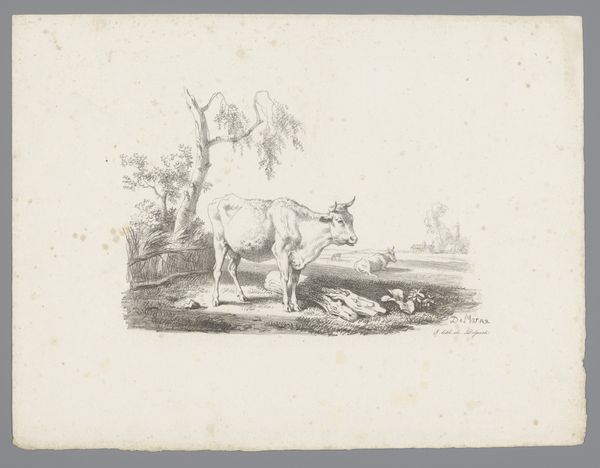
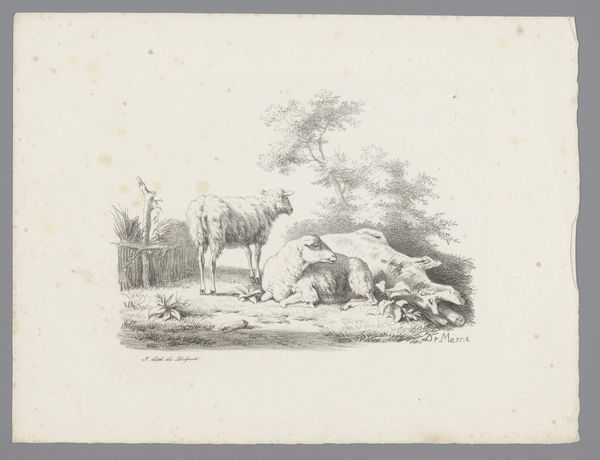
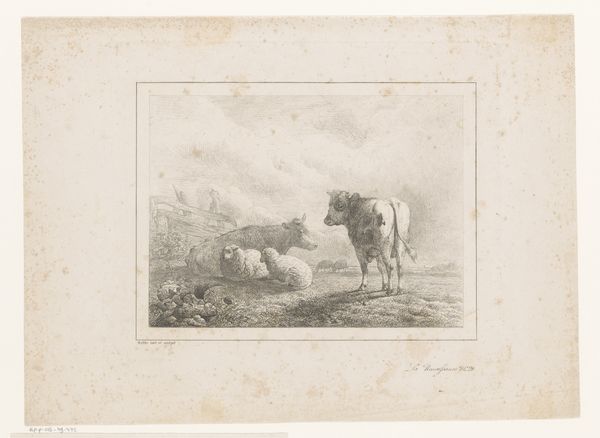
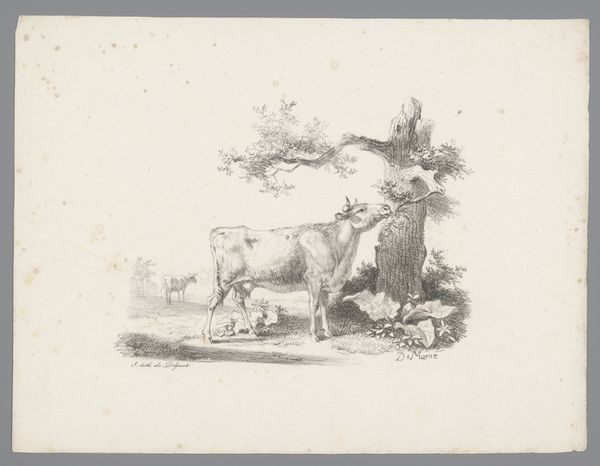
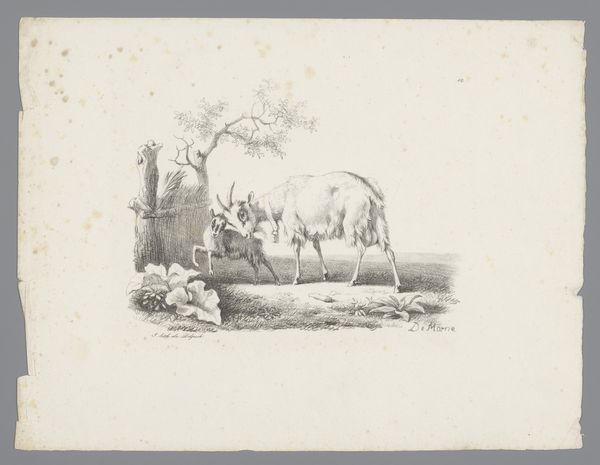
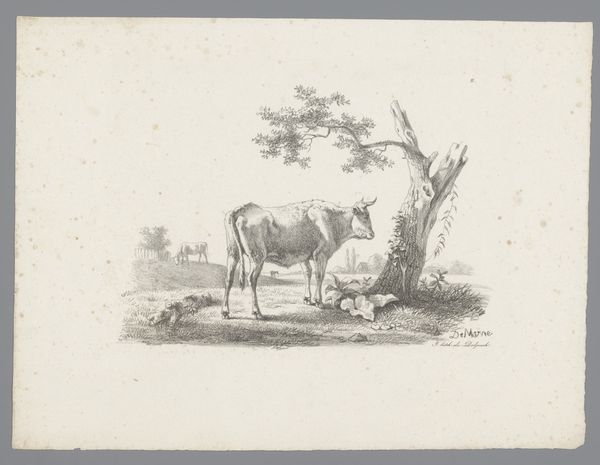
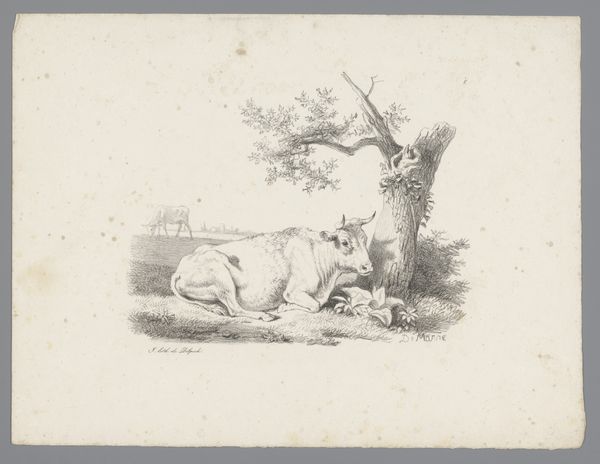
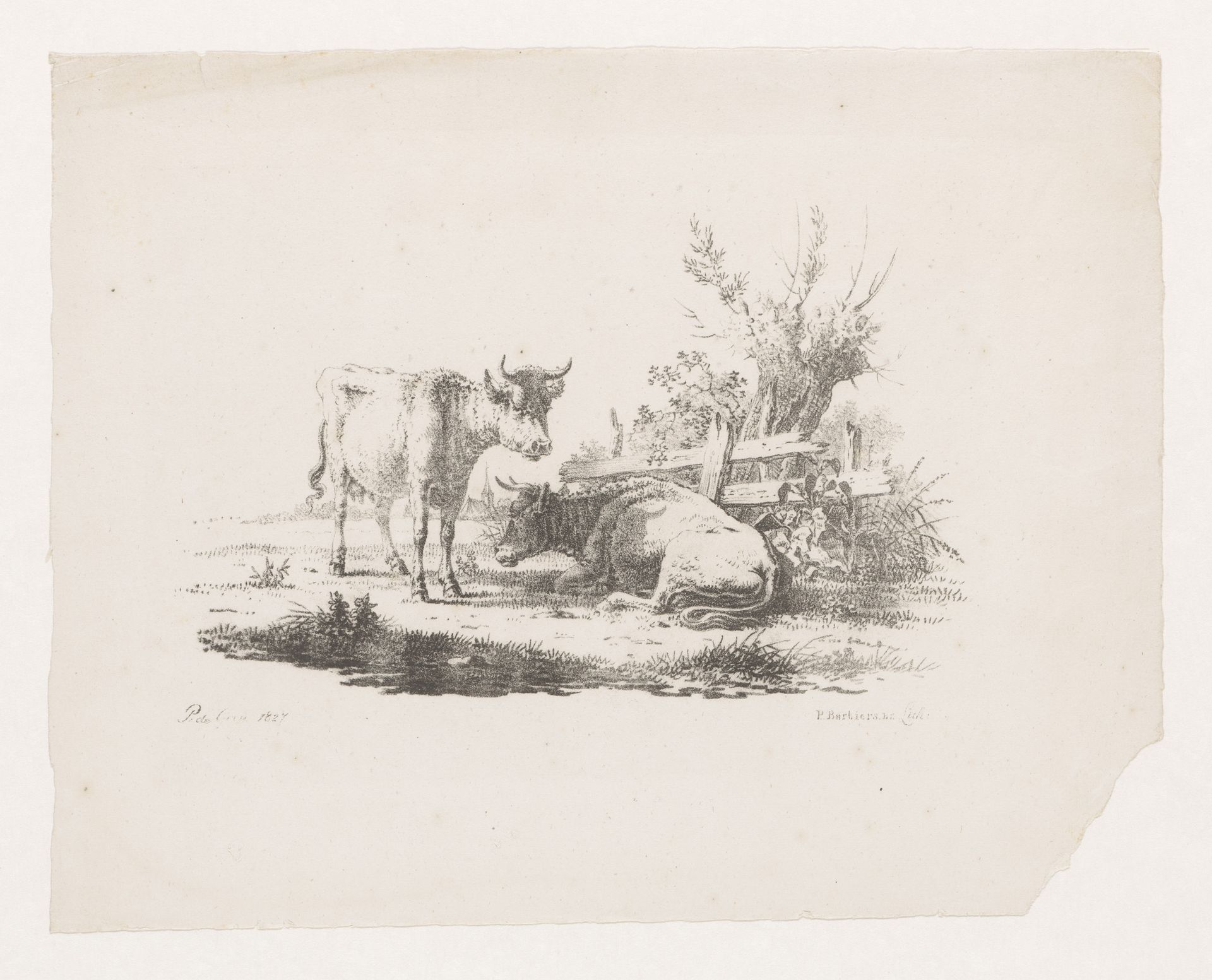
Pieter de Goeje made this drawing of two cows by a fence and a pollard willow. Drawn in the first half of the 19th century, De Goeje’s tranquil sketch reflects the Netherlands' deep connection with its agricultural landscape. It's impossible not to consider how class and labor are intertwined with this rural scene. The cows, symbols of pastoral life, also represented a crucial economic role in Dutch society. They embody sustenance and wealth, reflecting a dependence on agriculture that shaped social structures. The restful pose of the animals evokes a sense of harmony, yet it also prompts us to consider the unseen labor required to maintain this idyllic tableau. This artwork serves not only as a peaceful scene, but it also subtly highlights the social and economic relationships that define a community. It invites us to appreciate the beauty of the land, while also acknowledging the human element that shapes and sustains it.

Artwork details
- Medium
- drawing, print, etching
- Dimensions
- height 240 mm, width 305 mm
- Copyright
- Rijks Museum: Open Domain
Tags
Comments
Share your thoughts
About this artwork
Pieter de Goeje made this drawing of two cows by a fence and a pollard willow. Drawn in the first half of the 19th century, De Goeje’s tranquil sketch reflects the Netherlands' deep connection with its agricultural landscape. It's impossible not to consider how class and labor are intertwined with this rural scene. The cows, symbols of pastoral life, also represented a crucial economic role in Dutch society. They embody sustenance and wealth, reflecting a dependence on agriculture that shaped social structures. The restful pose of the animals evokes a sense of harmony, yet it also prompts us to consider the unseen labor required to maintain this idyllic tableau. This artwork serves not only as a peaceful scene, but it also subtly highlights the social and economic relationships that define a community. It invites us to appreciate the beauty of the land, while also acknowledging the human element that shapes and sustains it.
Comments
Share your thoughts