About this artwork
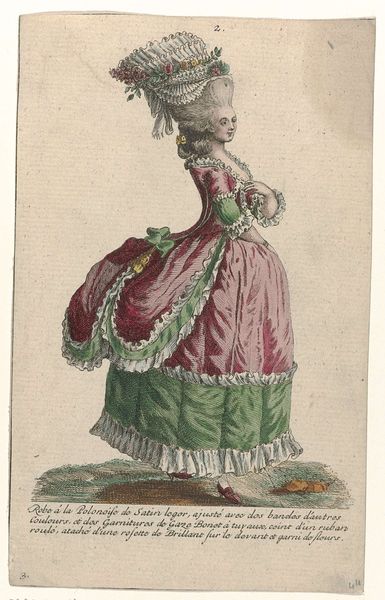
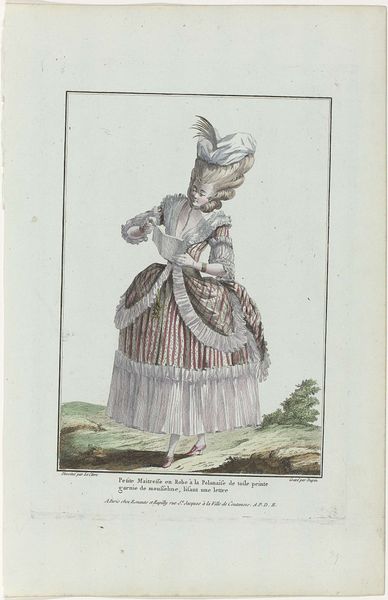
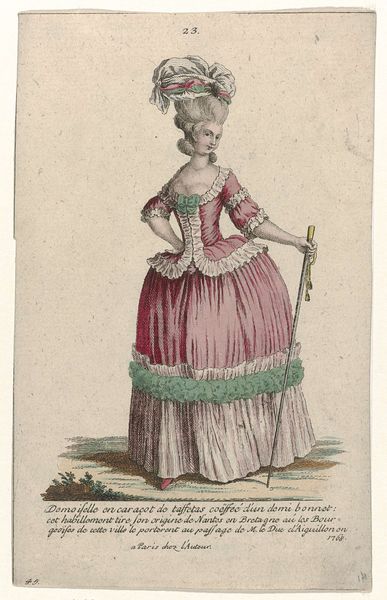
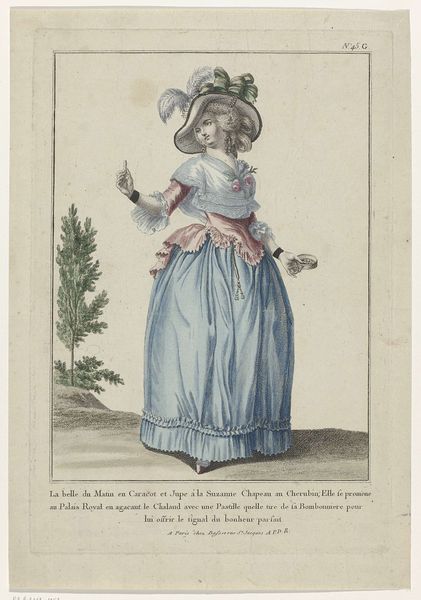
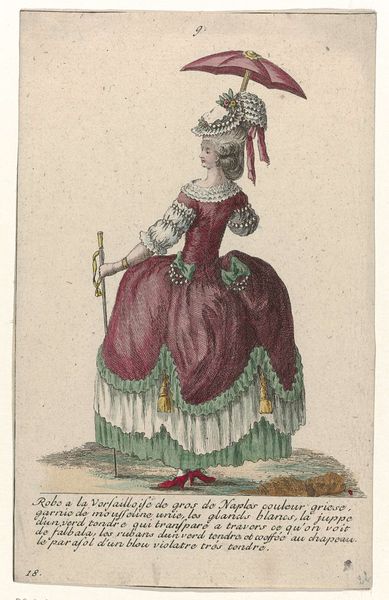
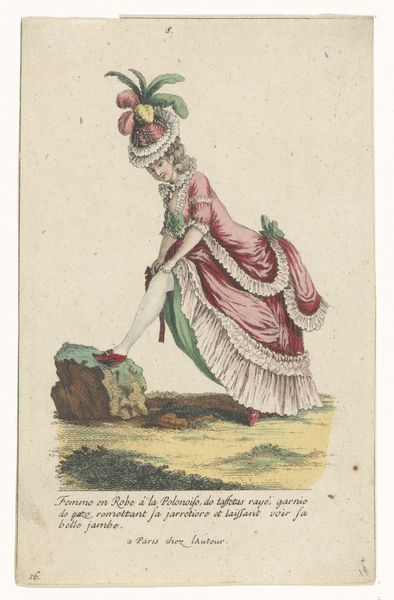
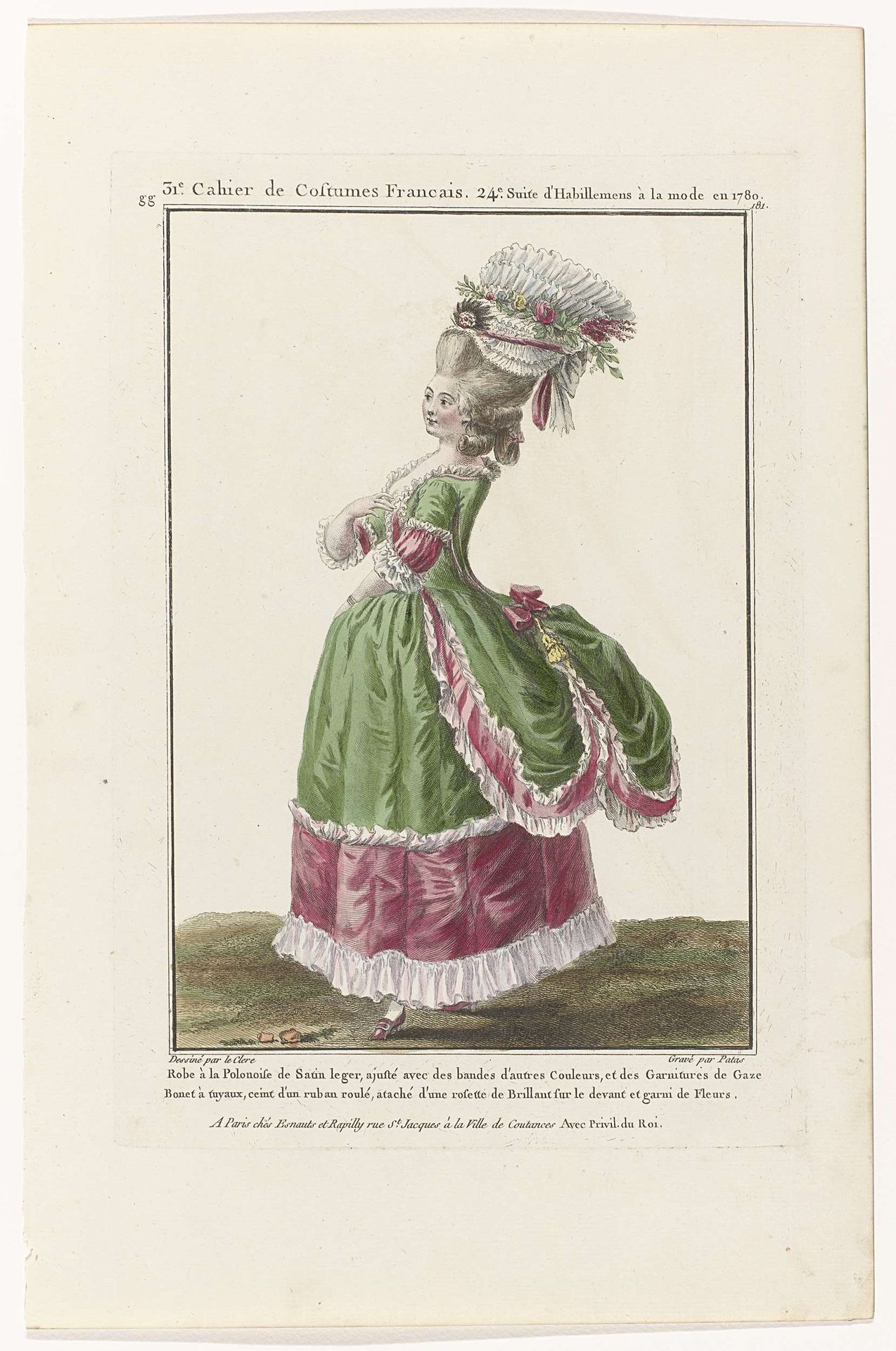
Editor: This is a fashion plate titled "Gallerie des Modes et Costumes Français, 1780," created by Charles Emmanuel Patas around 1780, rendered in watercolor. The green and pink dress feels playful and a bit absurd to me with that gigantic headdress! What symbolic weight do these fashion illustrations carry? Curator: Precisely! Consider this not merely as a depiction of clothing, but as a powerful marker of social identity. What do the colours green and pink together evoke for you in a social setting like 18th century France? Editor: I suppose, an elite status and frivolous extravagance? They don't seem like practical, everyday colors. Curator: Indeed! The Rococo period reveled in precisely that: elaborate, impractical displays. This is visual rhetoric. This image, part of a fashion series, isn't just about pretty dresses; it communicates aspiration, status, and cultural ideals. Notice the "Robe à la Polonaise" style, referencing a connection to Poland, and by association the kind of playful, faux-rural fashion that Marie Antoinette championed. Do you see other indications of privilege, or messages? Editor: Definitely the powdered wig and the feathered headdress--those shout wealth and leisure! Curator: Exactly. The clothing becomes a stage upon which to perform identity. What remains of the Rococo Era now? Editor: The image is evidence of fashion's ability to define and reinforce social strata through specific symbols. I appreciate how clothing in art reflects cultural values and the societal games of status. Thank you for enriching my perception. Curator: And thank you for opening a discussion around fashion as an enduring semiotic tool that carries many levels of messages across the ages.
Gallerie des Modes et Costumes Français, 1780, gg 181: Robe à la Polonois (...) 1780

Artwork details
- Dimensions
- height 281 mm, width 194 mm
- Copyright
- Rijks Museum: Open Domain
Comments
No comments
About this artwork
Editor: This is a fashion plate titled "Gallerie des Modes et Costumes Français, 1780," created by Charles Emmanuel Patas around 1780, rendered in watercolor. The green and pink dress feels playful and a bit absurd to me with that gigantic headdress! What symbolic weight do these fashion illustrations carry? Curator: Precisely! Consider this not merely as a depiction of clothing, but as a powerful marker of social identity. What do the colours green and pink together evoke for you in a social setting like 18th century France? Editor: I suppose, an elite status and frivolous extravagance? They don't seem like practical, everyday colors. Curator: Indeed! The Rococo period reveled in precisely that: elaborate, impractical displays. This is visual rhetoric. This image, part of a fashion series, isn't just about pretty dresses; it communicates aspiration, status, and cultural ideals. Notice the "Robe à la Polonaise" style, referencing a connection to Poland, and by association the kind of playful, faux-rural fashion that Marie Antoinette championed. Do you see other indications of privilege, or messages? Editor: Definitely the powdered wig and the feathered headdress--those shout wealth and leisure! Curator: Exactly. The clothing becomes a stage upon which to perform identity. What remains of the Rococo Era now? Editor: The image is evidence of fashion's ability to define and reinforce social strata through specific symbols. I appreciate how clothing in art reflects cultural values and the societal games of status. Thank you for enriching my perception. Curator: And thank you for opening a discussion around fashion as an enduring semiotic tool that carries many levels of messages across the ages.
Comments
No comments