About this artwork
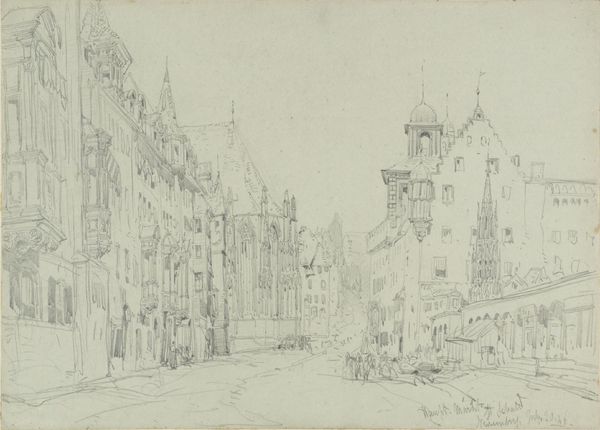
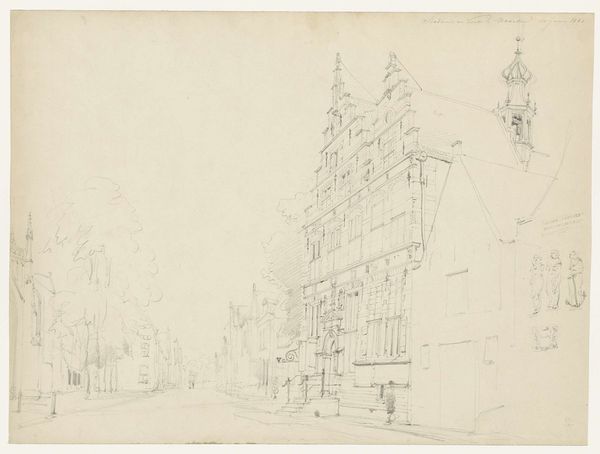
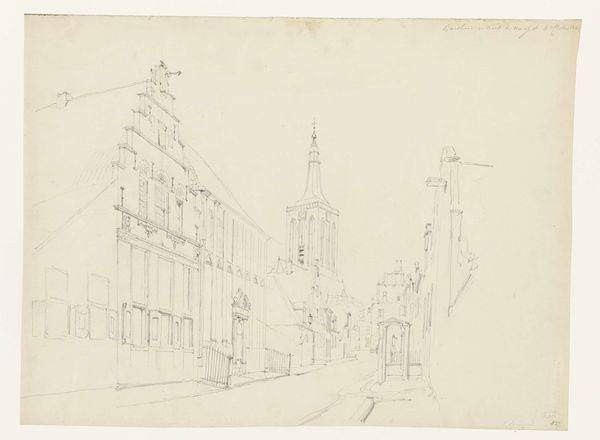
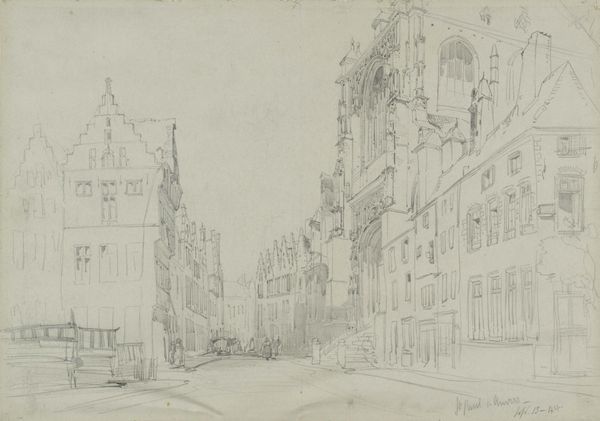
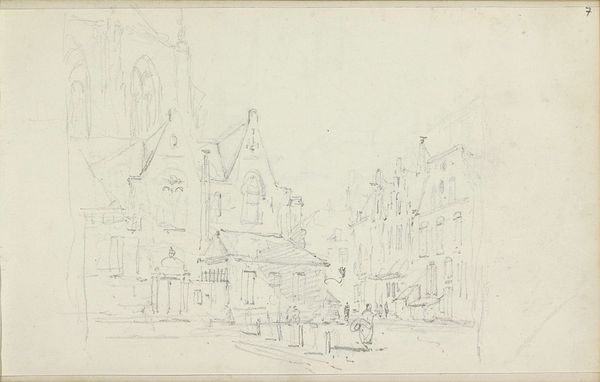
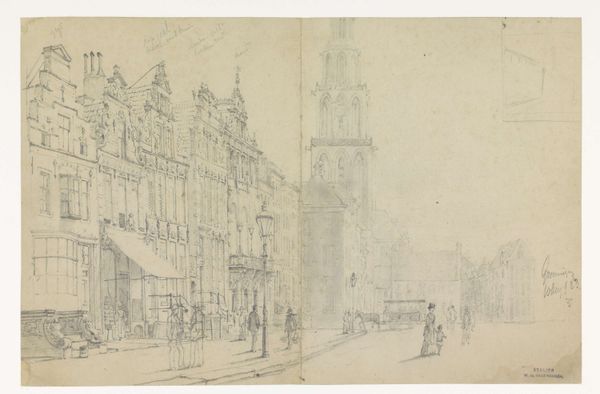
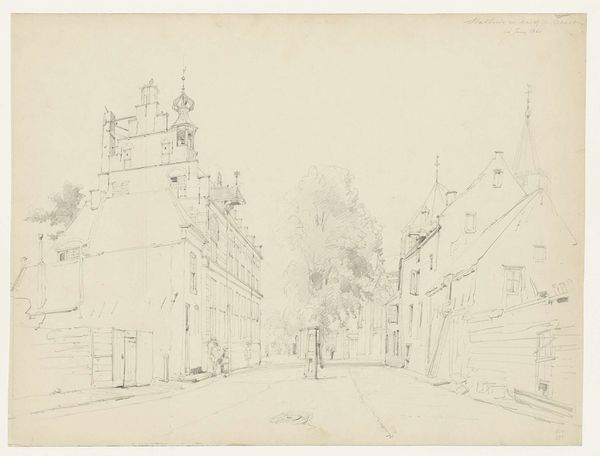
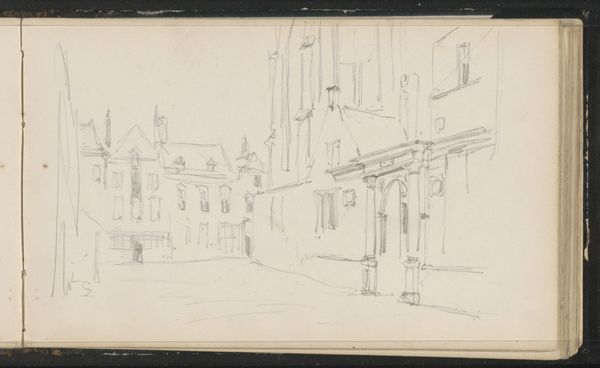
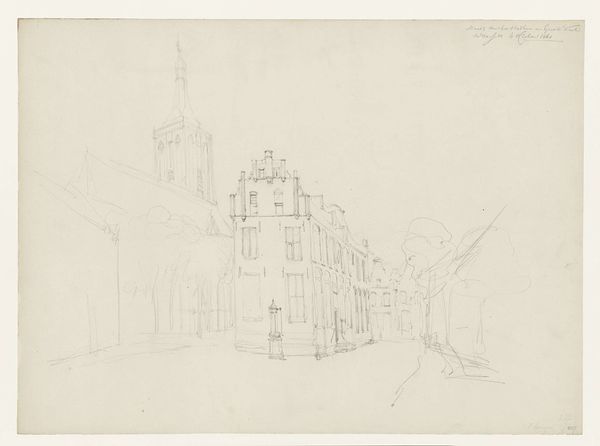
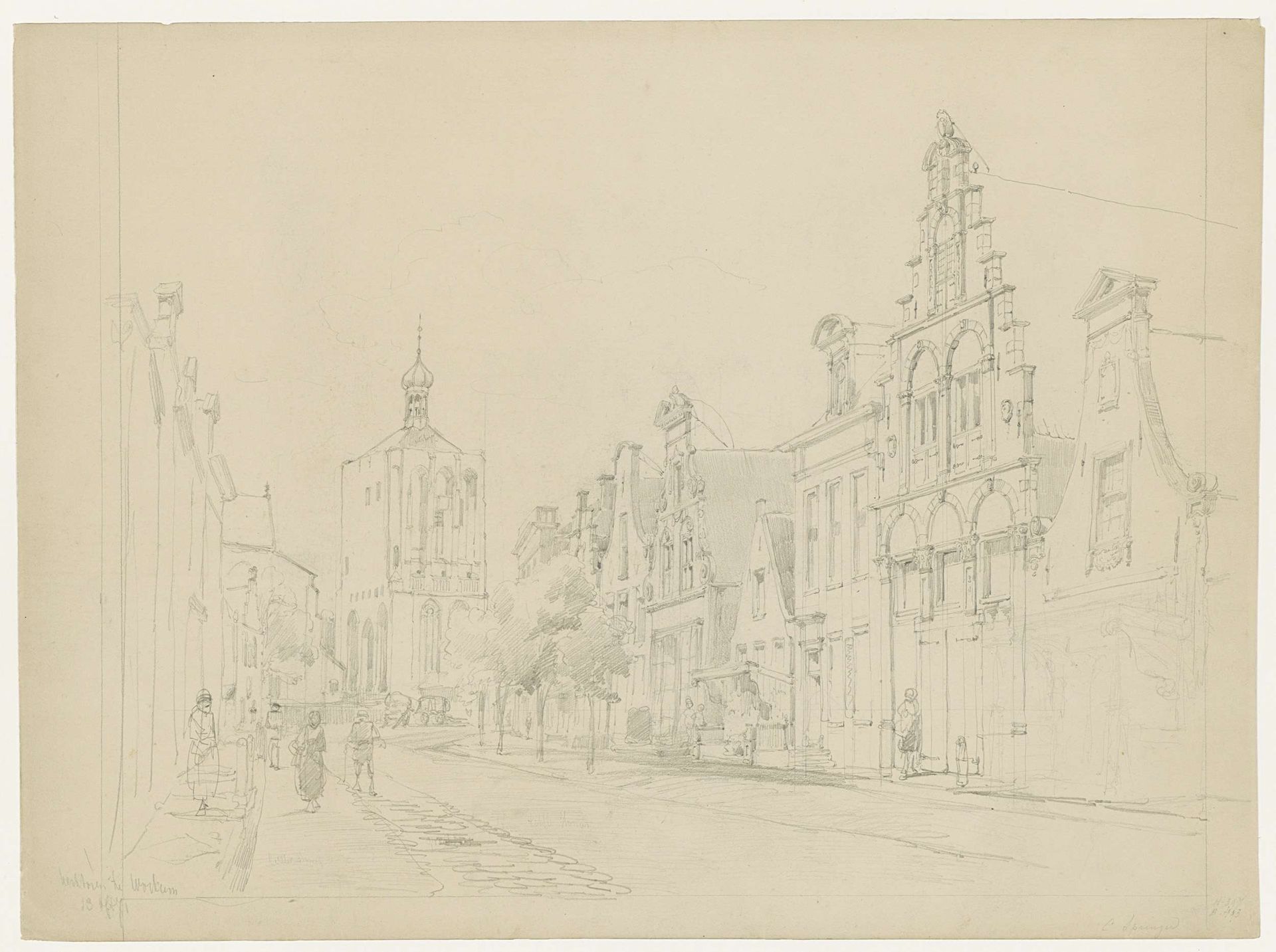
Cornelis Springer created this graphite drawing, "Gezicht te Workum," and it's now held at the Rijksmuseum. The composition is dominated by architectural forms meticulously rendered with delicate lines. The buildings, with their varying heights and intricate facades, line the street, creating a sense of depth emphasized by linear perspective. Springer's treatment of space is particularly interesting, with the street receding into the distance, drawing the viewer's eye towards the horizon. This calculated arrangement gives structure to the urban landscape. The sketch captures a moment frozen in time, the artist's hand evident in the precise yet subtle variations in line weight and shading. This formal approach to capturing the cityscape can be interpreted through the lens of structuralism, revealing an underlying order. The buildings and figures, as signs, contribute to a larger system that represents urban life. The drawing destabilizes any singular reading, inviting ongoing interpretation of its architectural and social space.

Artwork details
- Medium
- drawing, pencil
- Dimensions
- height 417 mm, width 562 mm
- Location
- Rijksmuseum
- Copyright
- Rijks Museum: Open Domain
Tags
Comments
Share your thoughts
About this artwork
Cornelis Springer created this graphite drawing, "Gezicht te Workum," and it's now held at the Rijksmuseum. The composition is dominated by architectural forms meticulously rendered with delicate lines. The buildings, with their varying heights and intricate facades, line the street, creating a sense of depth emphasized by linear perspective. Springer's treatment of space is particularly interesting, with the street receding into the distance, drawing the viewer's eye towards the horizon. This calculated arrangement gives structure to the urban landscape. The sketch captures a moment frozen in time, the artist's hand evident in the precise yet subtle variations in line weight and shading. This formal approach to capturing the cityscape can be interpreted through the lens of structuralism, revealing an underlying order. The buildings and figures, as signs, contribute to a larger system that represents urban life. The drawing destabilizes any singular reading, inviting ongoing interpretation of its architectural and social space.
Comments
Share your thoughts