About this artwork
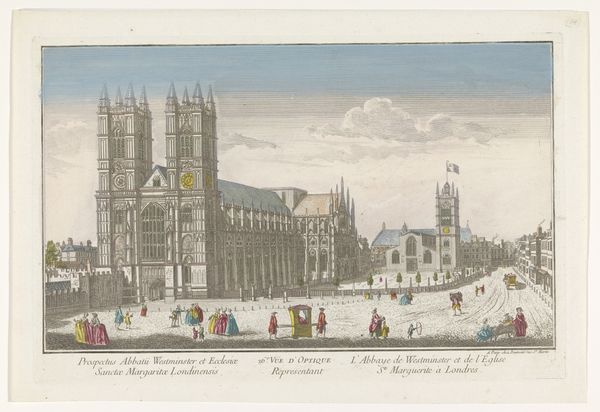
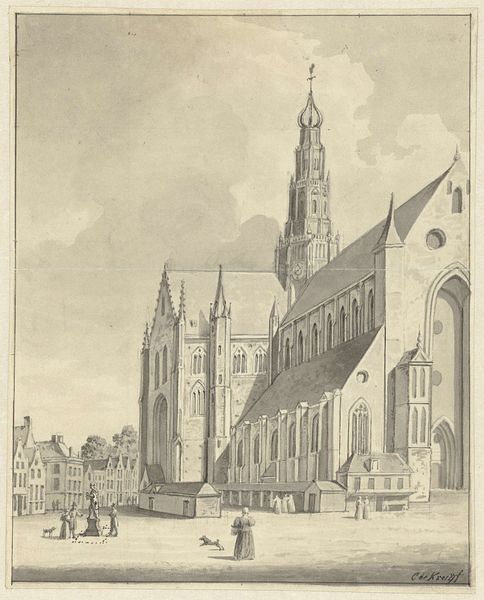
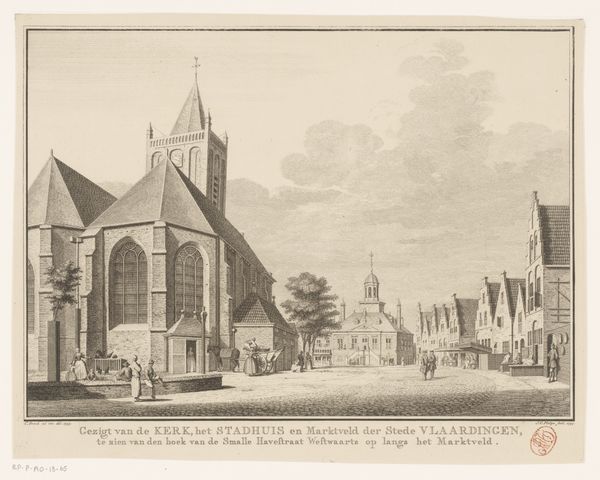
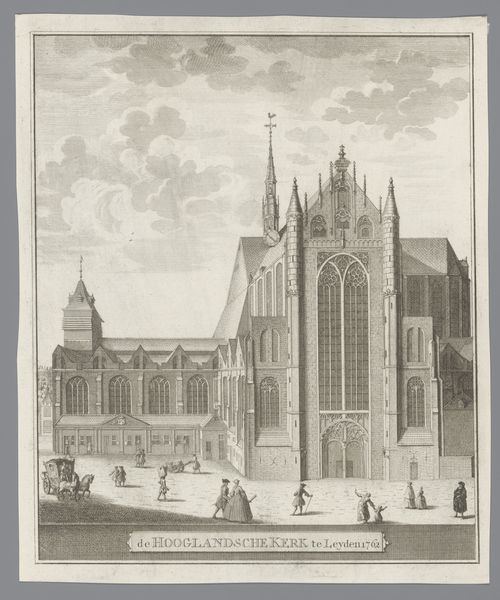
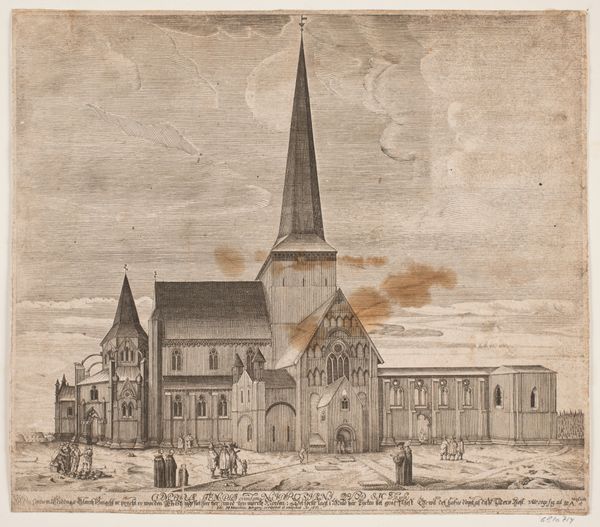
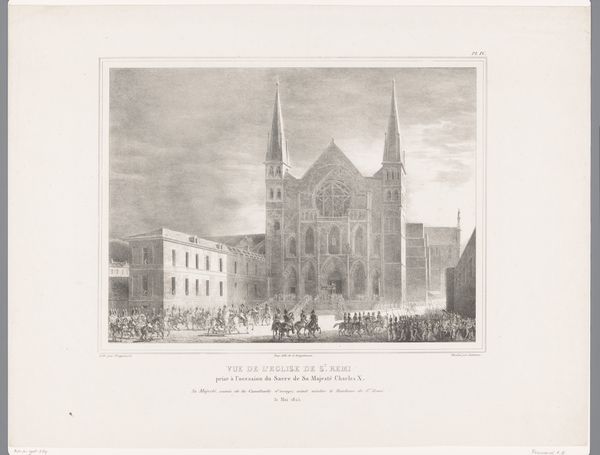
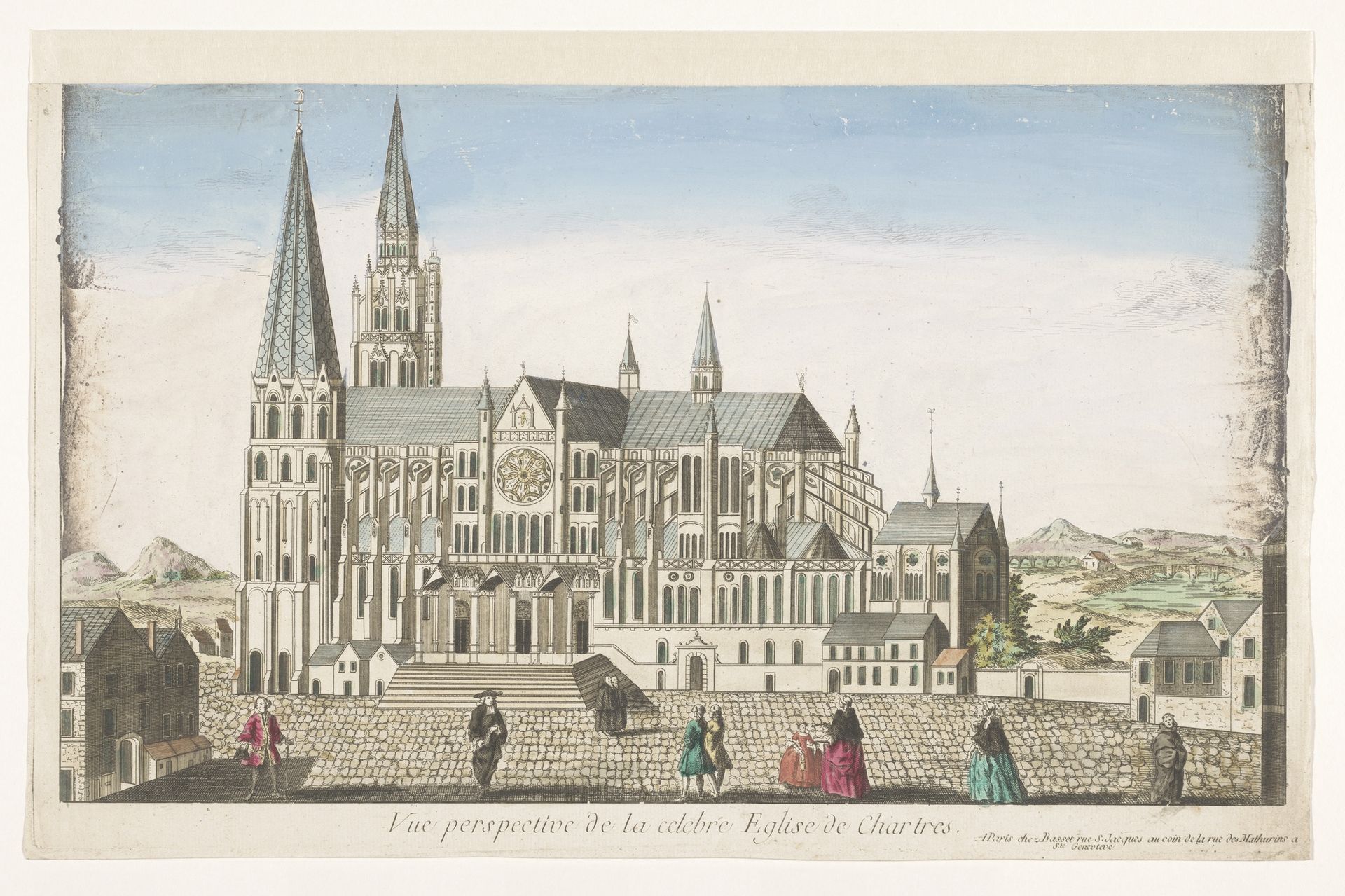
Curator: Standing before us is an 18th-century watercolor painting titled "Gezicht op de Kathedraal van Chartres." It is currently held in the Rijksmuseum. Editor: The composition is certainly striking; it's as though the artist intended for the cathedral to visually dominate the scene, the muted palette lends the landscape a dreamlike quality. Curator: It's attributed to Basset and renders the Chartres Cathedral with remarkable detail. Consider the rococo influence present in the meticulous architectural representation, yet we must not forget to question how such views become vehicles of power and social norms. Editor: Rococo and the Church – that juxtaposition creates a visual dialogue. Note the towering spires piercing the sky. In iconographic tradition, the cathedral and its spires represent the community reaching up towards spiritual transcendence. But tell me, how does this idealized perspective affect our contemporary understanding? Curator: The cityscape is, as you pointed out, idealized. This kind of landscape served to reify not only a literal geographic space, but it upheld an ideological terrain, a sort of imagined hierarchy where the Church held sway and citizenship revolved around conformity. I'm particularly interested in what this rendering might reveal about social identity and class in 18th-century France. The very act of viewing such a piece begs the question of who had the privilege to own it, and the implications that follow. Editor: Looking closely, one notices the tiny figures populating the foreground; seemingly undisturbed, they exist under this symbolic monolith. It brings into view the subtle interaction between institution and the individual. How potent visual language can be! Curator: Precisely. This piece underscores the entanglement between architecture, representation, and socio-political realities. There is power in visual art that must always be critiqued, not passively accepted. Editor: It prompts reflections on power, faith, and enduring legacy. A fascinating, if unsettling image.

Artwork details
- Medium
- painting, watercolor
- Dimensions
- height 286 mm, width 476 mm
- Location
- Rijksmuseum
- Copyright
- Rijks Museum: Open Domain
Tags
Comments
Share your thoughts
About this artwork
Curator: Standing before us is an 18th-century watercolor painting titled "Gezicht op de Kathedraal van Chartres." It is currently held in the Rijksmuseum. Editor: The composition is certainly striking; it's as though the artist intended for the cathedral to visually dominate the scene, the muted palette lends the landscape a dreamlike quality. Curator: It's attributed to Basset and renders the Chartres Cathedral with remarkable detail. Consider the rococo influence present in the meticulous architectural representation, yet we must not forget to question how such views become vehicles of power and social norms. Editor: Rococo and the Church – that juxtaposition creates a visual dialogue. Note the towering spires piercing the sky. In iconographic tradition, the cathedral and its spires represent the community reaching up towards spiritual transcendence. But tell me, how does this idealized perspective affect our contemporary understanding? Curator: The cityscape is, as you pointed out, idealized. This kind of landscape served to reify not only a literal geographic space, but it upheld an ideological terrain, a sort of imagined hierarchy where the Church held sway and citizenship revolved around conformity. I'm particularly interested in what this rendering might reveal about social identity and class in 18th-century France. The very act of viewing such a piece begs the question of who had the privilege to own it, and the implications that follow. Editor: Looking closely, one notices the tiny figures populating the foreground; seemingly undisturbed, they exist under this symbolic monolith. It brings into view the subtle interaction between institution and the individual. How potent visual language can be! Curator: Precisely. This piece underscores the entanglement between architecture, representation, and socio-political realities. There is power in visual art that must always be critiqued, not passively accepted. Editor: It prompts reflections on power, faith, and enduring legacy. A fascinating, if unsettling image.
Comments
Share your thoughts