About this artwork
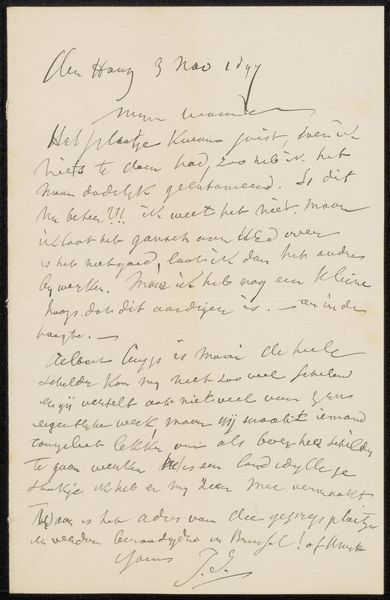
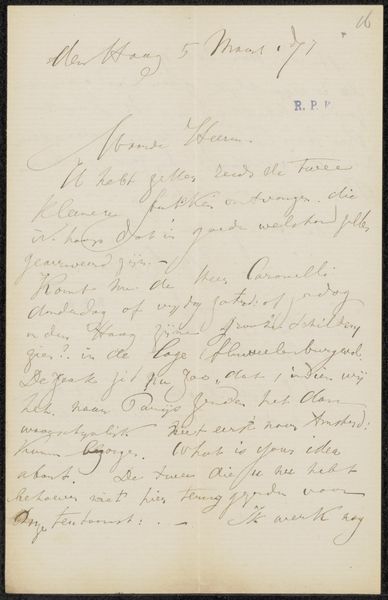
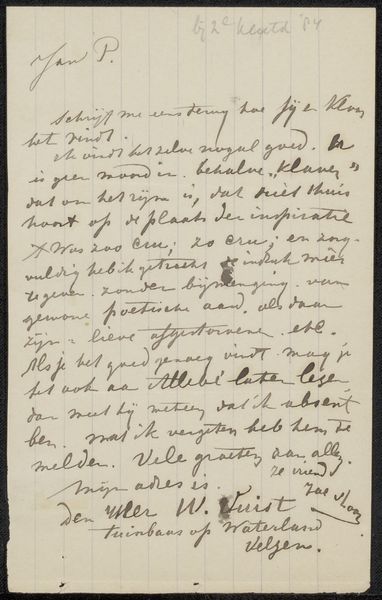
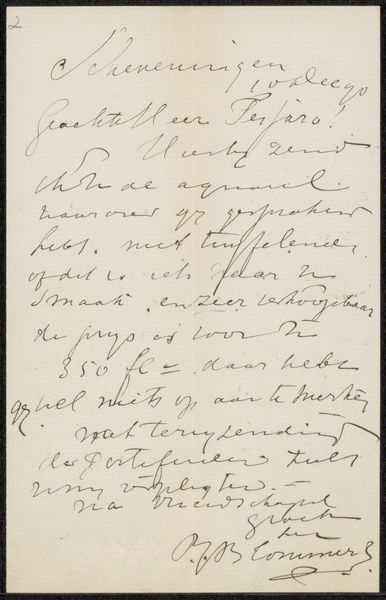
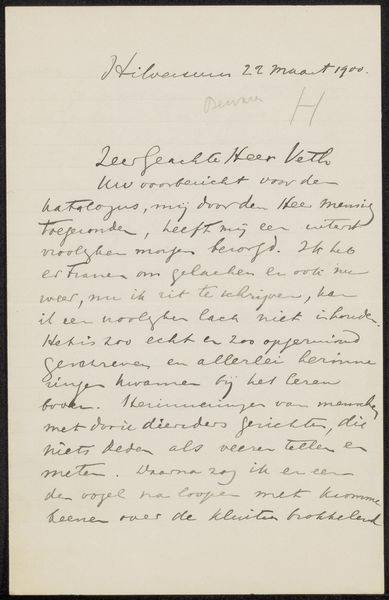
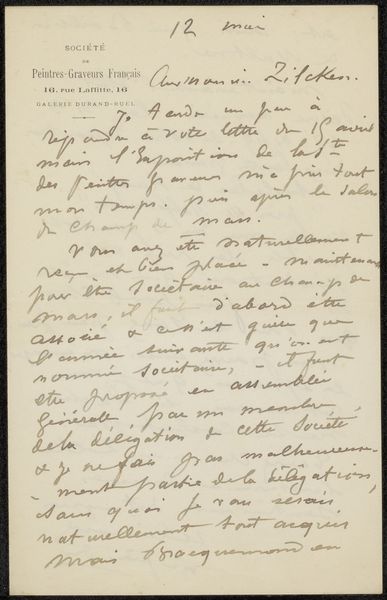
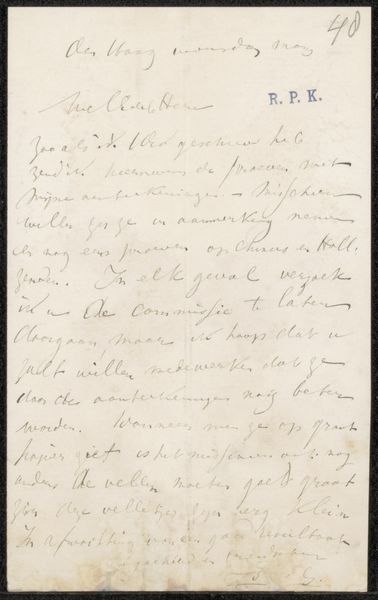
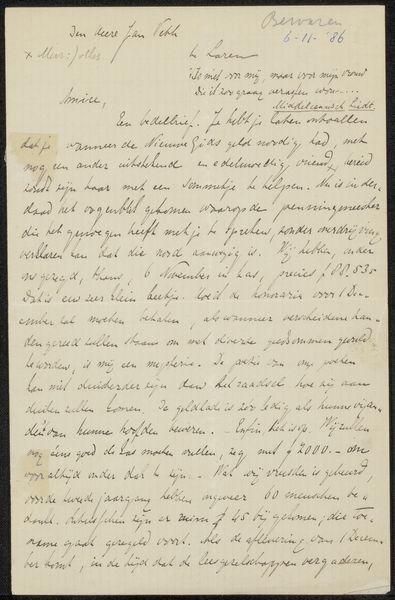
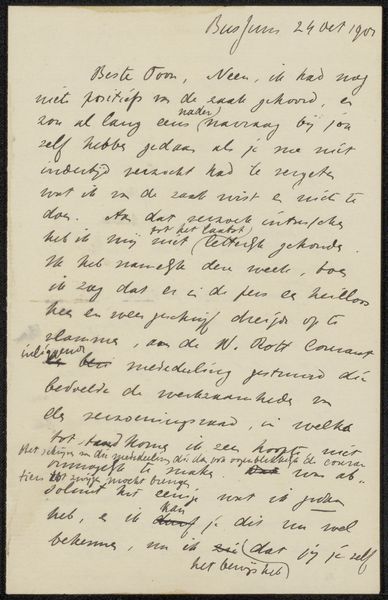
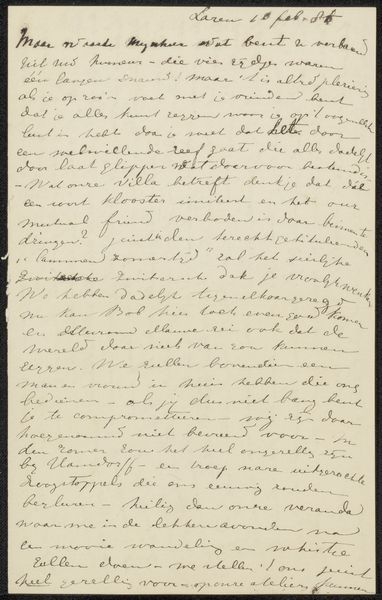
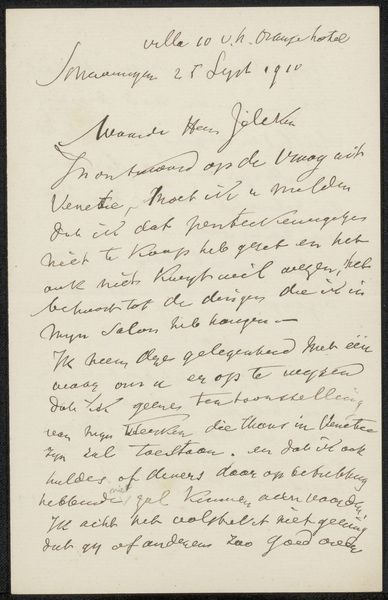
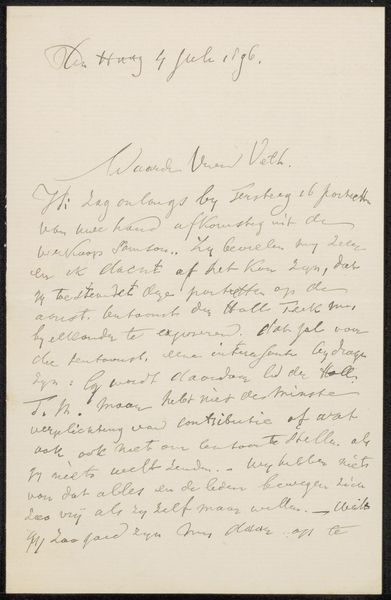
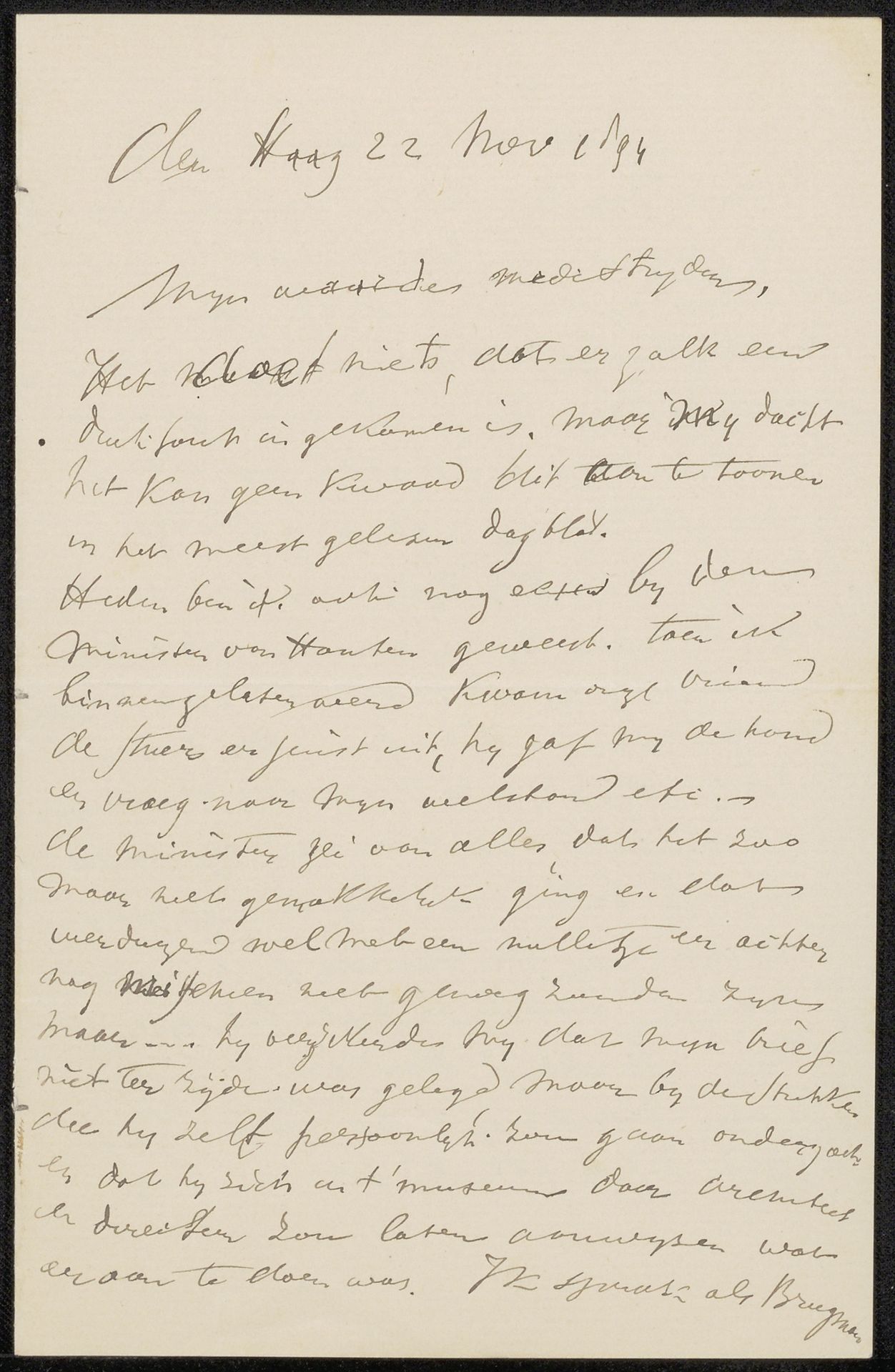
Jozef Israëls penned this letter to Jan Veth in The Hague on November 22, 1894, using iron gall ink on paper. Before the industrial revolution, iron gall ink, made from iron salts and tannins from vegetable sources, was the primary writing medium. Its formula was known since antiquity. The letter's appearance is deeply influenced by its materiality. The ink, fluid and dark, creates a strong contrast with the light paper, making the handwriting legible yet personal. The texture of the paper, though smooth enough for writing, absorbs the ink, giving the lines a slightly feathered edge. This reflects the direct, physical interaction between the writer, the tool, and the material. The act of handwriting itself carries significant social and cultural weight, indicative of a level of literacy and personal expression that was not universally accessible. This direct form of communication contrasts sharply with our contemporary digital methods, highlighting how materials and processes are inherently linked to social practices and historical context.

Artwork details
- Medium
- drawing, paper, ink, pen
- Location
- Rijksmuseum
- Copyright
- Rijks Museum: Open Domain
Tags
drawing
hand-lettering
hand drawn type
paper
personal sketchbook
ink
pen work
pen
Comments
No comments
About this artwork
Jozef Israëls penned this letter to Jan Veth in The Hague on November 22, 1894, using iron gall ink on paper. Before the industrial revolution, iron gall ink, made from iron salts and tannins from vegetable sources, was the primary writing medium. Its formula was known since antiquity. The letter's appearance is deeply influenced by its materiality. The ink, fluid and dark, creates a strong contrast with the light paper, making the handwriting legible yet personal. The texture of the paper, though smooth enough for writing, absorbs the ink, giving the lines a slightly feathered edge. This reflects the direct, physical interaction between the writer, the tool, and the material. The act of handwriting itself carries significant social and cultural weight, indicative of a level of literacy and personal expression that was not universally accessible. This direct form of communication contrasts sharply with our contemporary digital methods, highlighting how materials and processes are inherently linked to social practices and historical context.
Comments
No comments