About this artwork
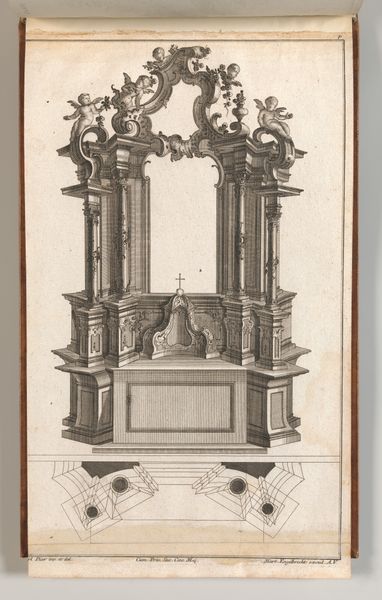
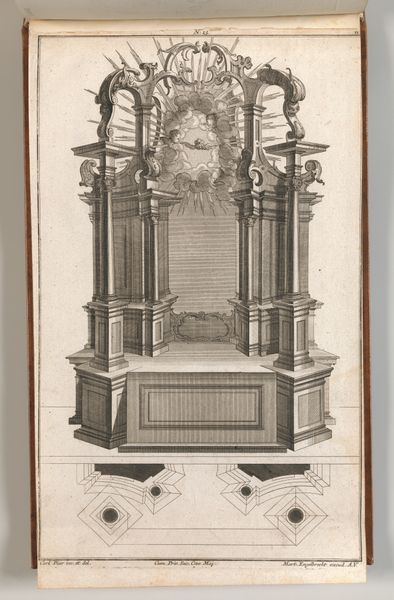
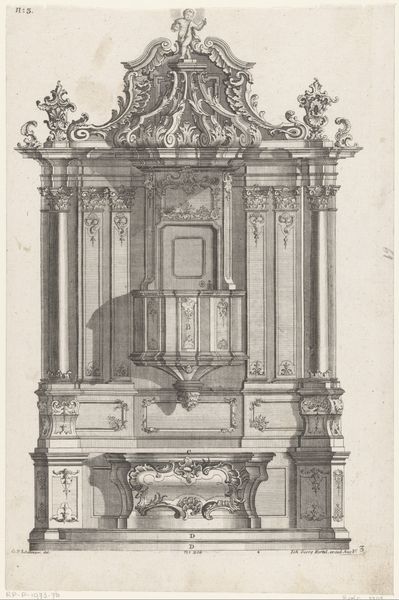
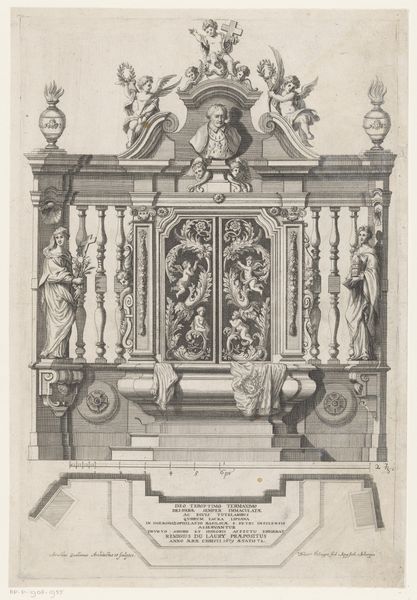
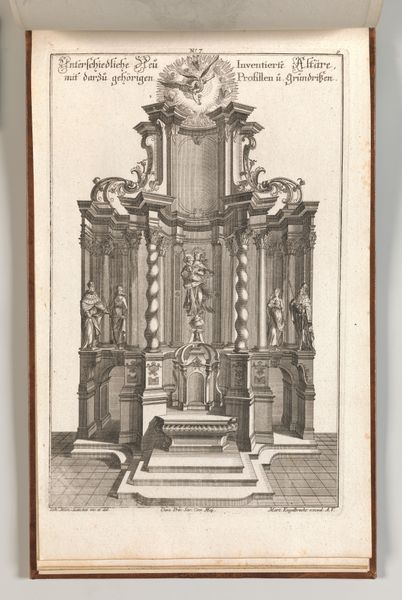
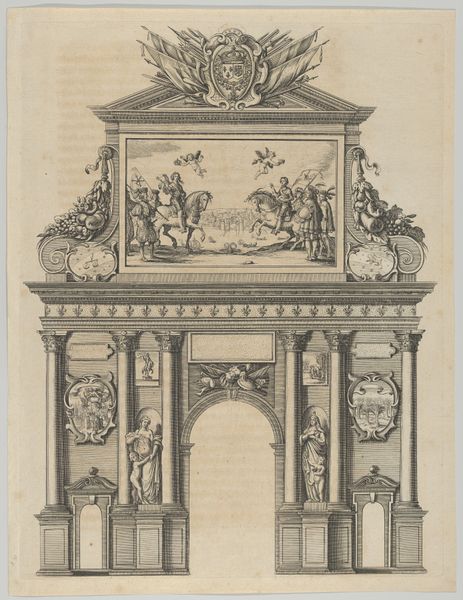
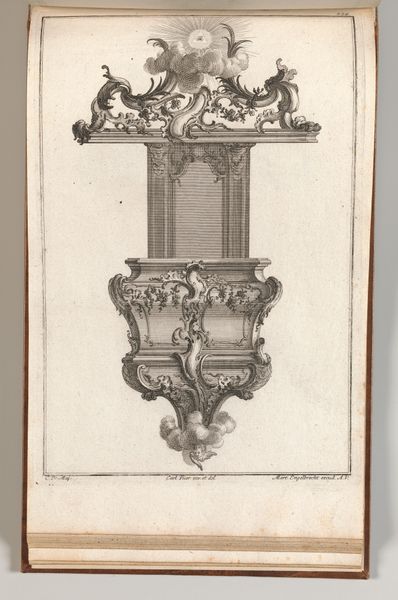
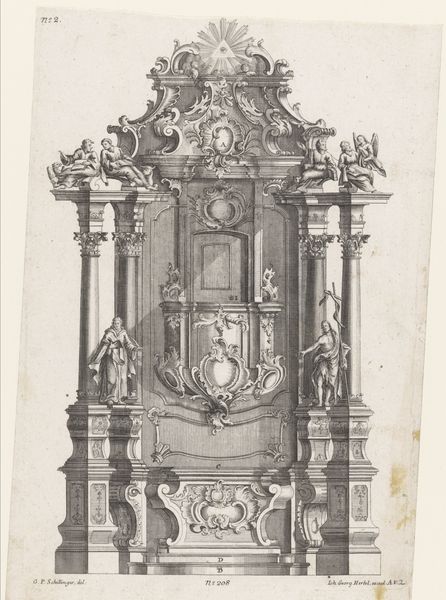
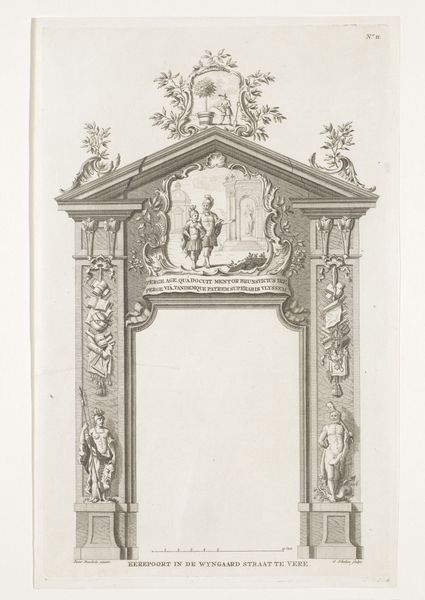
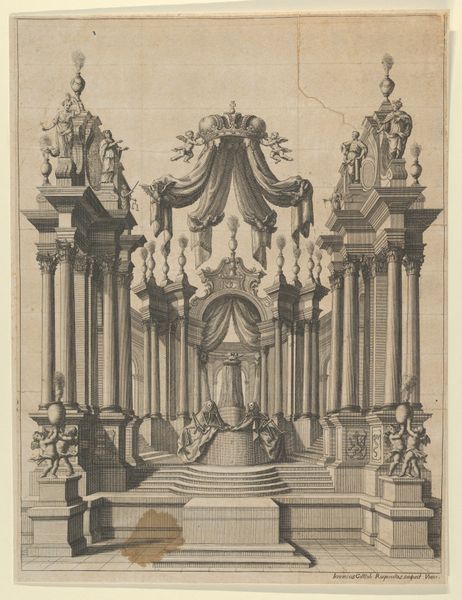
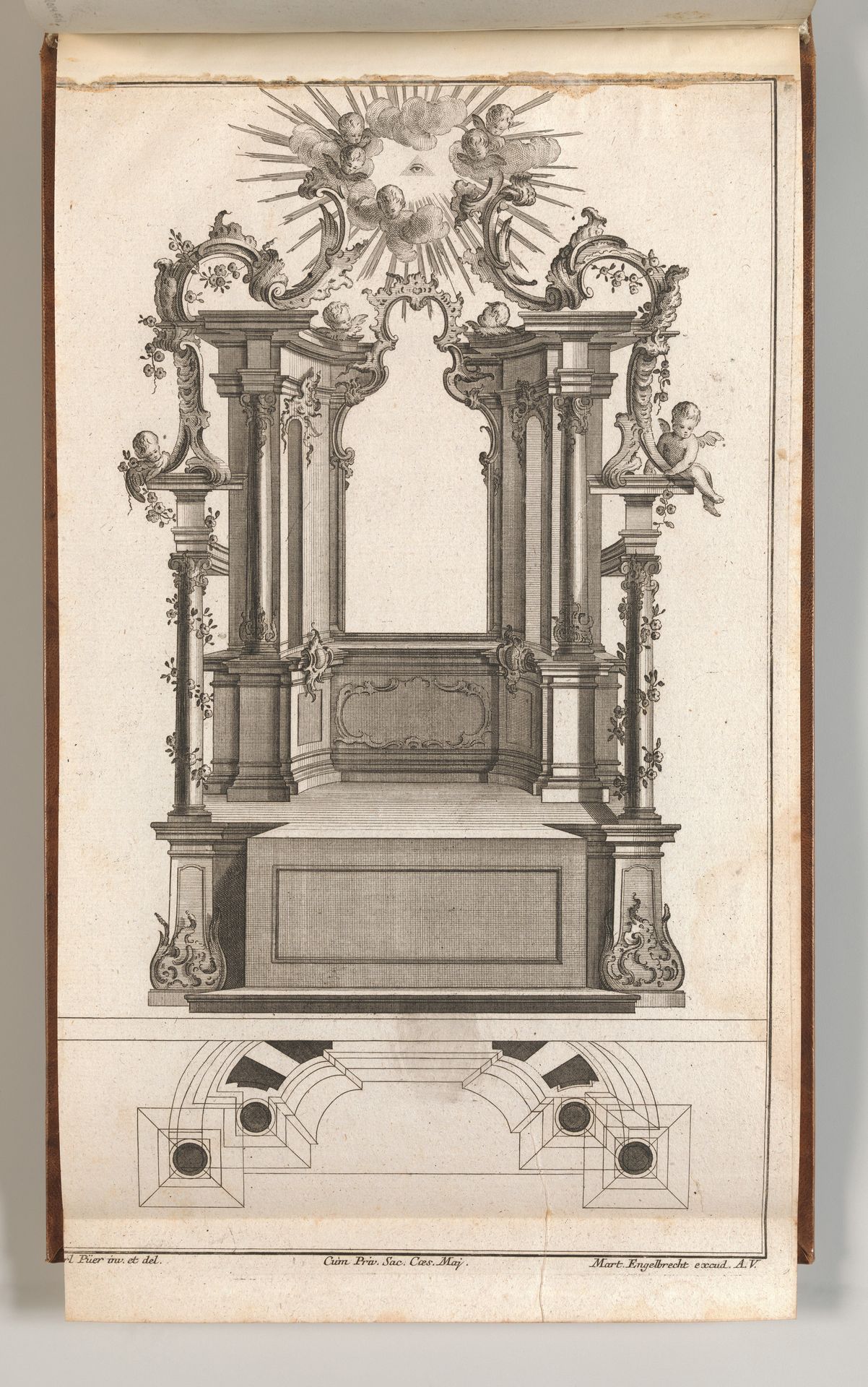
This is Jacob Gottlieb Thelot's 'Design for a Monumental Altar', a detailed print showcasing an elaborate altar design. The composition is dominated by symmetrical, vertical lines and structured forms, conveying a sense of architectural grandeur. Notice how Thelot employs contrasting textures, from the smooth surfaces of the columns to the intricate patterns of the ornamentation. This visual language can be decoded through structuralism, where the artwork functions as a system of signs, with each element – the cherubs, the floral motifs, the geometric base – contributing to a larger symbolic order. The visual tension between the solid architectural elements and the ethereal, radiant clouds above destabilizes the fixed meaning of religious space. It invites contemplation on the relationship between the earthly and the divine. Consider how this elaborate formal structure not only serves an aesthetic purpose but also engages with philosophical discourses on representation, power, and perception.
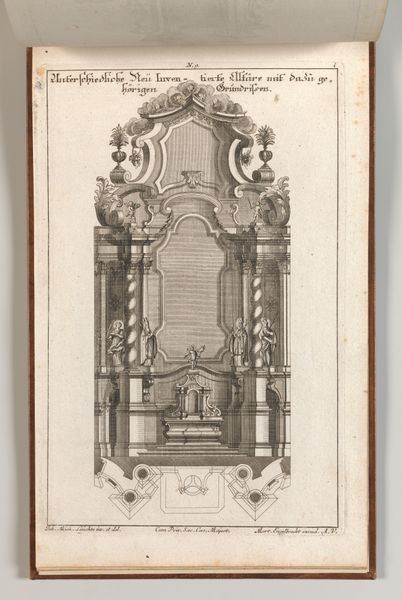
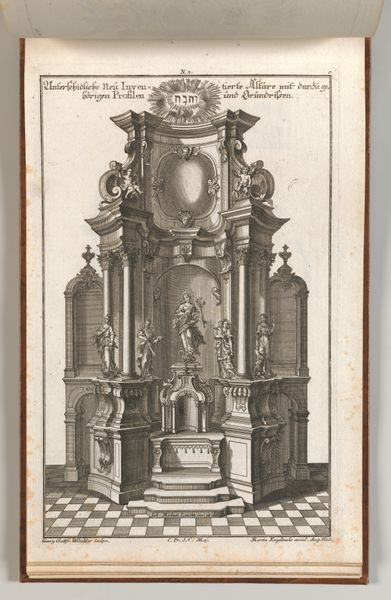
Design for a Monumental Altar, Plate 'o' (?) from 'Unterschiedliche Neu Inventierte Altäre mit darzu gehörigen Profillen u. Grundrißen.'
1745 - 1755

Jacob Gottlieb Thelot
@jacobgottliebthelot
The Metropolitan Museum of Art
Metropolitan Museum of Art, New York, NYArtwork details
- Medium
- drawing, print, engraving, architecture
- Dimensions
- Overall: 8 7/16 × 13 3/4 in. (21.5 × 35 cm)
- Location
- Metropolitan Museum of Art, New York, NY
- Copyright
- Public Domain
Tags
Comments
Share your thoughts
About this artwork
This is Jacob Gottlieb Thelot's 'Design for a Monumental Altar', a detailed print showcasing an elaborate altar design. The composition is dominated by symmetrical, vertical lines and structured forms, conveying a sense of architectural grandeur. Notice how Thelot employs contrasting textures, from the smooth surfaces of the columns to the intricate patterns of the ornamentation. This visual language can be decoded through structuralism, where the artwork functions as a system of signs, with each element – the cherubs, the floral motifs, the geometric base – contributing to a larger symbolic order. The visual tension between the solid architectural elements and the ethereal, radiant clouds above destabilizes the fixed meaning of religious space. It invites contemplation on the relationship between the earthly and the divine. Consider how this elaborate formal structure not only serves an aesthetic purpose but also engages with philosophical discourses on representation, power, and perception.
Comments
Share your thoughts