About this artwork
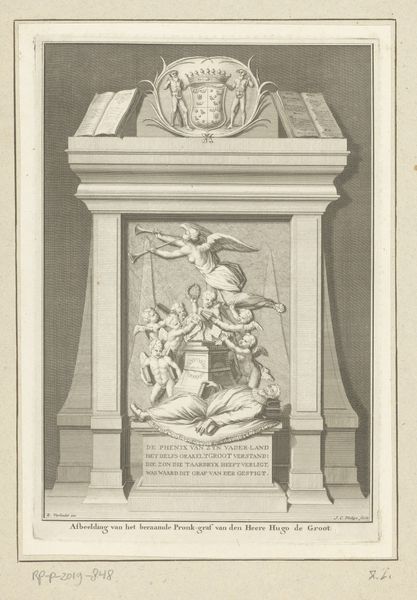
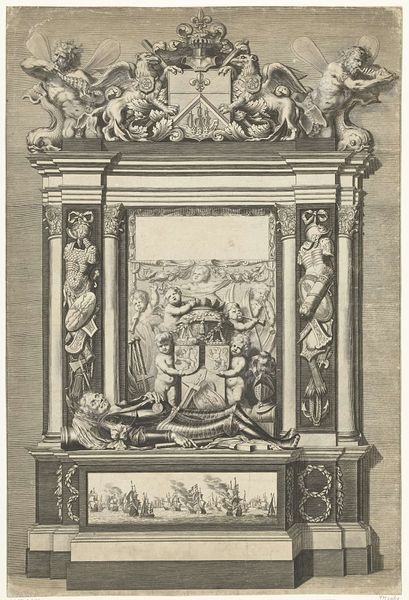
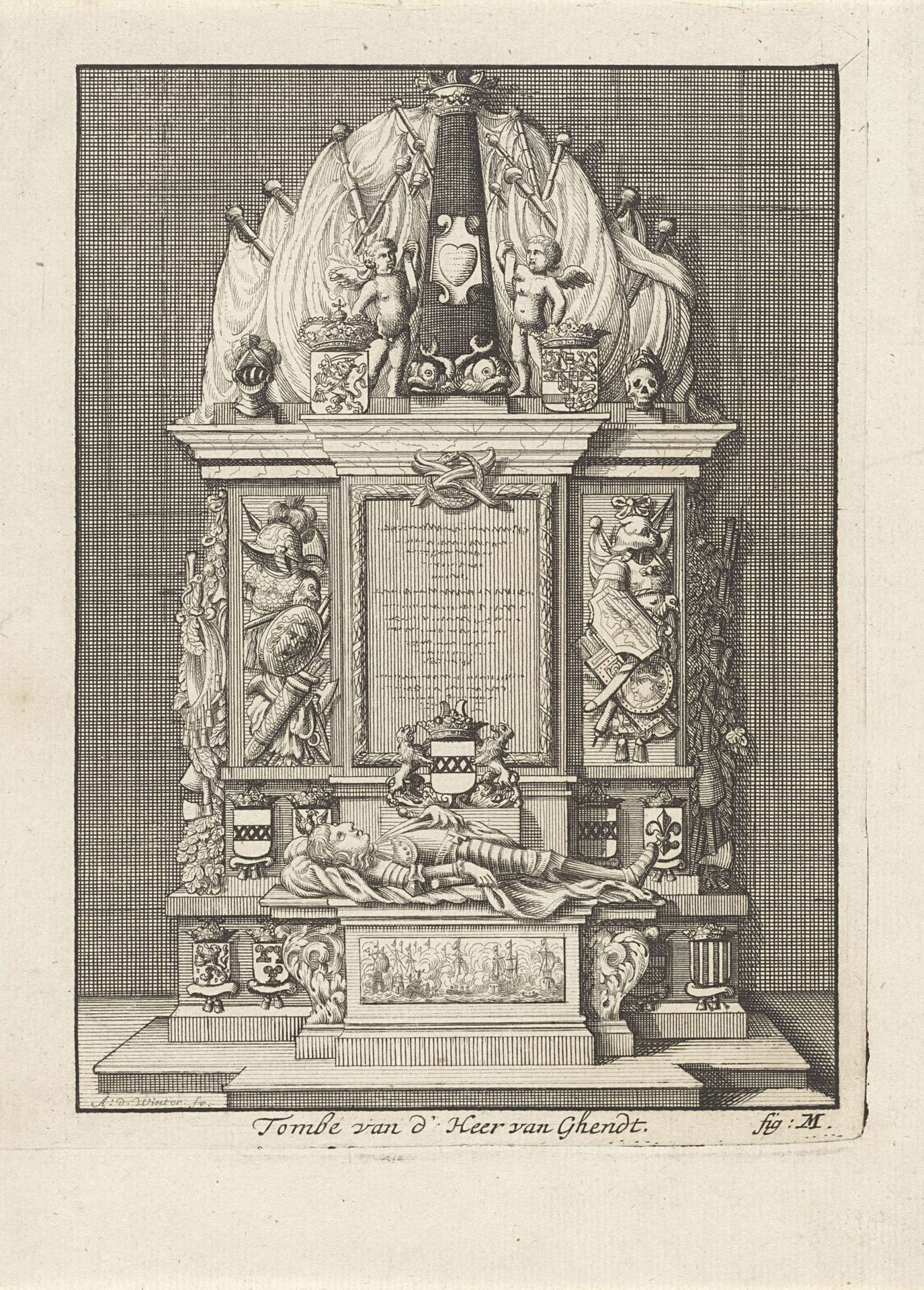
This engraving by Anthonie de Winter depicts the tomb of Willem Joseph, Baron van Gendt. It is filled with symbols of death and nobility. Above the epitaph, cherubs stand guard next to a heart, and on the sides, skulls sit ominously. The figure of the cherub, derived from the Greco-Roman Cupid, recurs throughout art history, often associated with love and innocence. Yet here, it stands alongside symbols of death, revealing a complex interplay between life and mortality. We see this cherubic figure again and again, not just in memorial art but in secular celebrations of love and desire, from Renaissance paintings to Valentine's Day cards. This endurance speaks to a deep-seated human drive to reconcile opposing forces: love and death, innocence and experience. Consider how the artist merges these potent symbols to remind us of life's transient nature, engaging our subconscious with the emotional power of mortality. The image is not merely a depiction of death but an invitation to contemplate life's cyclical progression.
Graftombe van Willem Joseph baron van Gendt
1672 - 1690

Anthonie de Winter
1653 - 1707Location
RijksmuseumArtwork details
- Medium
- engraving
- Dimensions
- height 213 mm, width 155 mm
- Location
- Rijksmuseum
- Copyright
- Rijks Museum: Open Domain
Tags
Comments
Share your thoughts
About this artwork
This engraving by Anthonie de Winter depicts the tomb of Willem Joseph, Baron van Gendt. It is filled with symbols of death and nobility. Above the epitaph, cherubs stand guard next to a heart, and on the sides, skulls sit ominously. The figure of the cherub, derived from the Greco-Roman Cupid, recurs throughout art history, often associated with love and innocence. Yet here, it stands alongside symbols of death, revealing a complex interplay between life and mortality. We see this cherubic figure again and again, not just in memorial art but in secular celebrations of love and desire, from Renaissance paintings to Valentine's Day cards. This endurance speaks to a deep-seated human drive to reconcile opposing forces: love and death, innocence and experience. Consider how the artist merges these potent symbols to remind us of life's transient nature, engaging our subconscious with the emotional power of mortality. The image is not merely a depiction of death but an invitation to contemplate life's cyclical progression.
Comments
Share your thoughts