About this artwork
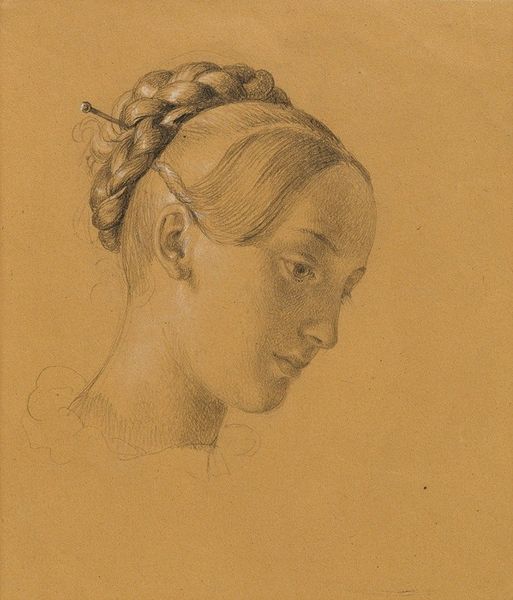
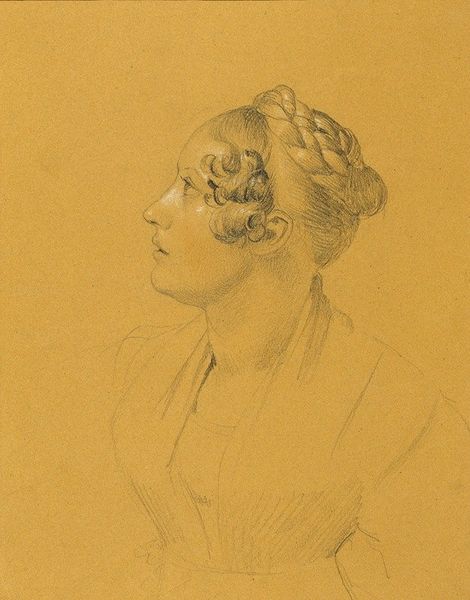
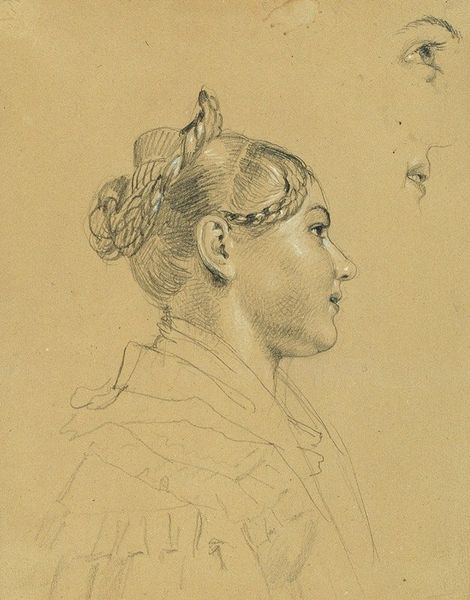
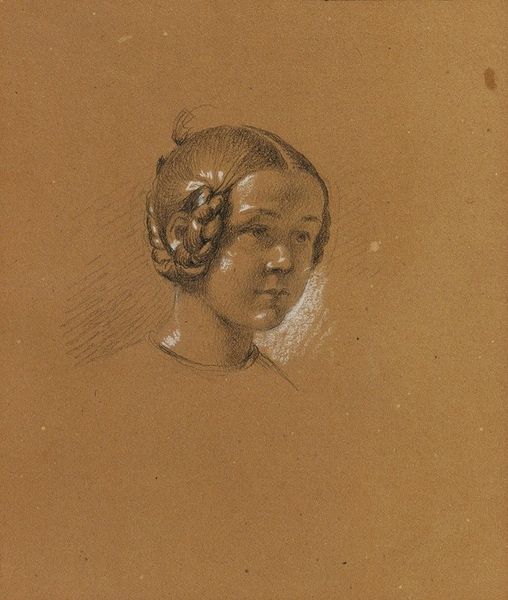
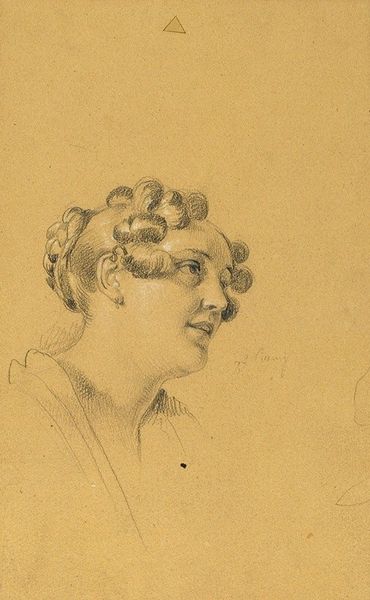
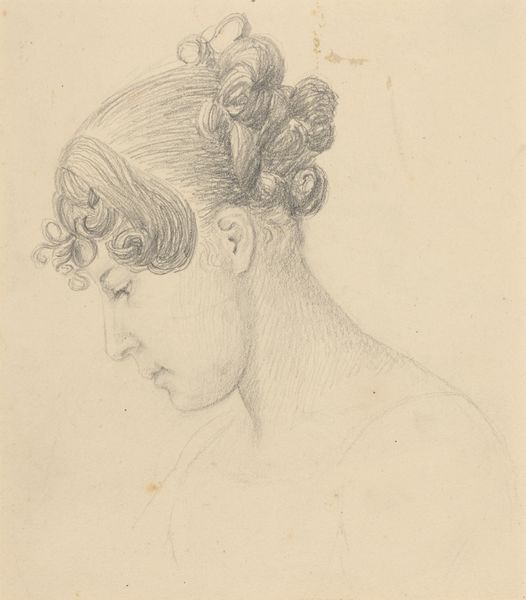
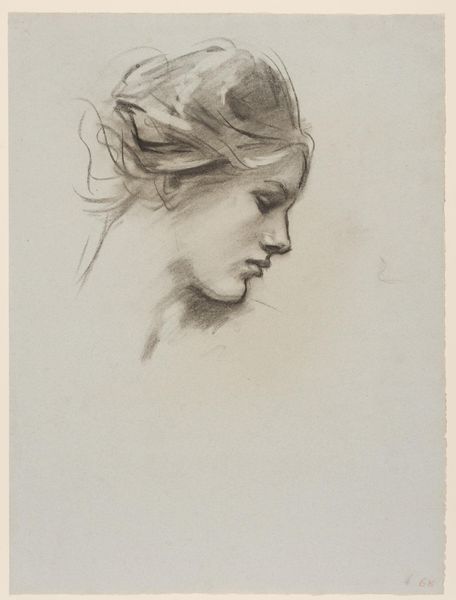
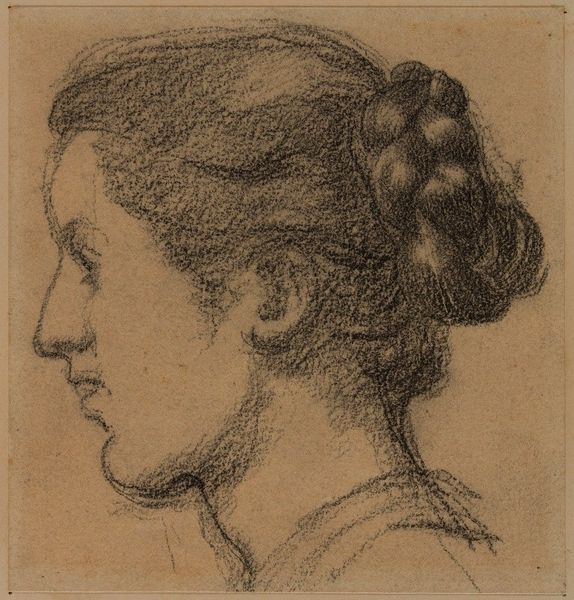
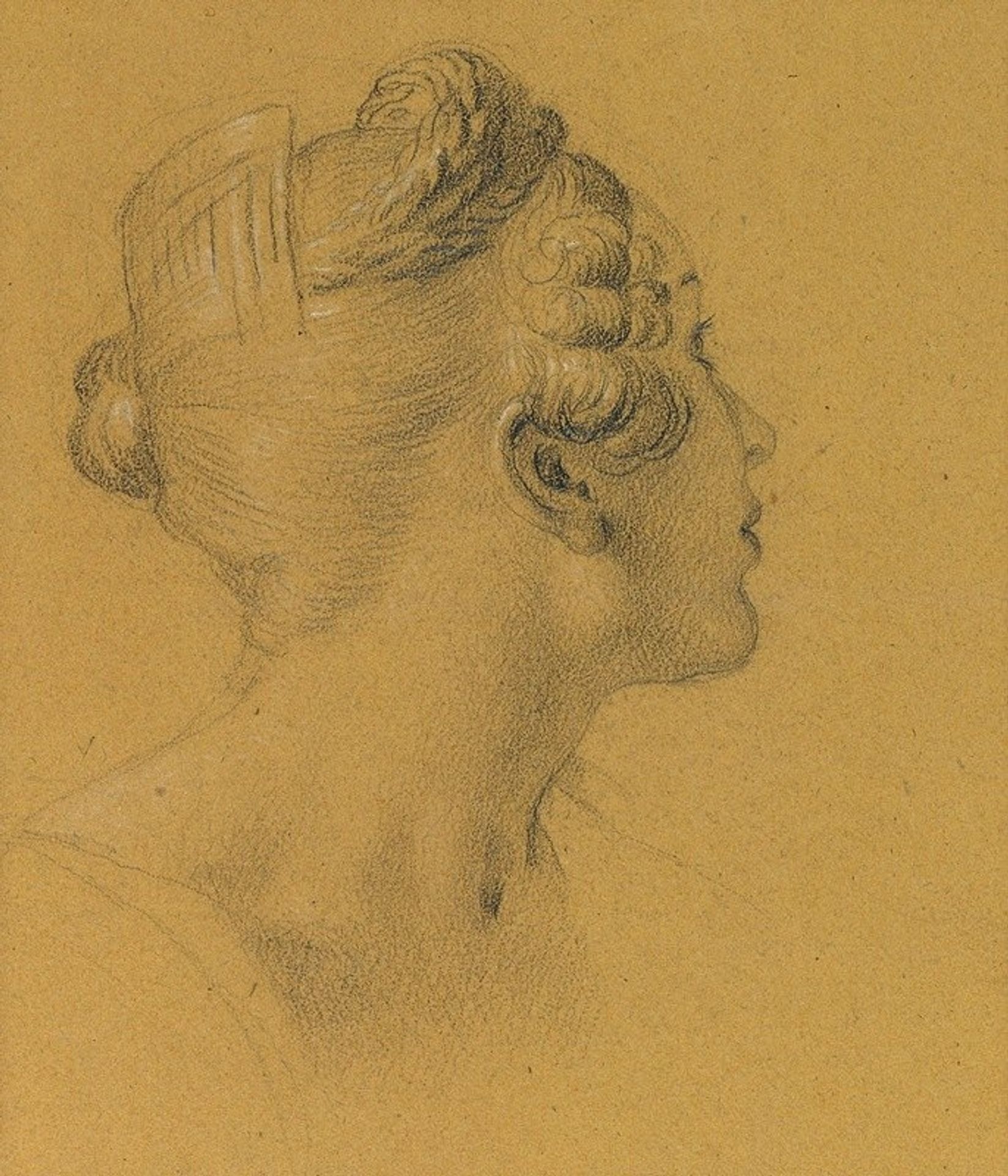
Johann Peter Krafft created this study of a female figure for wall paintings in the Hofburg using pencil on paper. The initial impression is the contrast between the soft gray lines of the figure against the warm, solid backdrop. Krafft masterfully employs the graphic qualities of the pencil to capture the texture and form of the subject. The delicate, curved lines describe the contours of her face and neck, while denser, layered strokes define the intricate arrangement of her hair. The subject's hairstyle and serene profile evoke classical sculpture, reflecting Neoclassical artistic principles of order, reason and symmetry, prevalent during the early 19th century. The lack of color directs our attention to the play of light and shadow, modeled through the careful application of graphite. This piece operates within a historical and cultural context where art served to idealize beauty. Ultimately, the drawing serves as a study, yet its formal qualities elevate it to a work of art.
Weibliche Studie zu den Wandgemälden in der Hofburg before 1828

Artwork details
- Medium
- drawing, pencil
- Copyright
- Public Domain: Artvee
Tags
portrait
drawing
neoclacissism
pencil sketch
charcoal drawing
pencil drawing
pencil
portrait drawing
facial study
academic-art
Comments
No comments
About this artwork
Johann Peter Krafft created this study of a female figure for wall paintings in the Hofburg using pencil on paper. The initial impression is the contrast between the soft gray lines of the figure against the warm, solid backdrop. Krafft masterfully employs the graphic qualities of the pencil to capture the texture and form of the subject. The delicate, curved lines describe the contours of her face and neck, while denser, layered strokes define the intricate arrangement of her hair. The subject's hairstyle and serene profile evoke classical sculpture, reflecting Neoclassical artistic principles of order, reason and symmetry, prevalent during the early 19th century. The lack of color directs our attention to the play of light and shadow, modeled through the careful application of graphite. This piece operates within a historical and cultural context where art served to idealize beauty. Ultimately, the drawing serves as a study, yet its formal qualities elevate it to a work of art.
Comments
No comments