1827 - 1828
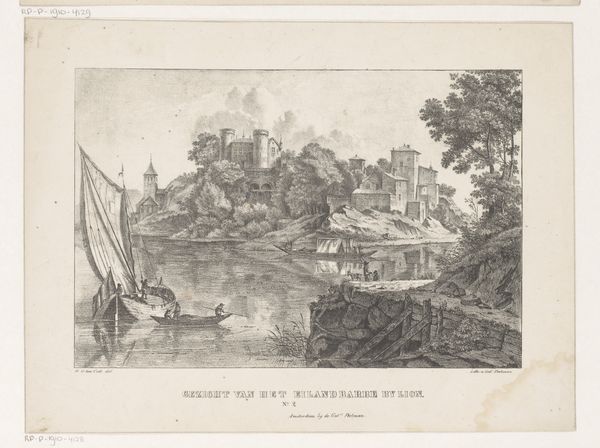
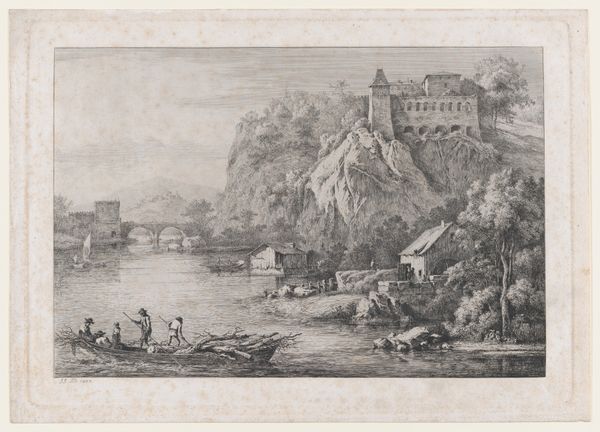
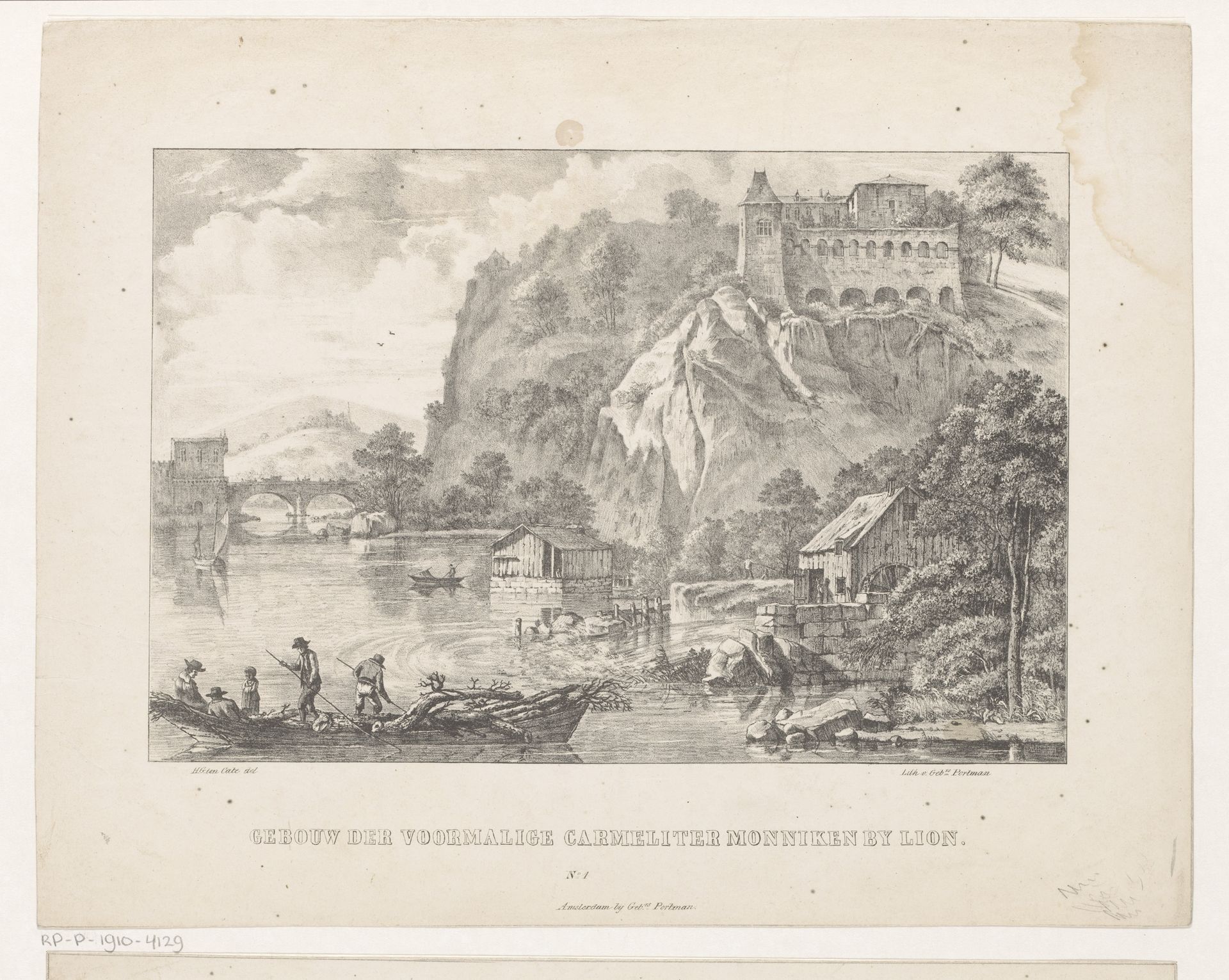
Gezicht op karmelietenklooster nabij Lyon

Listen to curator's interpretation
Curatorial notes
Editor: Here we have Hendrik Gerrit ten Cate's "View of a Carmelite Monastery near Lyon," made around 1827-1828 using engraving and pen. The landscape is peaceful, but there's a certain tension in the sharp contrasts of light and shadow. What elements of its composition stand out to you? Curator: The interplay between line and tone is certainly prominent. Notice how the meticulous engraving technique renders texture: the rough stone of the monastery, the ripples on the water. The composition, furthermore, creates a distinct contrast, vertically dissecting and separating the ruggedness of nature below and the geometric architecture sitting higher up. Editor: So the structure of the image itself, with the lines and contrast, creates that tension I felt? Curator: Precisely. And consider the use of line weight. See how the foreground figures are delineated with heavier lines, creating a sense of immediacy and anchoring the viewer, while the monastery, rendered with finer lines, recedes into a dreamlike distance, adding another compositional layer? Editor: It’s like the artist is inviting us to consider this building from afar. It makes me think about distance, longing, and nostalgia. I initially felt an imbalance between the top and bottom, but the perspective point really forces a harmonious interplay to take hold! Curator: Yes, and beyond the emotive quality you recognize, consider its structural purpose. How do you interpret the artist's choices in organizing line, tone, and compositional techniques, in establishing focal points? Editor: Well, by employing all these meticulous visual elements the artist does construct a rich, balanced and self-referential composition that transcends merely representing a landscape. I find myself increasingly drawn to analyze art not just for its content but for its construction, line by line. Curator: I'm gratified you have noted and considered my argument. Visual expression is so complex. It reflects an engagement with material reality and aesthetic potential in equal measure.