About this artwork
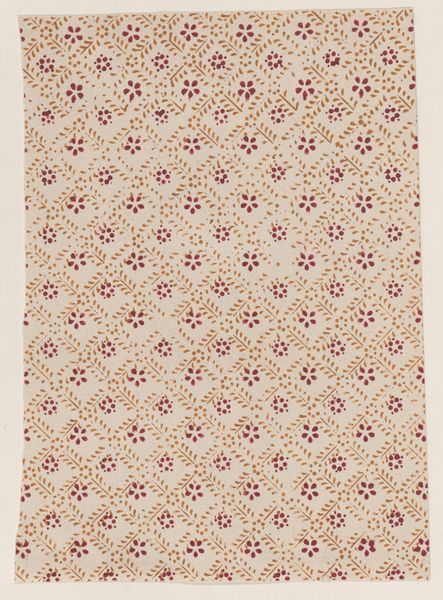
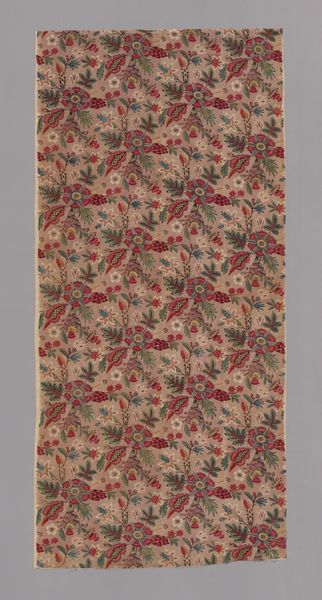
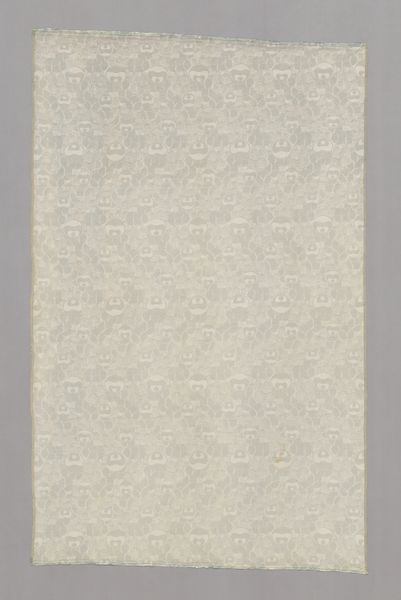
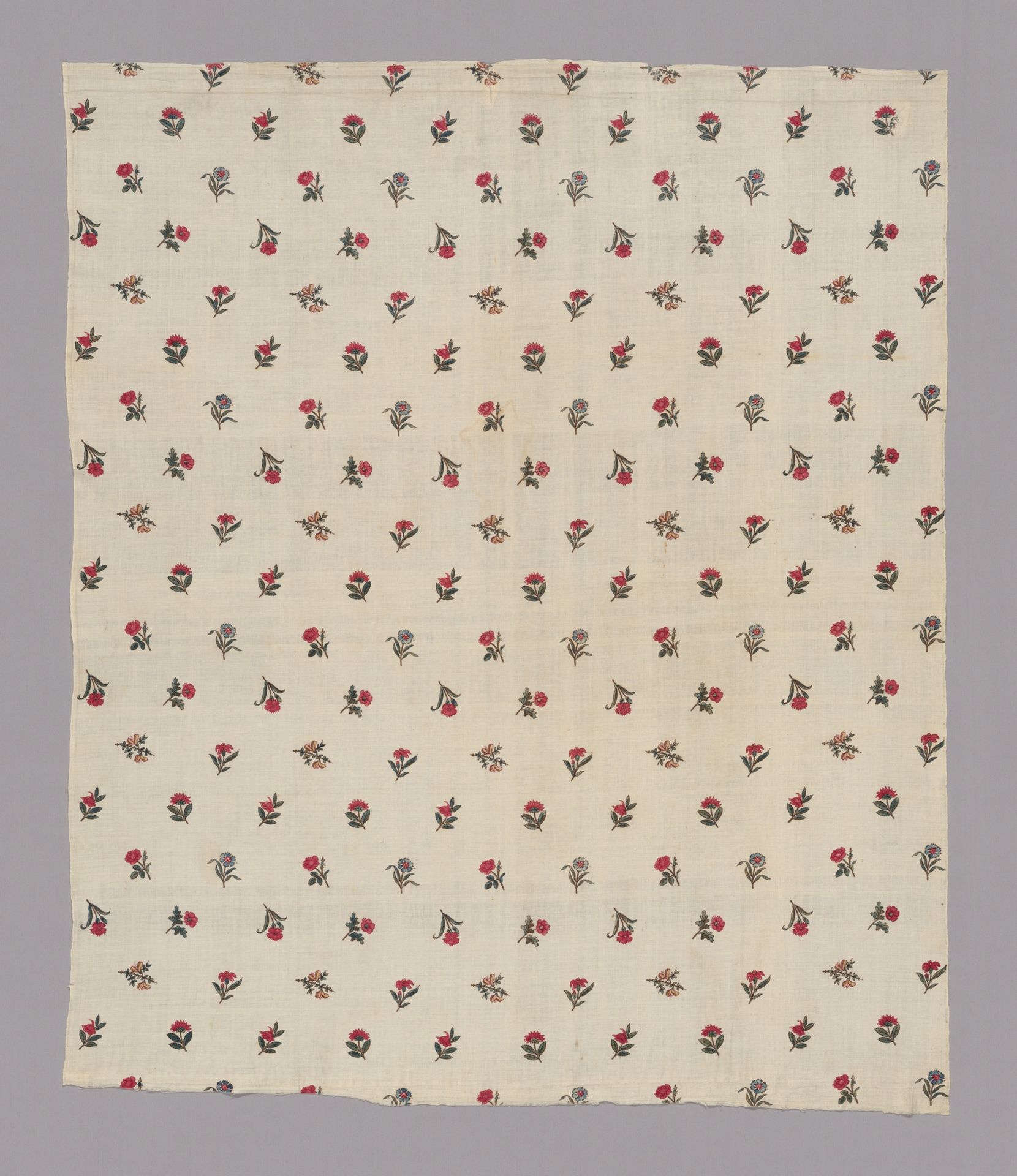
Editor: Here we have a "Length of Dress Fabric" created around 1785 by the Oberkampf Manufactory. It's a textile piece. It has a charming, delicate feel with all of its tiny flowers. What do you see in this piece, and what meanings might it hold beyond its surface appearance? Curator: Indeed, it seems light and airy at first glance. But consider what textiles represented in the 18th century. Beyond mere decoration, dress fabrics acted as signifiers of social status, taste, and even political affiliation. The regularity of the pattern hints at the industrialization creeping into even the most intimate aspects of life, namely one's clothing. How do you feel the artist uses the motif? Editor: Well, the flowers, while pretty, do feel a bit… repetitive. Like they've lost some of their naturalism. I suppose that links to your point about industrialization? It feels like nature being turned into a commodity. Curator: Precisely! And think about the tradition of floral symbolism itself. Roses, like the ones here, can represent love and beauty, but also secrecy and transience. In the hands of a skilled artisan, even mass-produced images carry a symbolic weight. How does this knowledge transform your understanding of the artwork? Editor: I see it differently now. It's not just a pretty pattern, but a complex statement about society at that time. The flowers aren't just flowers; they are ciphers with cultural context. I didn't realize it could contain such layered meaning. Curator: Absolutely, images are more than what they seem! Looking closely at patterns reveals complex worlds and can tell us so much about both ourselves and our history. Editor: It really changes the way I’ll look at fabric from now on.
Length of Dress Fabric
c. 1785


Artwork details
- Medium
- print, weaving, textile
- Dimensions
- 104.1 × 88.1 cm (41 × 34 3/4 in.) Repeat: 22.3 cm (8 7/8 in.)
- Location
- The Art Institute of Chicago
- Copyright
- Public Domain
Tags
fashion mockup
weaving
textile
flower
fashion and textile design
text
pattern design
fabric design
15_18th-century
repetition of pattern
costume
regular pattern
pattern repetition
textile design
decorative-art
imprinted textile
layered pattern
Comments
Be the first to share your thoughts about this work.
About this artwork
Editor: Here we have a "Length of Dress Fabric" created around 1785 by the Oberkampf Manufactory. It's a textile piece. It has a charming, delicate feel with all of its tiny flowers. What do you see in this piece, and what meanings might it hold beyond its surface appearance? Curator: Indeed, it seems light and airy at first glance. But consider what textiles represented in the 18th century. Beyond mere decoration, dress fabrics acted as signifiers of social status, taste, and even political affiliation. The regularity of the pattern hints at the industrialization creeping into even the most intimate aspects of life, namely one's clothing. How do you feel the artist uses the motif? Editor: Well, the flowers, while pretty, do feel a bit… repetitive. Like they've lost some of their naturalism. I suppose that links to your point about industrialization? It feels like nature being turned into a commodity. Curator: Precisely! And think about the tradition of floral symbolism itself. Roses, like the ones here, can represent love and beauty, but also secrecy and transience. In the hands of a skilled artisan, even mass-produced images carry a symbolic weight. How does this knowledge transform your understanding of the artwork? Editor: I see it differently now. It's not just a pretty pattern, but a complex statement about society at that time. The flowers aren't just flowers; they are ciphers with cultural context. I didn't realize it could contain such layered meaning. Curator: Absolutely, images are more than what they seem! Looking closely at patterns reveals complex worlds and can tell us so much about both ourselves and our history. Editor: It really changes the way I’ll look at fabric from now on.
Comments
Be the first to share your thoughts about this work.