About this artwork
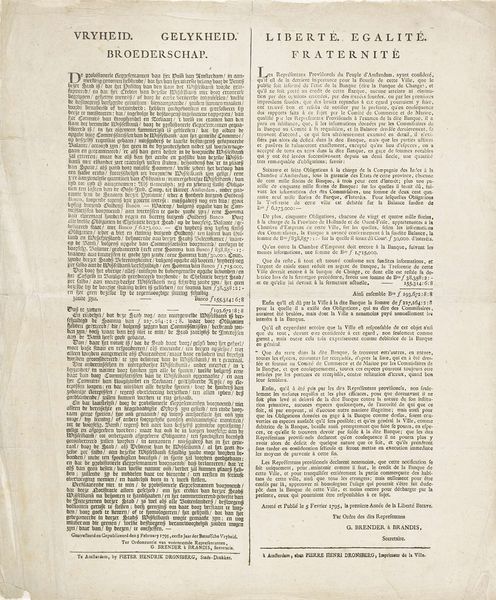
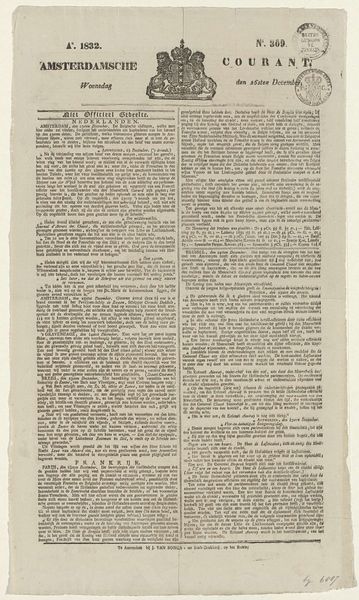
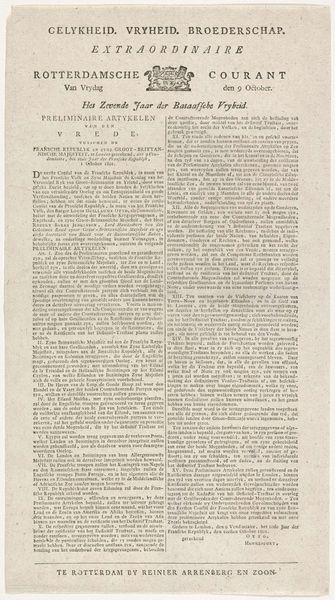
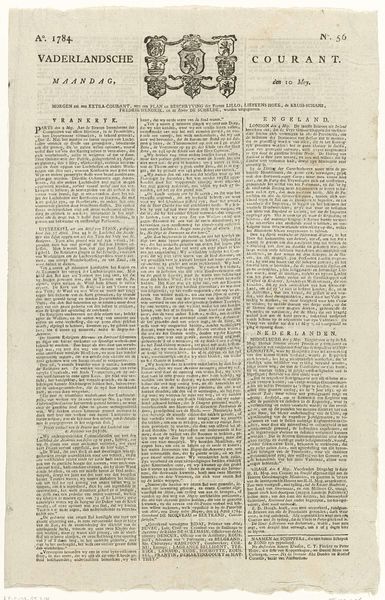
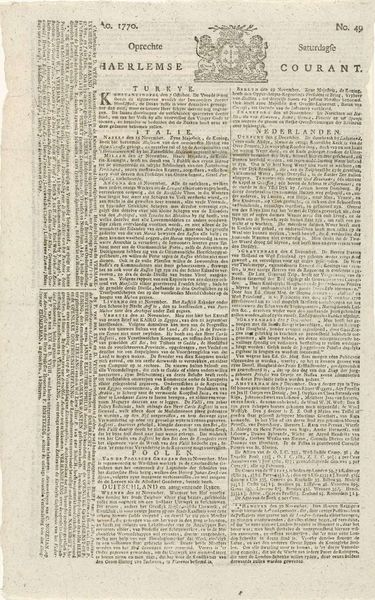
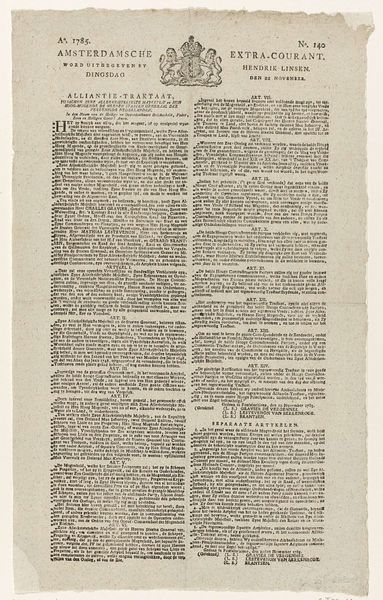
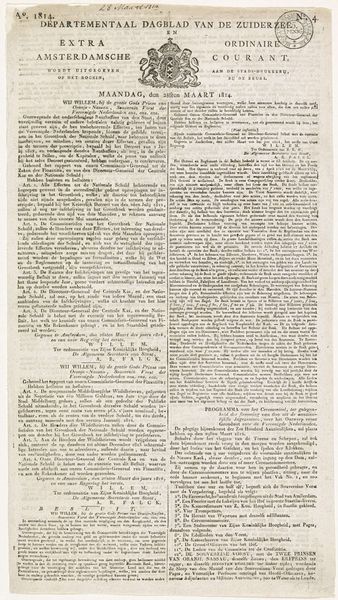
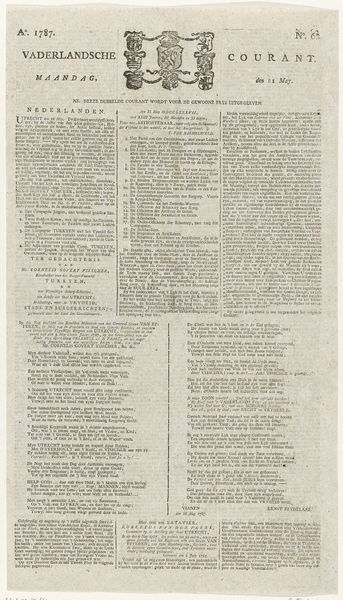
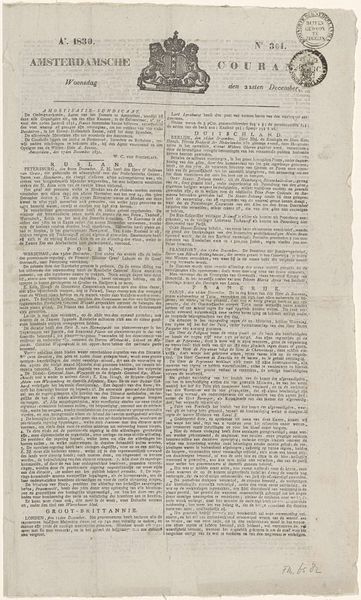
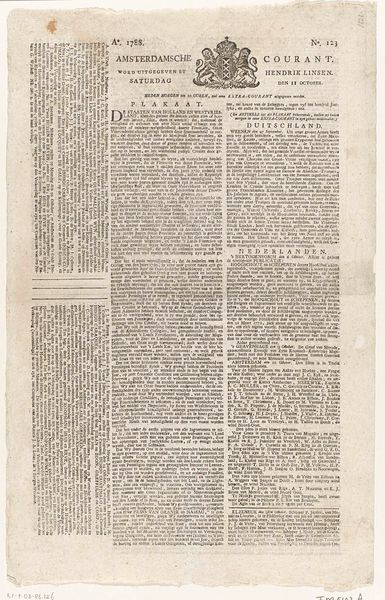
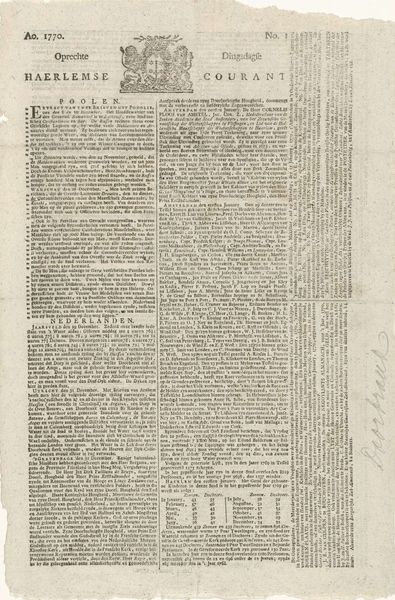
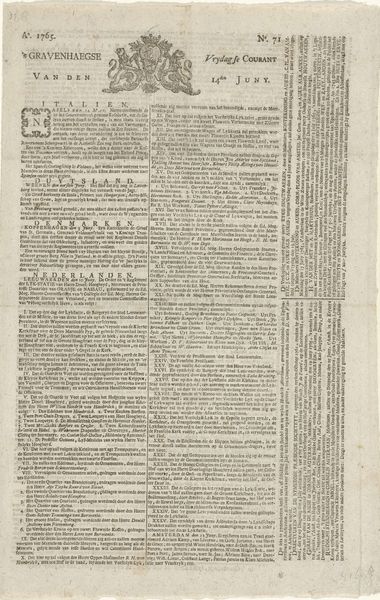
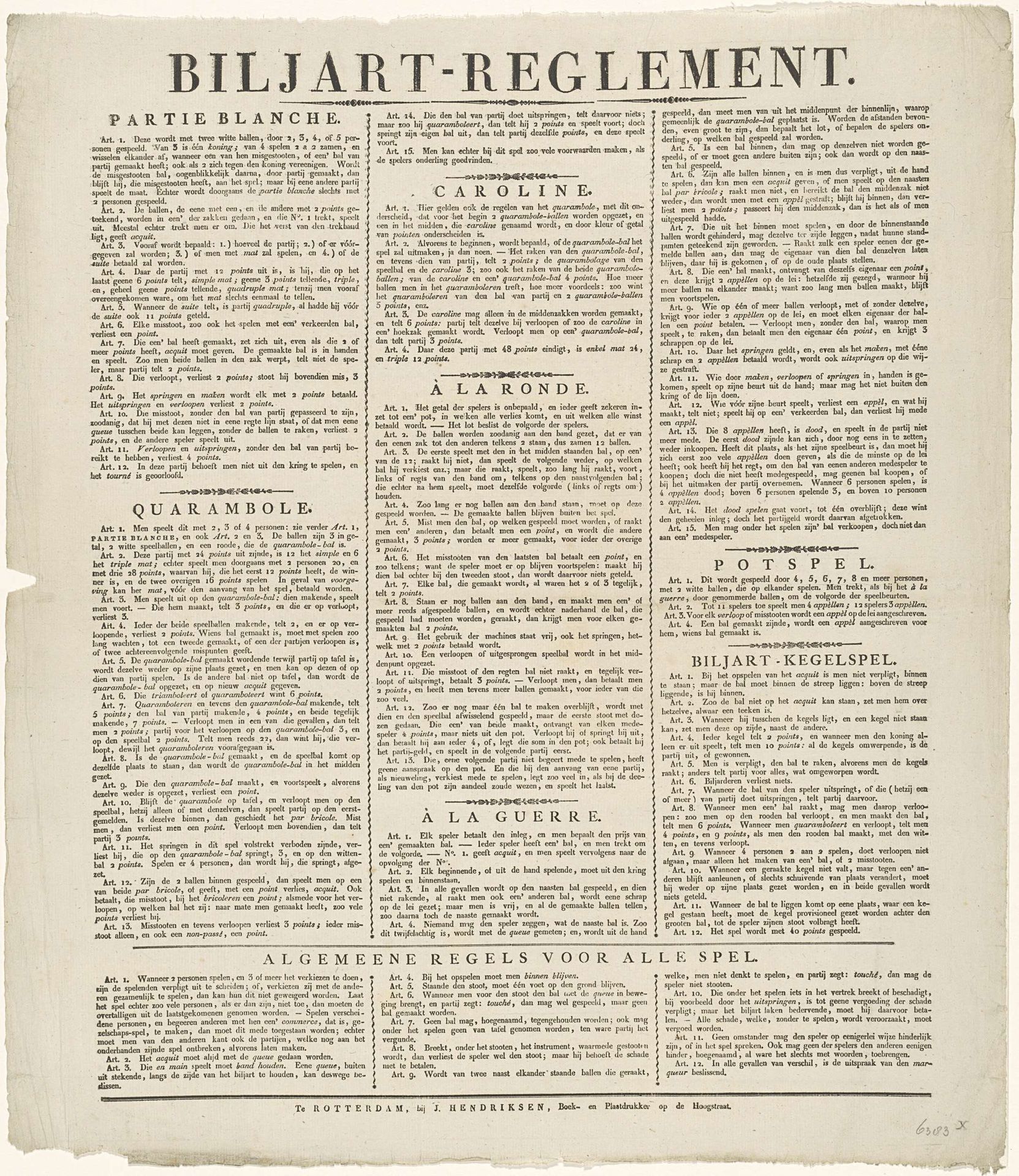
This broadside, *Regels van het biljartspel*, was printed in Rotterdam around 1780-1790 by Jan Hendriksen. It is made from paper, with text laid down by movable type and a printing press. Consider the labor involved in its production: from papermaking to typesetting and the operation of the printing press itself, this broadside would have been the result of collective labor, likely within a small workshop or printing house. Paper was a relatively precious commodity at the time, derived from recycled cloth rags. The printing press, though a technical marvel, still required physical effort, as each page was pressed by hand. This object offers a fascinating glimpse into the culture of leisure and recreation in the late 18th century. The rules of the game had to be systematized, printed, and distributed, so that billiard players could have an agreed-upon set of regulations. Seeing the history embedded in this printed paper encourages us to see its value far beyond its function as a set of rules.

Artwork details
- Medium
- graphic-art, print, textile, paper, typography
- Dimensions
- height 536 mm, width 465 mm
- Copyright
- Rijks Museum: Open Domain
Tags
Comments
Share your thoughts
About this artwork
This broadside, *Regels van het biljartspel*, was printed in Rotterdam around 1780-1790 by Jan Hendriksen. It is made from paper, with text laid down by movable type and a printing press. Consider the labor involved in its production: from papermaking to typesetting and the operation of the printing press itself, this broadside would have been the result of collective labor, likely within a small workshop or printing house. Paper was a relatively precious commodity at the time, derived from recycled cloth rags. The printing press, though a technical marvel, still required physical effort, as each page was pressed by hand. This object offers a fascinating glimpse into the culture of leisure and recreation in the late 18th century. The rules of the game had to be systematized, printed, and distributed, so that billiard players could have an agreed-upon set of regulations. Seeing the history embedded in this printed paper encourages us to see its value far beyond its function as a set of rules.
Comments
Share your thoughts