About this artwork
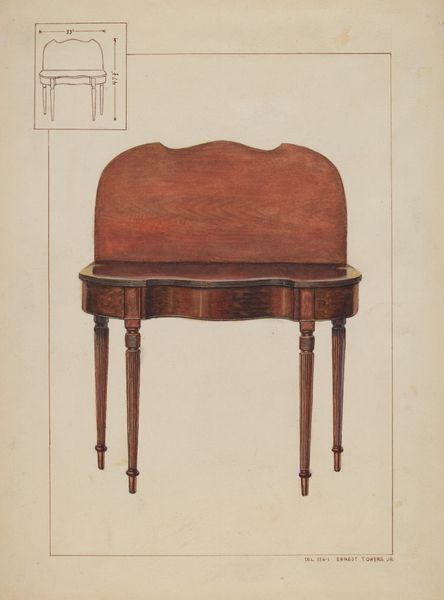
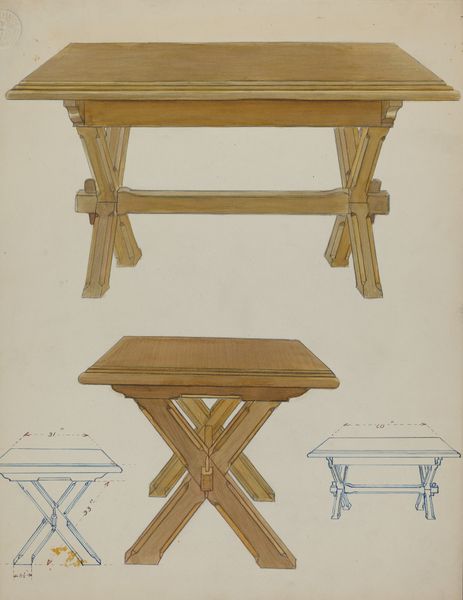
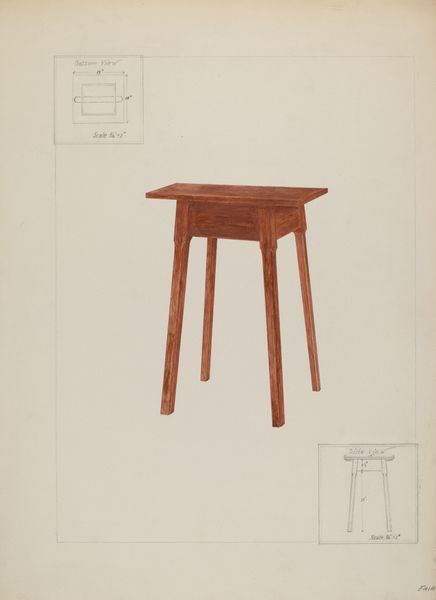
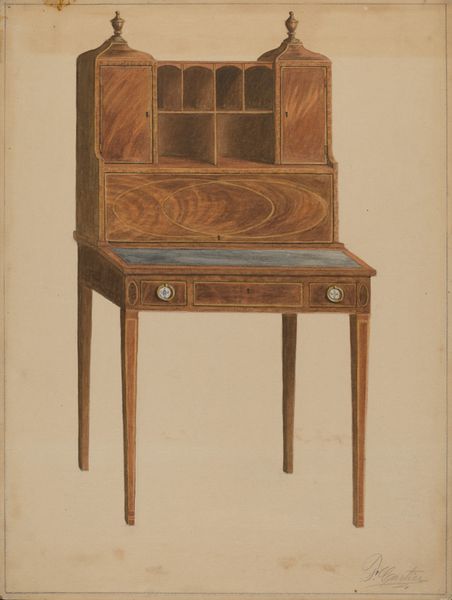
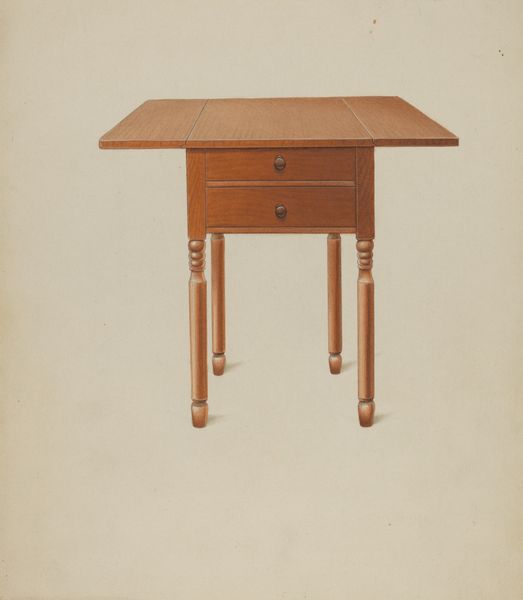
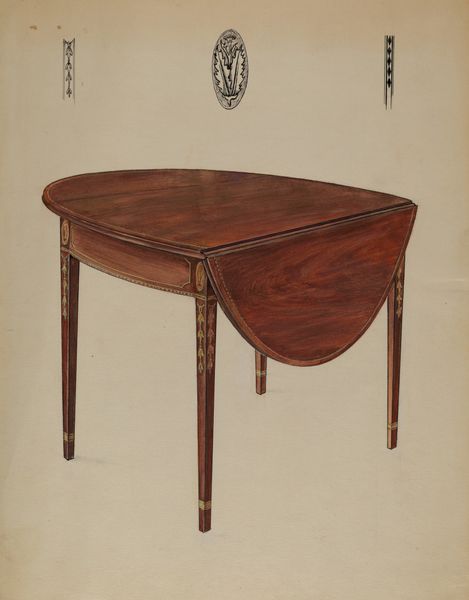
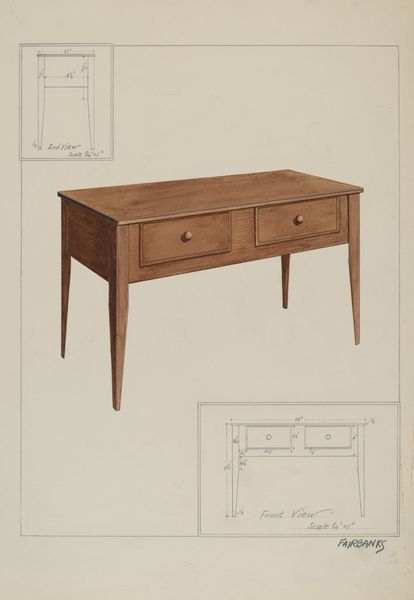
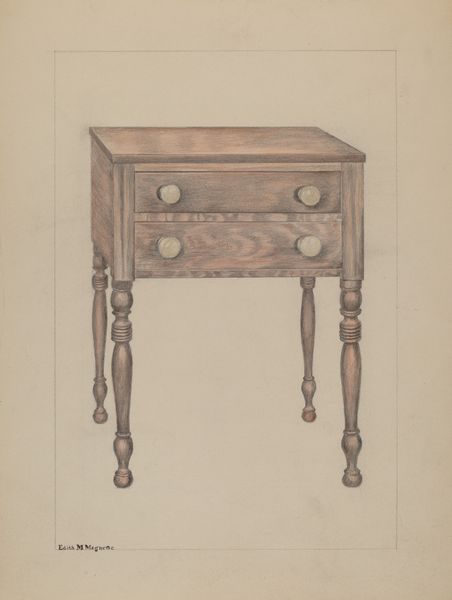
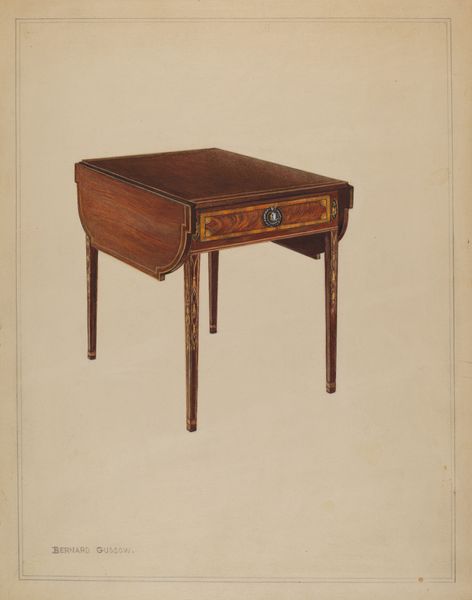
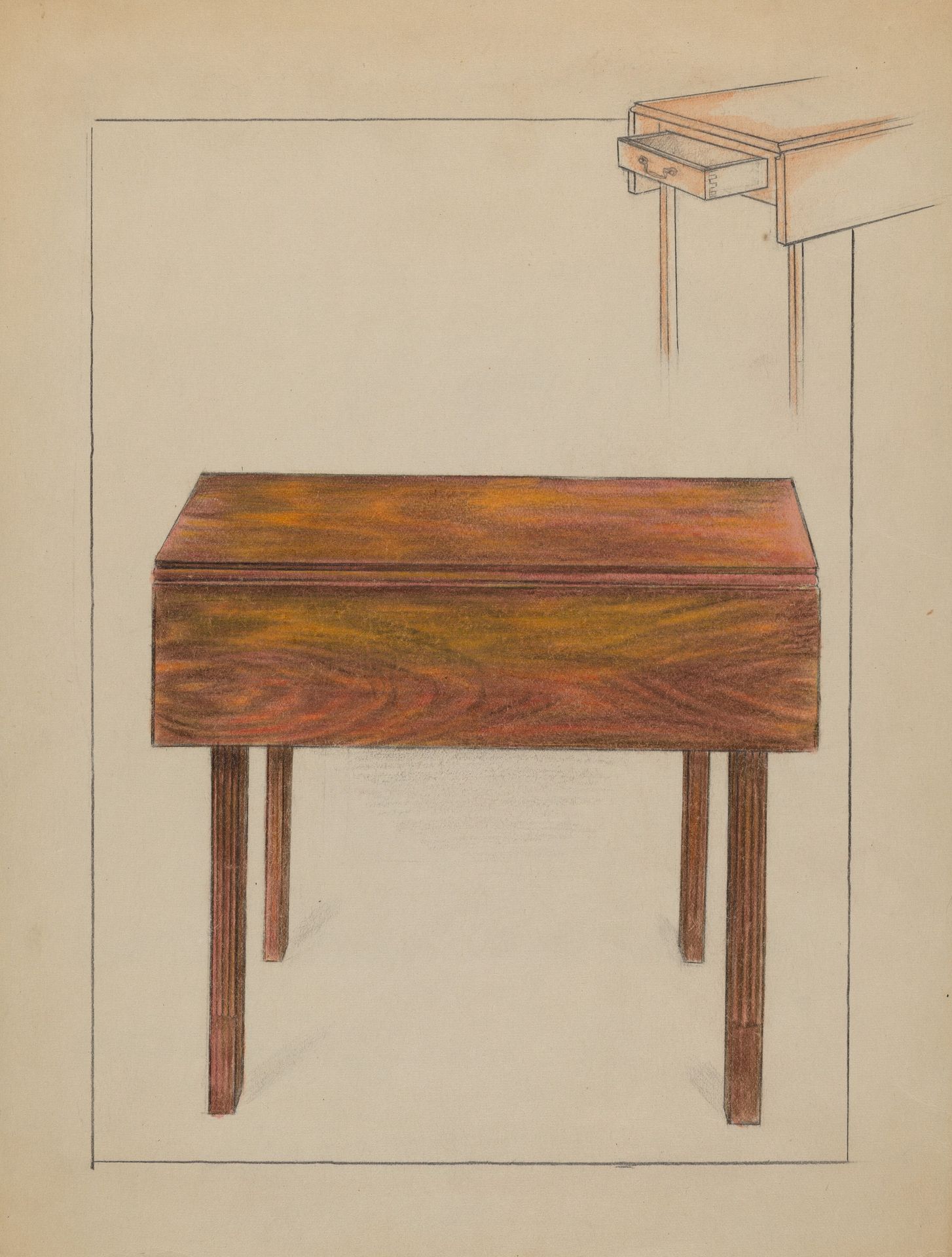
Ruth Bialostosky rendered this ‘Drop Leaf Table’ drawing in pencil and colored pencil on paper, though the date of its creation remains unknown. Such drawings are often considered outside the realm of "high art." However, they offer us valuable insights into the industrial design processes of the 20th century. We might consider the drawing in the context of the Arts and Crafts movement of the early 20th century. The movement sought to critique industrialization and the loss of craftsmanship. Yet, here we have a handcrafted drawing depicting a mass-producible object. This highlights the complex relationship between art, craft, and industry in American culture. Was Bialostosky celebrating the ingenuity of modern design, or lamenting the loss of traditional woodworking skills? By examining trade catalogs, design journals, and the records of furniture manufacturers, we might come closer to understanding the cultural and institutional contexts that shaped Bialostosky's work. Art history shows us how art exists within social and economic forces.
Drop Leaf Table 1935 - 1942


Artwork details
- Medium
- drawing, pencil
- Dimensions
- overall: 27.9 x 21.1 cm (11 x 8 5/16 in.) Original IAD Object: none given
- Copyright
- National Gallery of Art: CC0 1.0
Tags
drawing
geometric
pencil
Comments
No comments
About this artwork
Ruth Bialostosky rendered this ‘Drop Leaf Table’ drawing in pencil and colored pencil on paper, though the date of its creation remains unknown. Such drawings are often considered outside the realm of "high art." However, they offer us valuable insights into the industrial design processes of the 20th century. We might consider the drawing in the context of the Arts and Crafts movement of the early 20th century. The movement sought to critique industrialization and the loss of craftsmanship. Yet, here we have a handcrafted drawing depicting a mass-producible object. This highlights the complex relationship between art, craft, and industry in American culture. Was Bialostosky celebrating the ingenuity of modern design, or lamenting the loss of traditional woodworking skills? By examining trade catalogs, design journals, and the records of furniture manufacturers, we might come closer to understanding the cultural and institutional contexts that shaped Bialostosky's work. Art history shows us how art exists within social and economic forces.
Comments
No comments