About this artwork
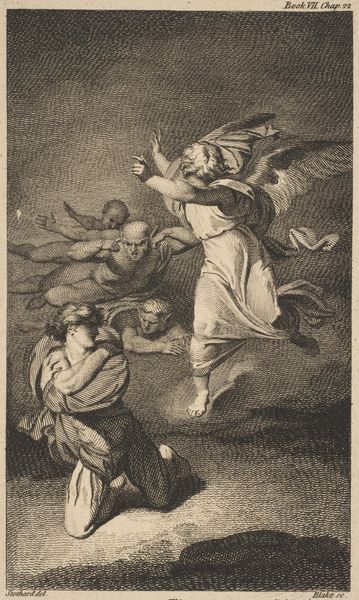
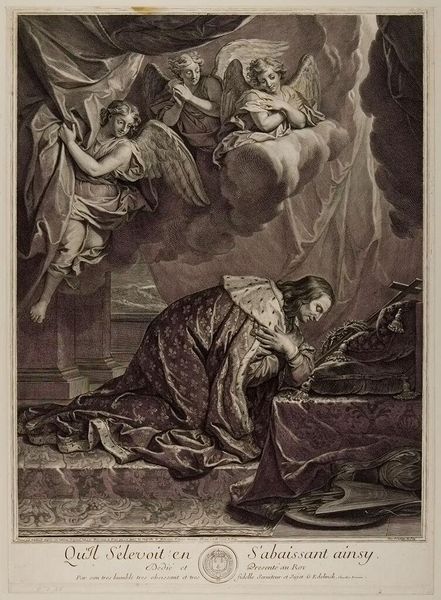
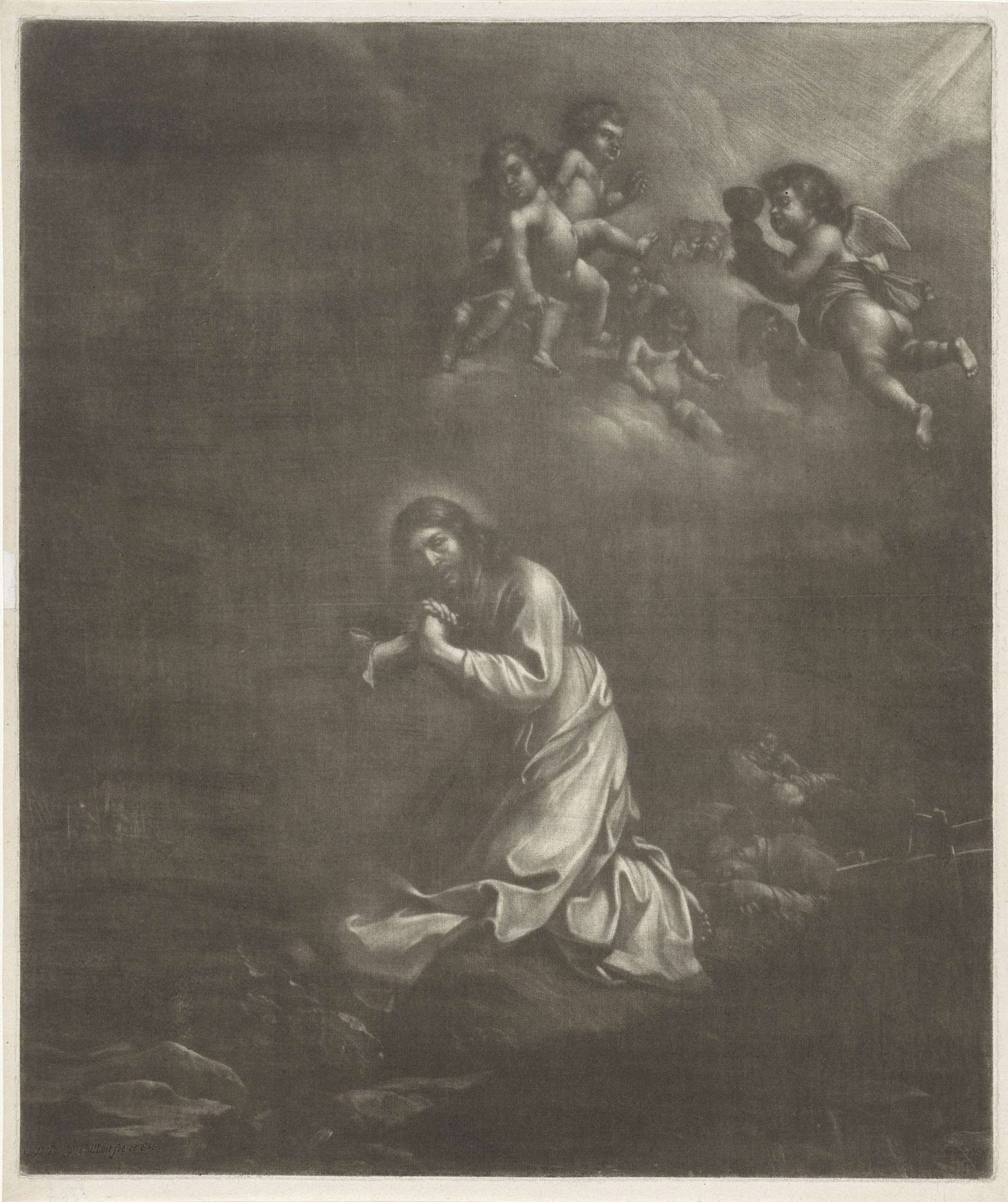
Wallerant Vaillant created this mezzotint depicting Christ in the Garden of Gethsemane. Observe Christ's posture, kneeling with hands clasped in prayer; a universal symbol of supplication and piety. This gesture echoes through time, appearing in various religious traditions from antiquity to the Renaissance. The presence of angels above is a classical motif, their tender expressions and the chalice they bear speaking to divine intervention and Christ's impending sacrifice. This chalice, heavy with meaning, is an ancient vessel, almost a psychic container for collective memory and subconscious longings. It appears in diverse art forms, from medieval tapestries to modern cinema, and remains a potent symbol of sacrifice. This image, therefore, isn't just a depiction of a biblical moment, but a powerful engagement with symbols that have resonated through centuries. The emotional weight of Christ's prayer, amplified by the angelic visitation, engages viewers on a deep, subconscious level. It connects us to an evolving narrative of human suffering, hope, and redemption.
Christus in de hof van Getsemane 1658 - 1677

Wallerant Vaillant
1623 - 1677Location
RijksmuseumArtwork details
- Medium
- print, etching, engraving
- Dimensions
- height 395 mm, width 333 mm
- Location
- Rijksmuseum
- Copyright
- Rijks Museum: Open Domain
Tags
allegory
baroque
etching
landscape
charcoal drawing
figuration
chiaroscuro
history-painting
engraving
Comments
No comments
About this artwork
Wallerant Vaillant created this mezzotint depicting Christ in the Garden of Gethsemane. Observe Christ's posture, kneeling with hands clasped in prayer; a universal symbol of supplication and piety. This gesture echoes through time, appearing in various religious traditions from antiquity to the Renaissance. The presence of angels above is a classical motif, their tender expressions and the chalice they bear speaking to divine intervention and Christ's impending sacrifice. This chalice, heavy with meaning, is an ancient vessel, almost a psychic container for collective memory and subconscious longings. It appears in diverse art forms, from medieval tapestries to modern cinema, and remains a potent symbol of sacrifice. This image, therefore, isn't just a depiction of a biblical moment, but a powerful engagement with symbols that have resonated through centuries. The emotional weight of Christ's prayer, amplified by the angelic visitation, engages viewers on a deep, subconscious level. It connects us to an evolving narrative of human suffering, hope, and redemption.
Comments
No comments