About this artwork
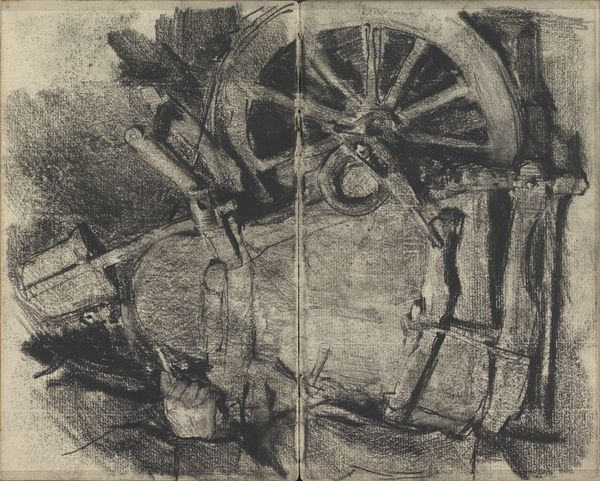
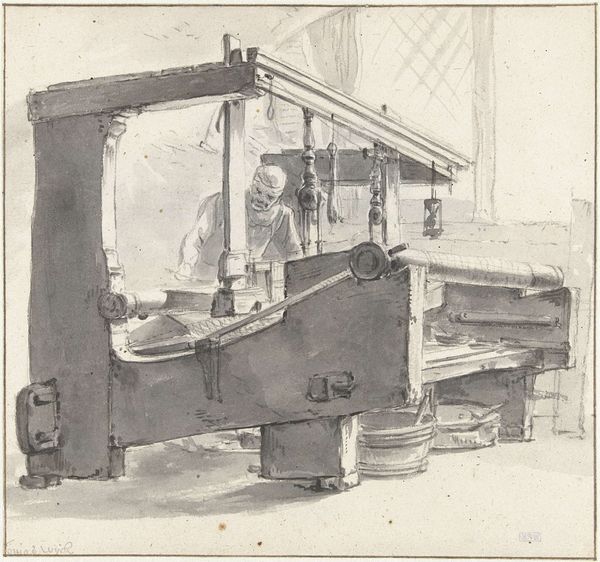
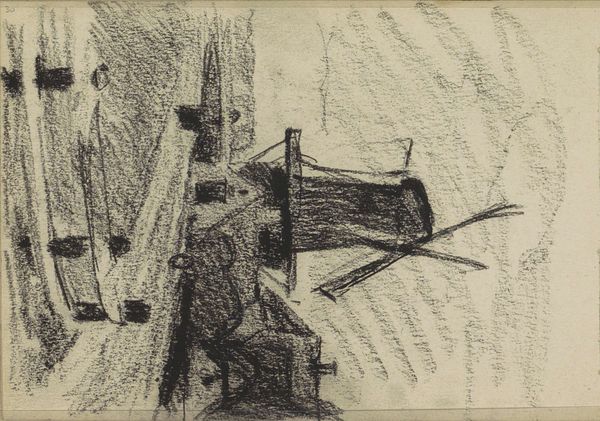
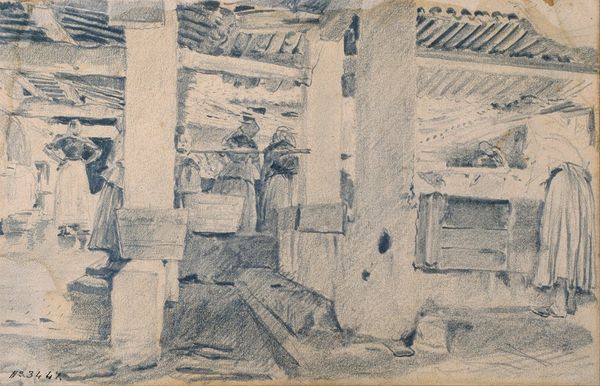
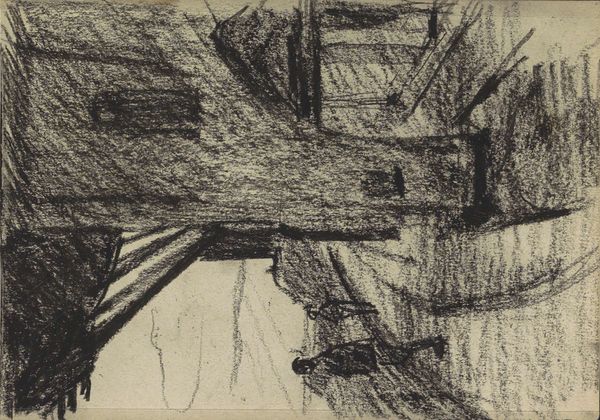
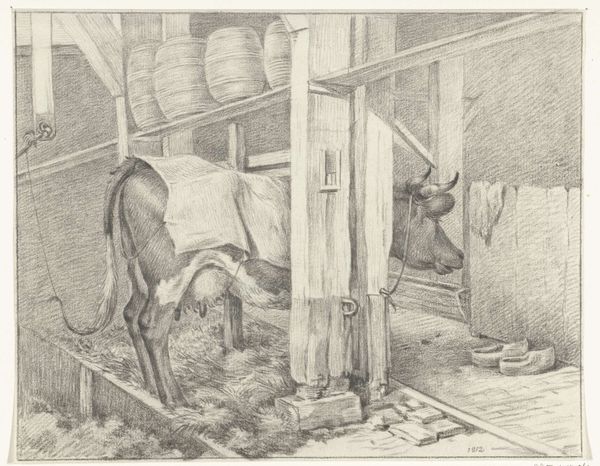
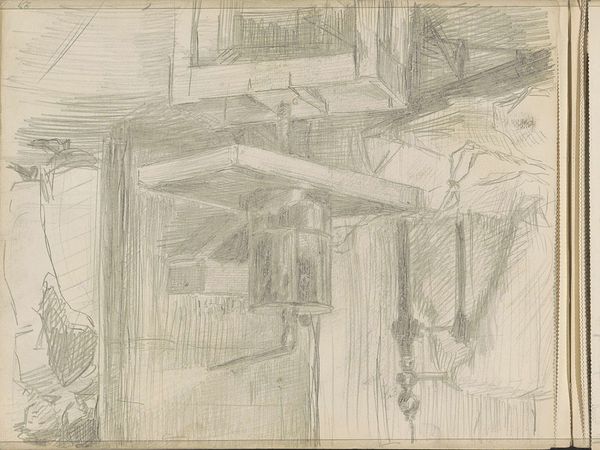
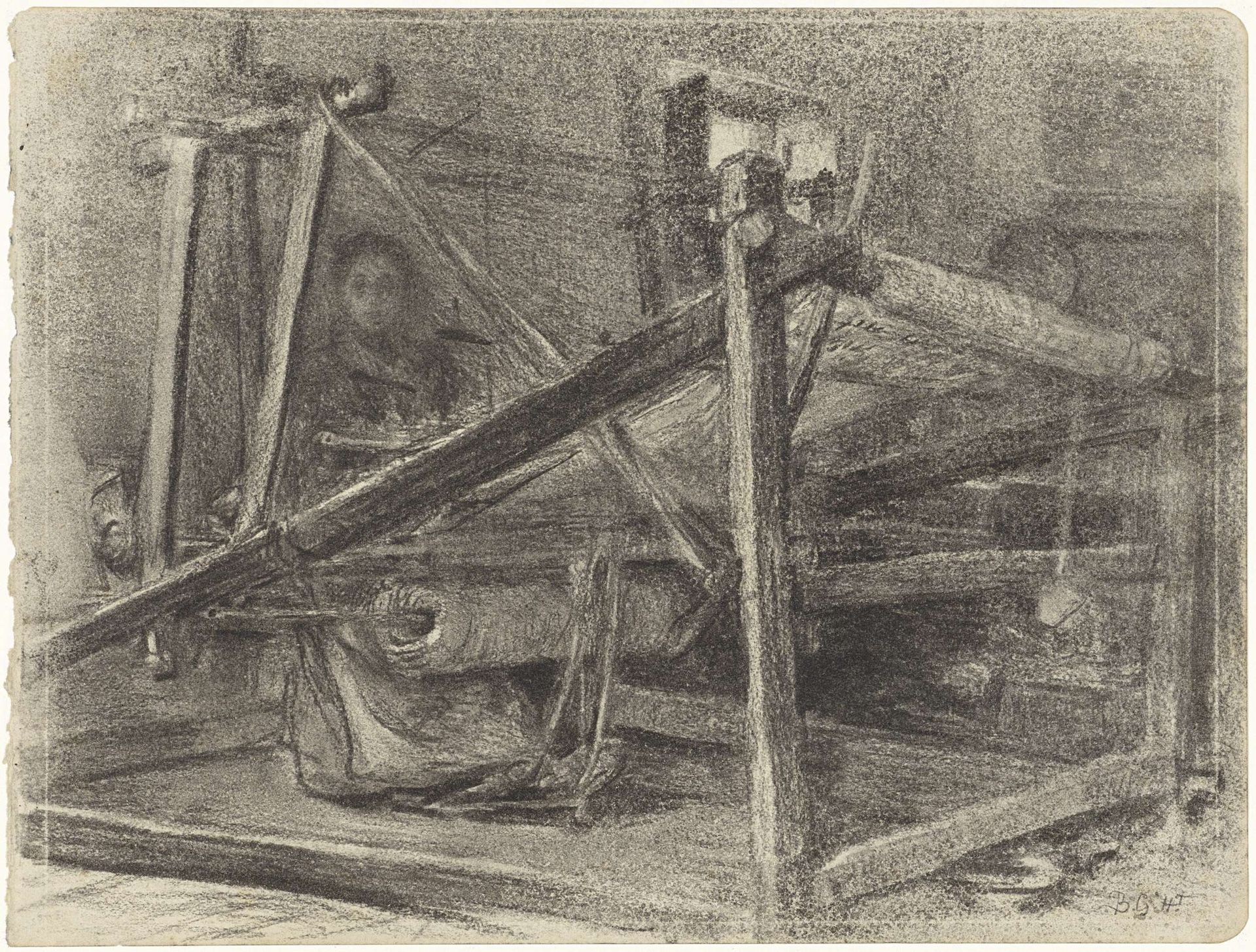
Bramine Hubrecht sketched "Weeftoestel en een vrouw op de achtergrond" with graphite, capturing a weaver at her loom. The piece offers a glimpse into the lives of working women at the turn of the 20th century. Hubrecht, born in 1855, lived in a time of immense social change. The industrial revolution transformed labor, yet traditional crafts persisted, often sustained by women. This drawing, therefore, isn't just an image of a loom; it's a portrait of labor, gender, and resilience. The woman in the background is almost ghostly, suggesting the often unseen and unacknowledged labor of women. Does this piece reinforce traditional gender roles, or does it offer a more subversive narrative? I'd argue it presents a complex view, acknowledging the realities of women's work while hinting at its confinement. The loom itself becomes a symbol, both of creation and constraint. Hubrecht's sketch invites us to consider the historical and ongoing dialogues around labor, gender, and the stories we tell about those who often remain in the background.
Weeftoestel en een vrouw op de achtergrond
1865 - 1913

Bramine Hubrecht
1855 - 1913Location
RijksmuseumArtwork details
- Medium
- drawing, pencil, charcoal
- Dimensions
- height 238 mm, width 315 mm
- Location
- Rijksmuseum
- Copyright
- Rijks Museum: Open Domain
Tags
Comments
Share your thoughts
About this artwork
Bramine Hubrecht sketched "Weeftoestel en een vrouw op de achtergrond" with graphite, capturing a weaver at her loom. The piece offers a glimpse into the lives of working women at the turn of the 20th century. Hubrecht, born in 1855, lived in a time of immense social change. The industrial revolution transformed labor, yet traditional crafts persisted, often sustained by women. This drawing, therefore, isn't just an image of a loom; it's a portrait of labor, gender, and resilience. The woman in the background is almost ghostly, suggesting the often unseen and unacknowledged labor of women. Does this piece reinforce traditional gender roles, or does it offer a more subversive narrative? I'd argue it presents a complex view, acknowledging the realities of women's work while hinting at its confinement. The loom itself becomes a symbol, both of creation and constraint. Hubrecht's sketch invites us to consider the historical and ongoing dialogues around labor, gender, and the stories we tell about those who often remain in the background.
Comments
Share your thoughts