About this artwork
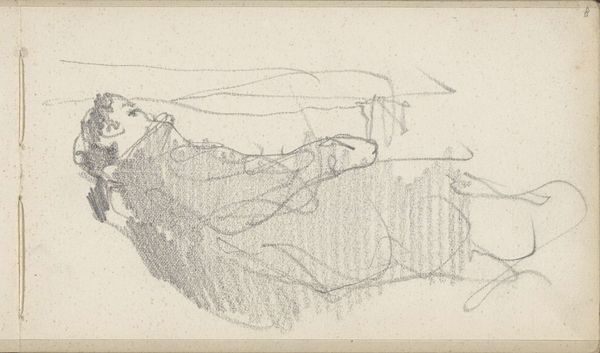
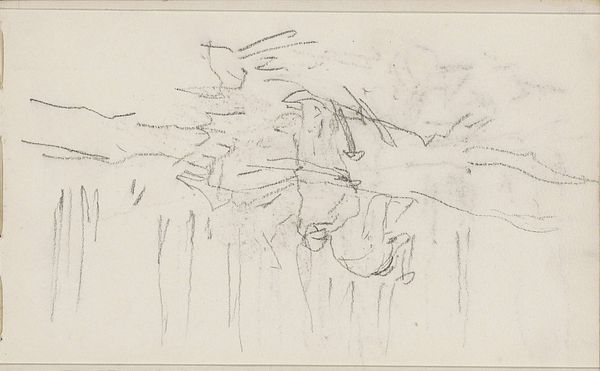
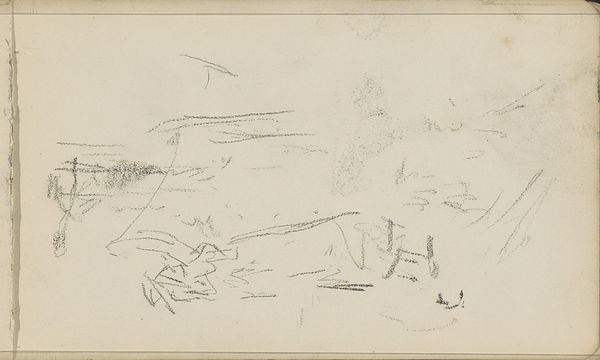
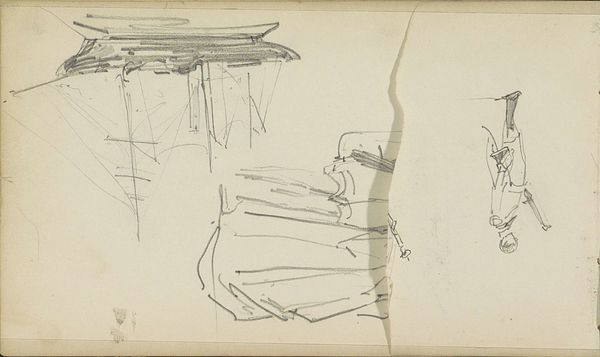
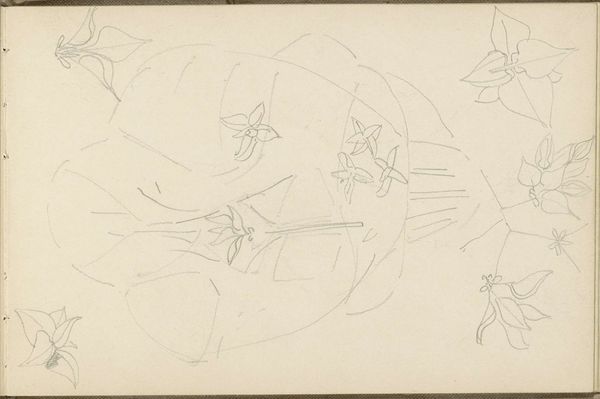
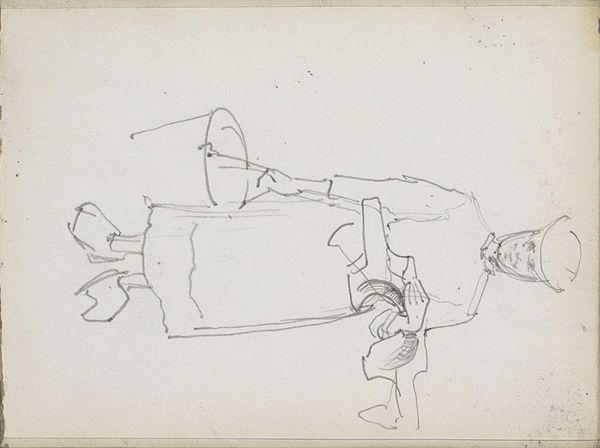
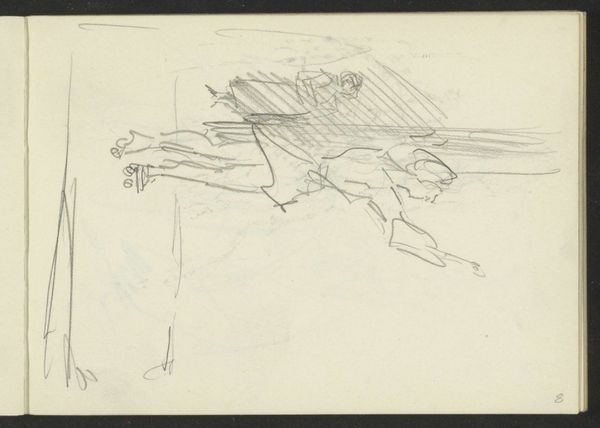
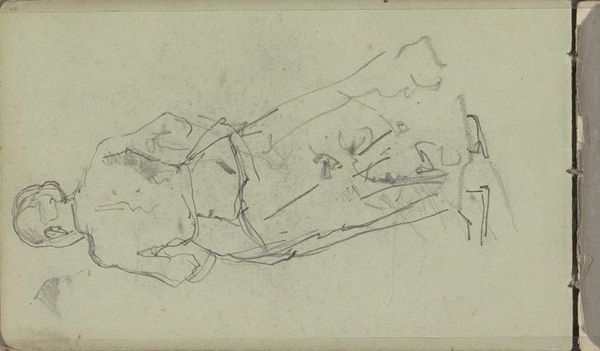
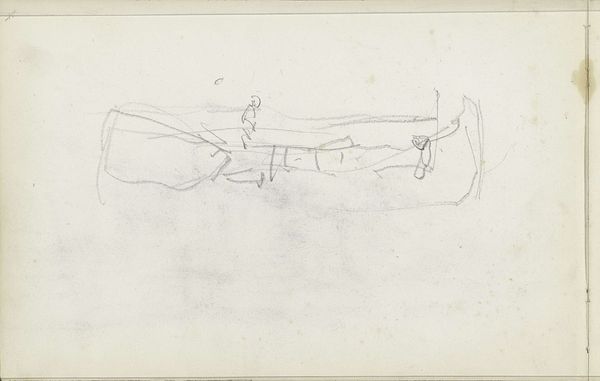
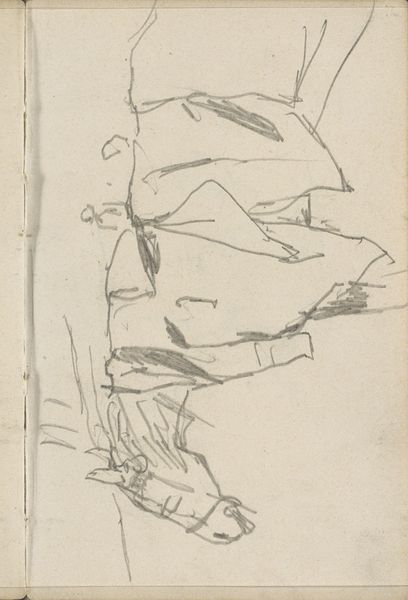
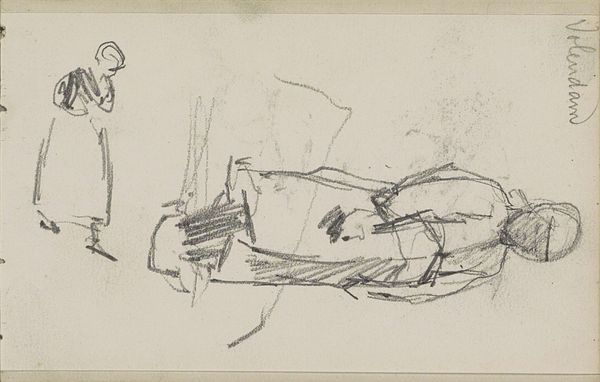
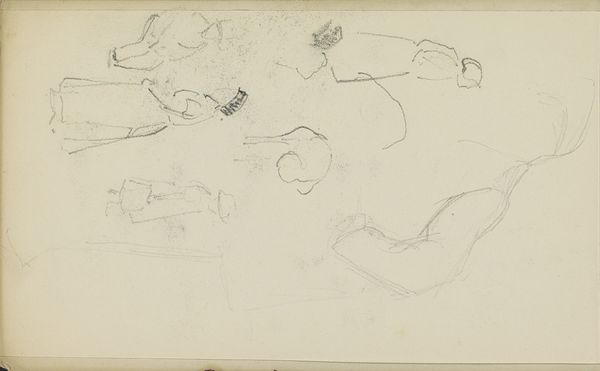
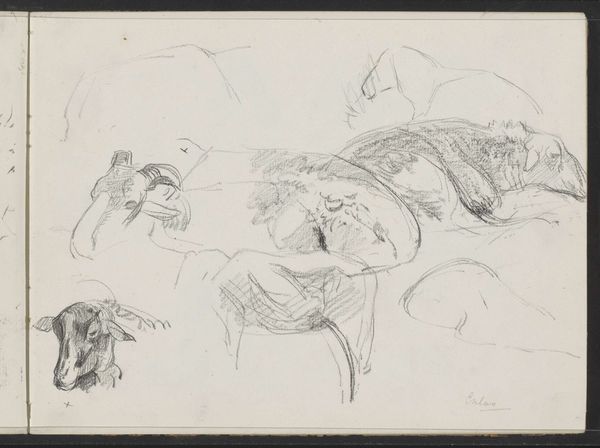
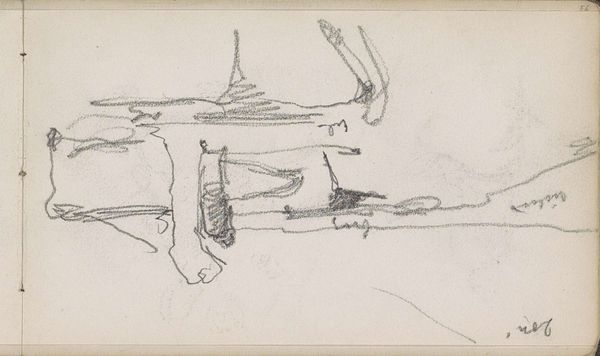
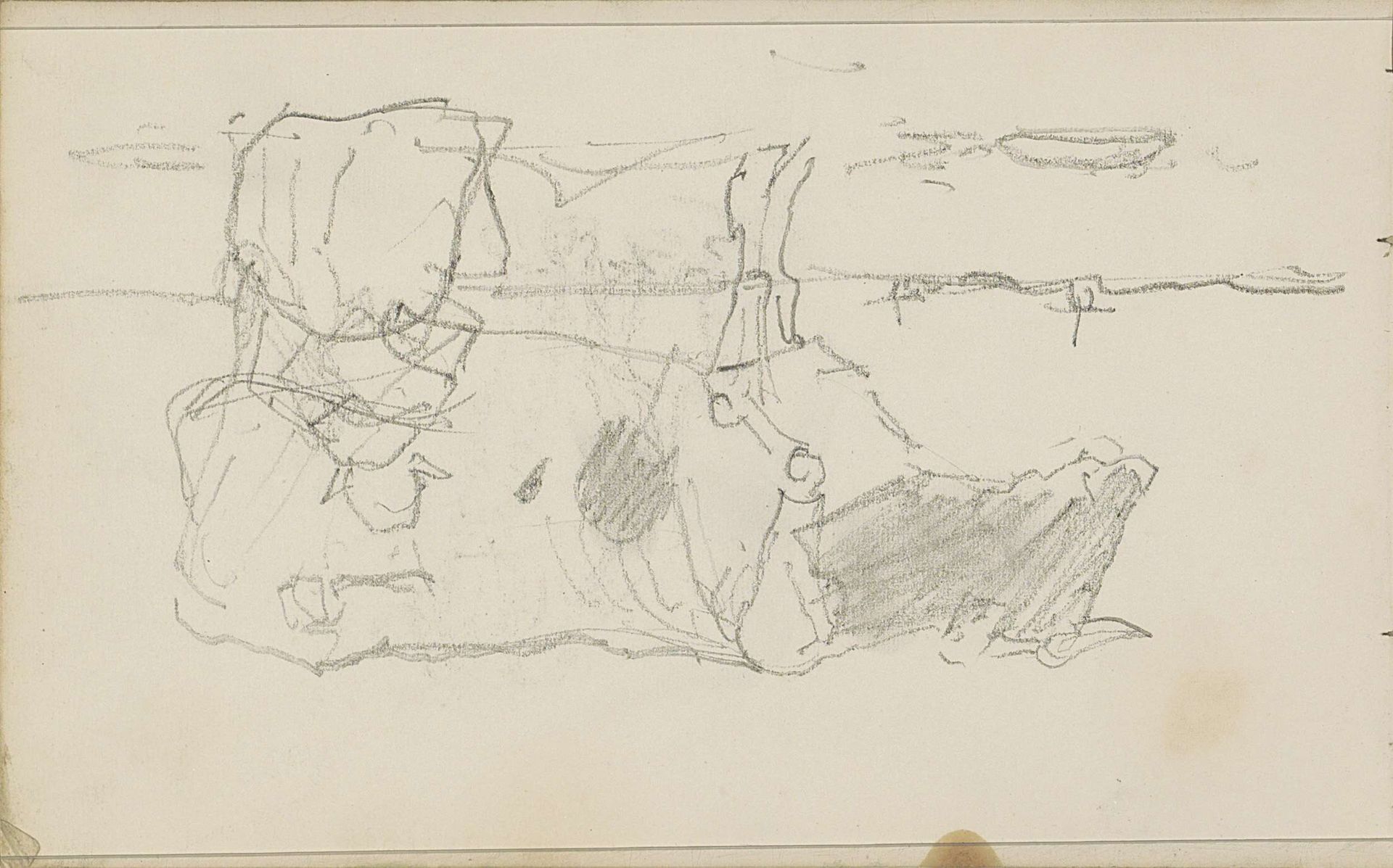
Editor: So, we're looking at Anton Mauve's "Boerin die een koe melkt in een veld," which translates to "Farmer Woman Milking a Cow in a Field." It was made sometime between 1848 and 1888 and it is currently held at the Rijksmuseum. It’s a pencil drawing, very light and sketchy. It has a sort of…fragile quality. What do you see in it? Curator: Immediately, I see a study in labor and materiality. Forget the idyllic landscape; consider the pencil, the paper, the hand that guided it. This isn’t just a pretty picture of rural life; it’s a record of Mauve's engagement with his materials, a tangible piece of the process. How does the act of sketching this scene, the choices of medium, reflect or perhaps even shape our understanding of the subject matter itself - the peasant woman at work? Editor: I hadn't thought about the physical process of drawing, just the image itself! It does seem quick, almost like he's capturing a fleeting moment. Does that relate to Impressionism somehow? Curator: Precisely. But, consider the context. What does it mean to depict labor – this very specific act of milking a cow – in a medium so readily available, so unassuming, so decidedly *not* precious? Pencil sketches, readily reproducible, challenge traditional boundaries around fine art and craft. The materiality becomes key, doesn't it? Was this intended for mass consumption, for study, or just for the artist's own record? These questions shift the conversation. Editor: So, it’s not *just* a cow and a farmer, it’s a statement about art's relationship to the everyday and to the materials we use. Curator: Exactly. The work, the raw material, and Mauve's intervention intertwine to reveal a different way of valuing both artistic creation and the mundane acts it depicts. What began as an impression transforms into an investigation of production and artistic intent. Editor: I see the sketch now, as less of a finished product, and more as evidence of an idea, a record of labour on the artist’s part. Thank you! Curator: And perhaps, by considering the sketch in these terms, we bring a fresh perspective to our understanding of art's inherent value and its connection to material conditions. A worthy consideration, I hope.

Artwork details
- Medium
- drawing, pencil
- Location
- Rijksmuseum
- Copyright
- Rijks Museum: Open Domain
Tags
drawing
amateur sketch
light pencil work
impressionism
incomplete sketchy
landscape
personal sketchbook
idea generation sketch
sketchwork
ink drawing experimentation
pencil
sketchbook drawing
genre-painting
sketchbook art
realism
initial sketch
Comments
No comments
About this artwork
Editor: So, we're looking at Anton Mauve's "Boerin die een koe melkt in een veld," which translates to "Farmer Woman Milking a Cow in a Field." It was made sometime between 1848 and 1888 and it is currently held at the Rijksmuseum. It’s a pencil drawing, very light and sketchy. It has a sort of…fragile quality. What do you see in it? Curator: Immediately, I see a study in labor and materiality. Forget the idyllic landscape; consider the pencil, the paper, the hand that guided it. This isn’t just a pretty picture of rural life; it’s a record of Mauve's engagement with his materials, a tangible piece of the process. How does the act of sketching this scene, the choices of medium, reflect or perhaps even shape our understanding of the subject matter itself - the peasant woman at work? Editor: I hadn't thought about the physical process of drawing, just the image itself! It does seem quick, almost like he's capturing a fleeting moment. Does that relate to Impressionism somehow? Curator: Precisely. But, consider the context. What does it mean to depict labor – this very specific act of milking a cow – in a medium so readily available, so unassuming, so decidedly *not* precious? Pencil sketches, readily reproducible, challenge traditional boundaries around fine art and craft. The materiality becomes key, doesn't it? Was this intended for mass consumption, for study, or just for the artist's own record? These questions shift the conversation. Editor: So, it’s not *just* a cow and a farmer, it’s a statement about art's relationship to the everyday and to the materials we use. Curator: Exactly. The work, the raw material, and Mauve's intervention intertwine to reveal a different way of valuing both artistic creation and the mundane acts it depicts. What began as an impression transforms into an investigation of production and artistic intent. Editor: I see the sketch now, as less of a finished product, and more as evidence of an idea, a record of labour on the artist’s part. Thank you! Curator: And perhaps, by considering the sketch in these terms, we bring a fresh perspective to our understanding of art's inherent value and its connection to material conditions. A worthy consideration, I hope.
Comments
No comments