About this artwork
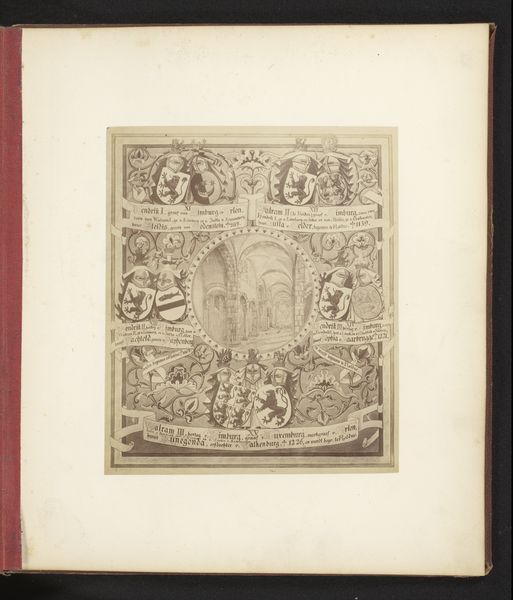
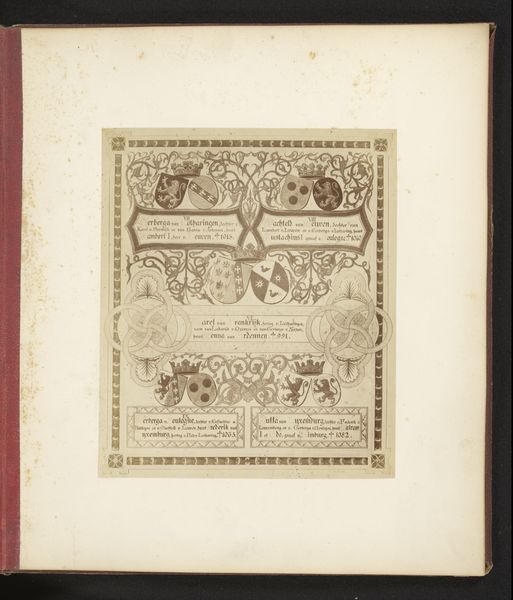
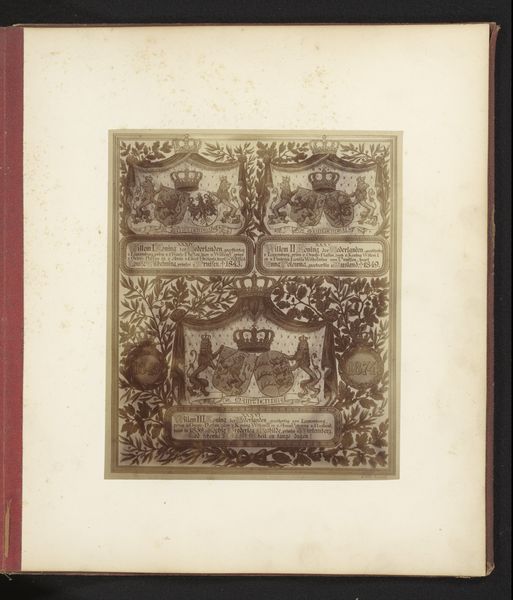
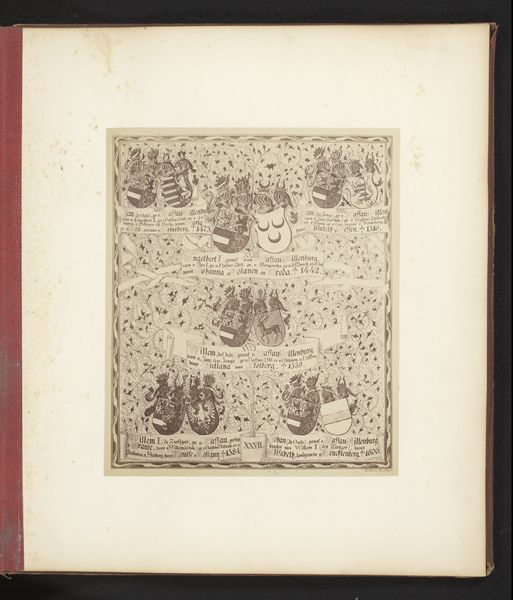
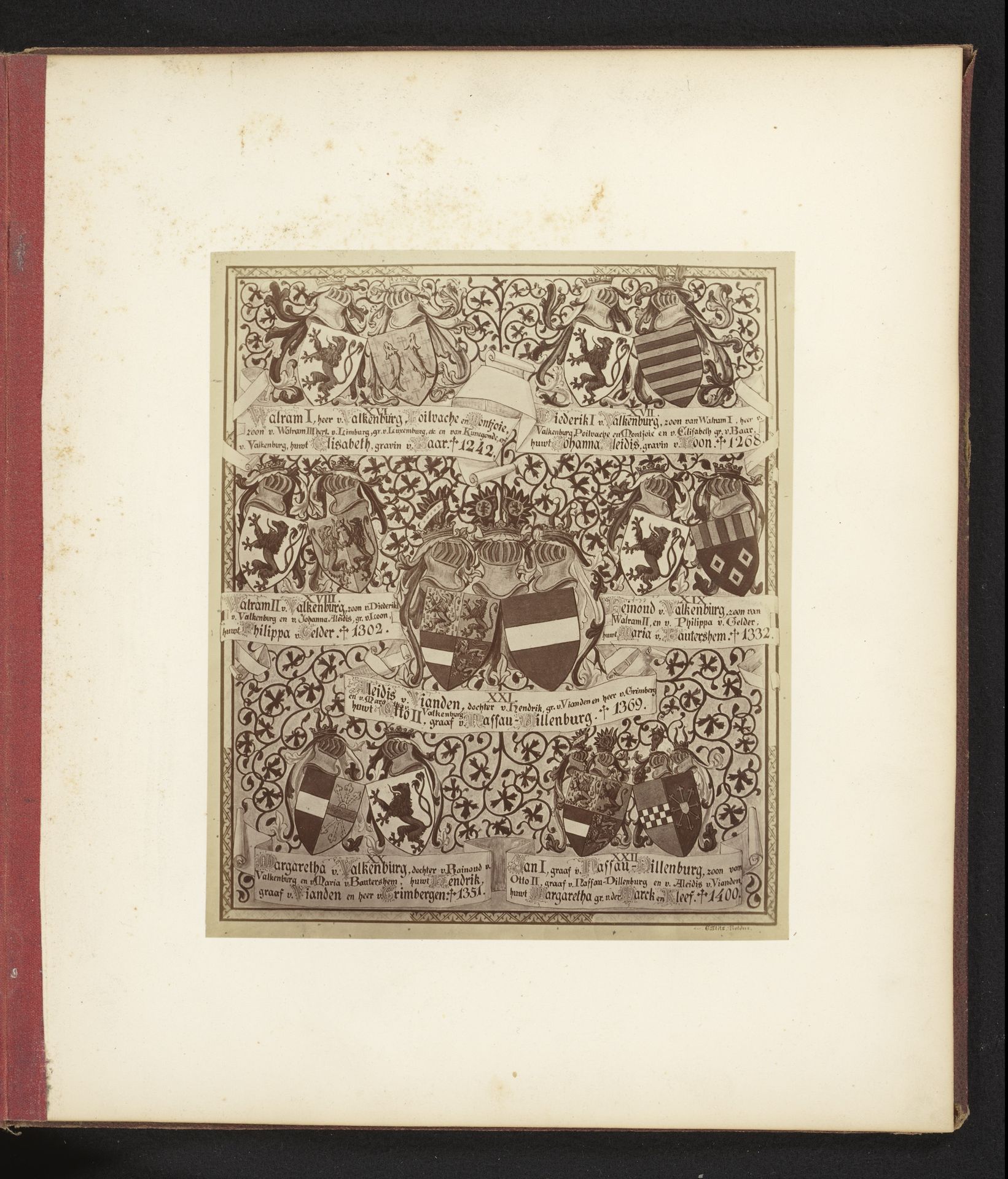
This is a reproduction of a drawing of a family tree, made by an anonymous artist. It traces the lineage from Walram I, Lord of Valkenburg, to Jan I, Count of Nassau-Dillenburg. Family trees like this weren't just about showing who was related to whom. In the context of the Low Countries, they were powerful statements of identity and legitimacy. During a time of shifting political landscapes, demonstrating noble ancestry could be crucial for maintaining or advancing one's position. The shields represent different familial lines, and the genealogy asserts a specific social hierarchy. Such images served as a visual record of power, often commissioned by the families themselves. To fully understand this piece, we might explore the archives of noble families in the region. We might also look to studies of heraldry and genealogical practices. It is in this way, we can start to unpack the social and institutional contexts of art.
Fotoreproductie van een tekening van een stamboom, van Walram I, heer van Valkenburg, tot Jan I, graaf van Nassau-Dillenburg
before 1874

Artwork details
- Medium
- drawing, paper, ink
- Dimensions
- height 184 mm, width 155 mm
- Copyright
- Rijks Museum: Open Domain
Tags
Comments
Share your thoughts
About this artwork
This is a reproduction of a drawing of a family tree, made by an anonymous artist. It traces the lineage from Walram I, Lord of Valkenburg, to Jan I, Count of Nassau-Dillenburg. Family trees like this weren't just about showing who was related to whom. In the context of the Low Countries, they were powerful statements of identity and legitimacy. During a time of shifting political landscapes, demonstrating noble ancestry could be crucial for maintaining or advancing one's position. The shields represent different familial lines, and the genealogy asserts a specific social hierarchy. Such images served as a visual record of power, often commissioned by the families themselves. To fully understand this piece, we might explore the archives of noble families in the region. We might also look to studies of heraldry and genealogical practices. It is in this way, we can start to unpack the social and institutional contexts of art.
Comments
Share your thoughts