About this artwork
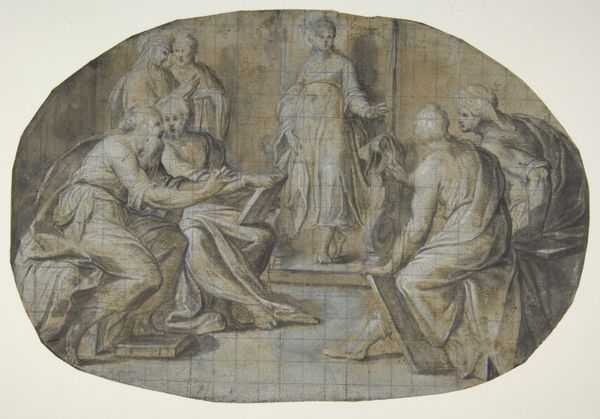
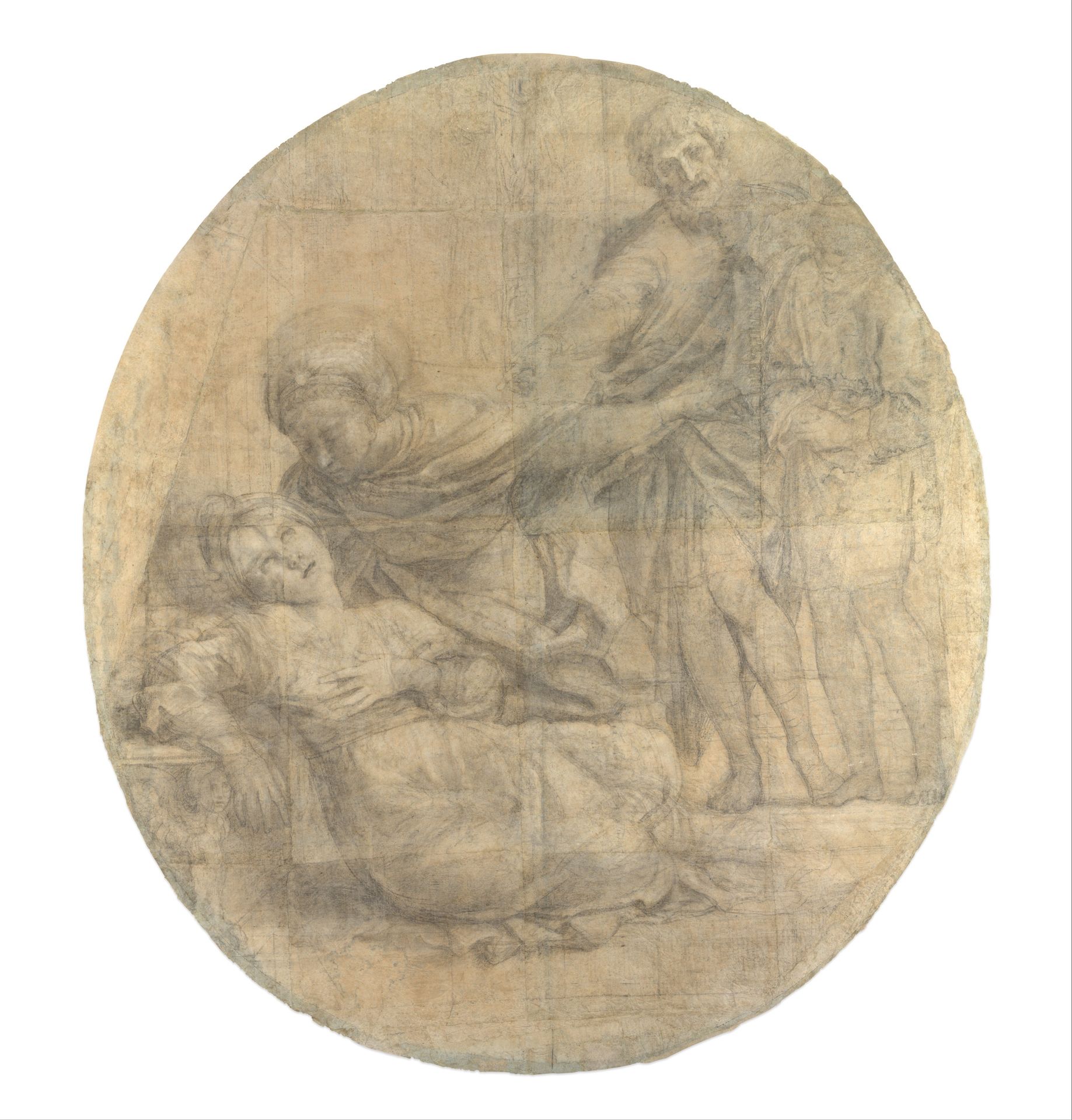
Domenichino created this cartoon of “The Martyrdom of Saint Cecilia” as a preparatory drawing, or underpainting, for a fresco. He was a prominent artist in the Baroque period, a time marked by the Catholic Church's efforts to reaffirm its power through dramatic and emotionally charged art. Cecilia, the patron saint of music, is depicted here at the moment of her attempted martyrdom. Her story, steeped in themes of faith and female piety, tells of her survival after being submerged in scalding baths. The executioner then attempts to behead her, but she lives for three days after the attack. Note the delicate lines and the subtle gradations of light and shadow as Cecilia lies on what appears to be a bed of sorts, her body relaxed in spite of the brutal act against her. Domenichino skillfully conveys a sense of otherworldly calm, suggesting Cecilia's unwavering faith in the face of death. This work highlights the intertwined narratives of gender, religion, and power that shaped the Baroque era.
The Martyrdom of Saint Cecilia (Cartoon for a Fresco)
1612 - 1614

Domenichino (Domenico Zampieri)
1581 - 1641
The Metropolitan Museum of Art
Metropolitan Museum of Art, New York, NYArtwork details
- Medium
- drawing, paper, charcoal
- Dimensions
- Irregular oval: 67 13/16 × 59 9/16 in. (172.2 × 151.3 cm)
- Location
- Metropolitan Museum of Art, New York, NY
- Copyright
- Public Domain
Tags
Comments
Share your thoughts
About this artwork
Domenichino created this cartoon of “The Martyrdom of Saint Cecilia” as a preparatory drawing, or underpainting, for a fresco. He was a prominent artist in the Baroque period, a time marked by the Catholic Church's efforts to reaffirm its power through dramatic and emotionally charged art. Cecilia, the patron saint of music, is depicted here at the moment of her attempted martyrdom. Her story, steeped in themes of faith and female piety, tells of her survival after being submerged in scalding baths. The executioner then attempts to behead her, but she lives for three days after the attack. Note the delicate lines and the subtle gradations of light and shadow as Cecilia lies on what appears to be a bed of sorts, her body relaxed in spite of the brutal act against her. Domenichino skillfully conveys a sense of otherworldly calm, suggesting Cecilia's unwavering faith in the face of death. This work highlights the intertwined narratives of gender, religion, and power that shaped the Baroque era.
Comments
Share your thoughts