About this artwork
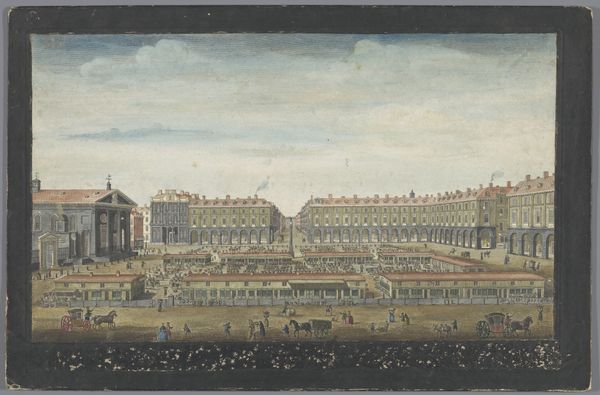
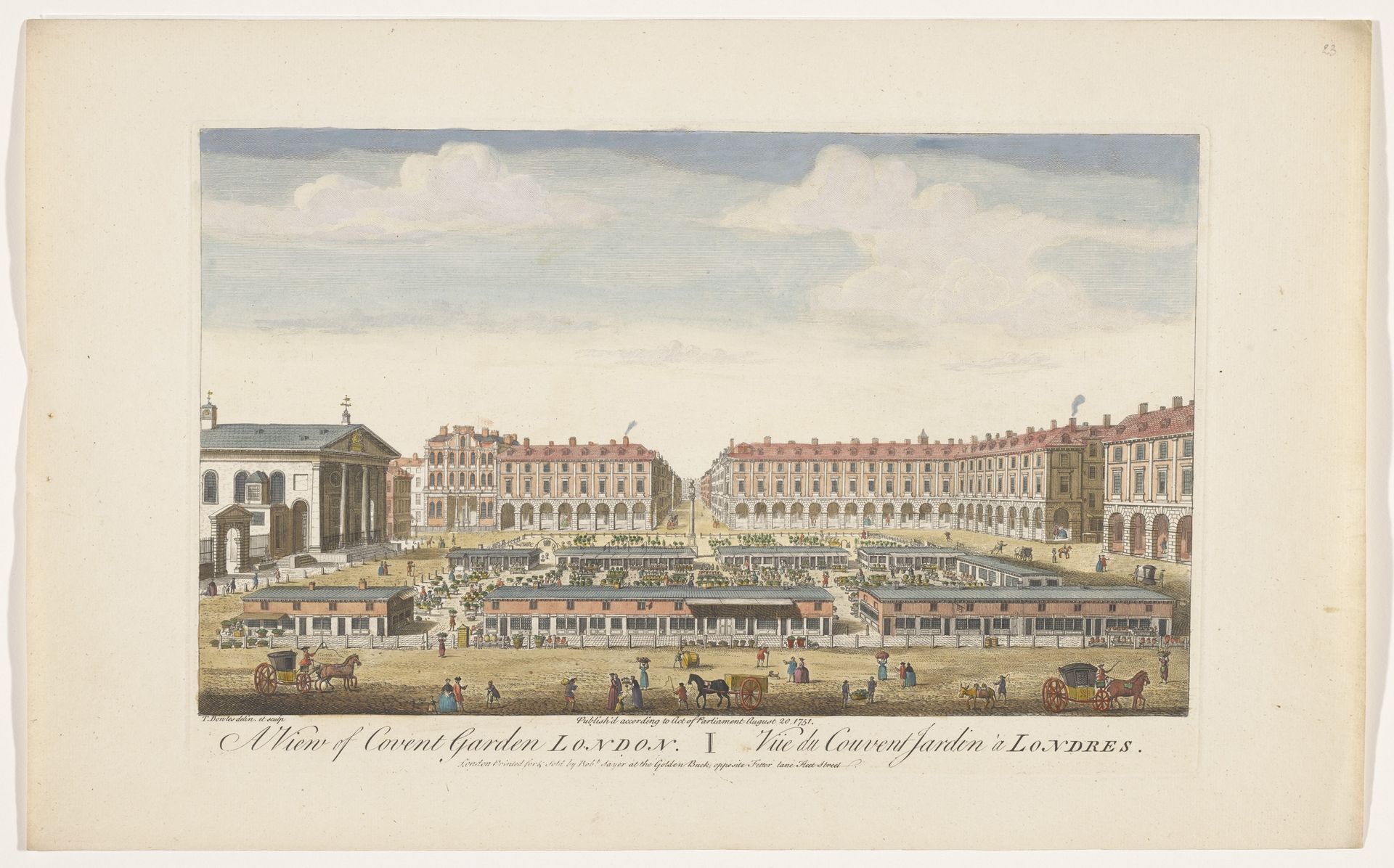
This print, “A View of Covent Garden, London,” was made by Robert Sayer sometime in the 1700s, using etching and watercolor on paper. The printmaking process gives a sense of the bustling activity of the marketplace, teeming with vendors and customers. The etching would have begun with a metal plate, likely copper, on which the artist scratched lines with a needle. Acid would then have been applied to bite into the metal, creating grooves that would hold ink. The more labor put into this stage, the more detail could be achieved. Finally, the plate would be pressed onto paper, transferring the image. The subtle washes of watercolor added by hand give a sense of the atmosphere. Prints like this were relatively inexpensive, making them accessible to a broad audience. They provide valuable insight into the material culture and social dynamics of 18th-century London, capturing a moment in time that is both artistic and documentary. It blurs the lines between fine art and commercial production, reminding us that images, like any other commodity, are produced through labor and consumed by society.
Gezicht op Covent Garden Market te Londen
Possibly 1751 - 1758

Robert Sayer
1725 - 1794Location
RijksmuseumArtwork details
- Medium
- painting, print, watercolor
- Dimensions
- height 260 mm, width 404 mm
- Location
- Rijksmuseum
- Copyright
- Rijks Museum: Open Domain
Tags
Comments
Share your thoughts
About this artwork
This print, “A View of Covent Garden, London,” was made by Robert Sayer sometime in the 1700s, using etching and watercolor on paper. The printmaking process gives a sense of the bustling activity of the marketplace, teeming with vendors and customers. The etching would have begun with a metal plate, likely copper, on which the artist scratched lines with a needle. Acid would then have been applied to bite into the metal, creating grooves that would hold ink. The more labor put into this stage, the more detail could be achieved. Finally, the plate would be pressed onto paper, transferring the image. The subtle washes of watercolor added by hand give a sense of the atmosphere. Prints like this were relatively inexpensive, making them accessible to a broad audience. They provide valuable insight into the material culture and social dynamics of 18th-century London, capturing a moment in time that is both artistic and documentary. It blurs the lines between fine art and commercial production, reminding us that images, like any other commodity, are produced through labor and consumed by society.
Comments
Share your thoughts