About this artwork
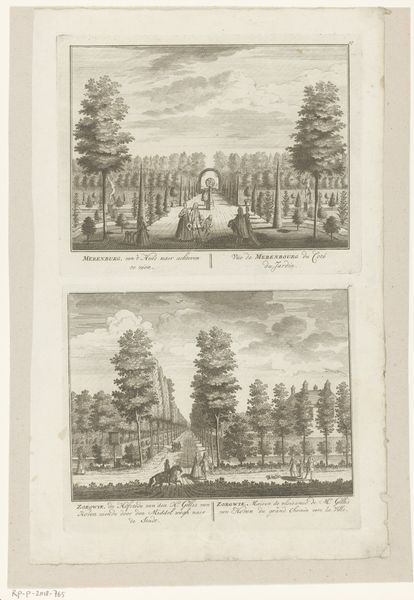
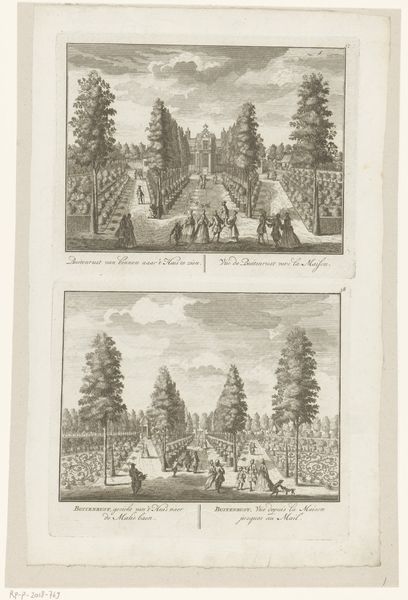
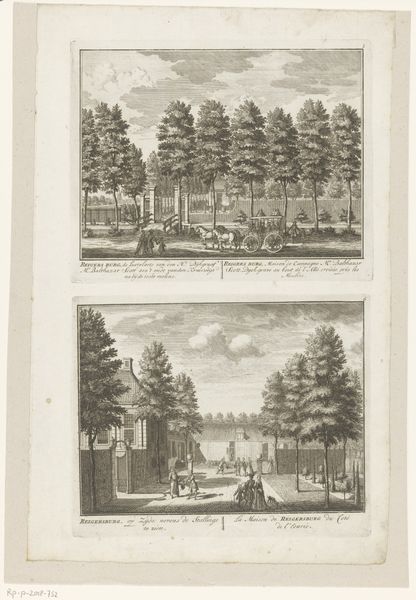
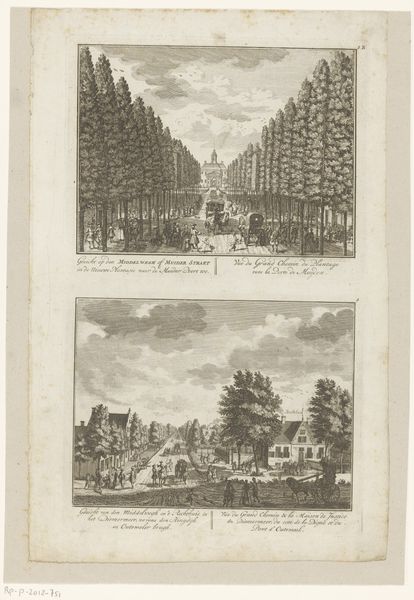
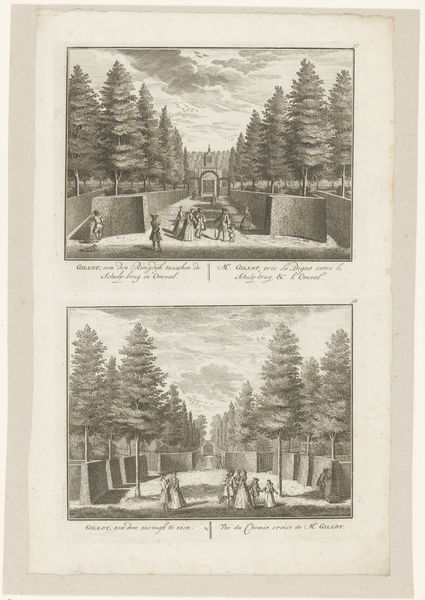
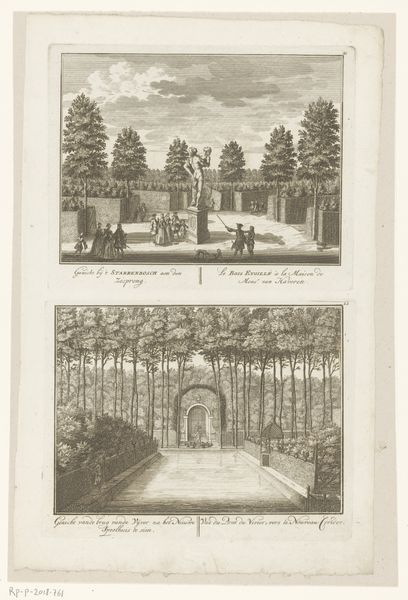
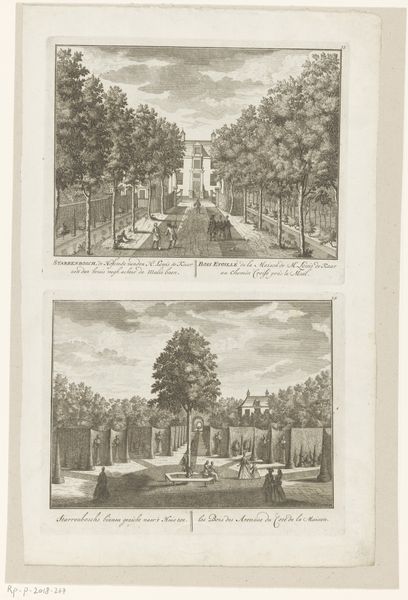
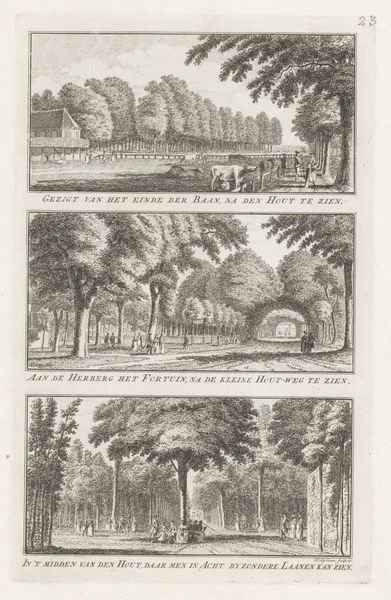
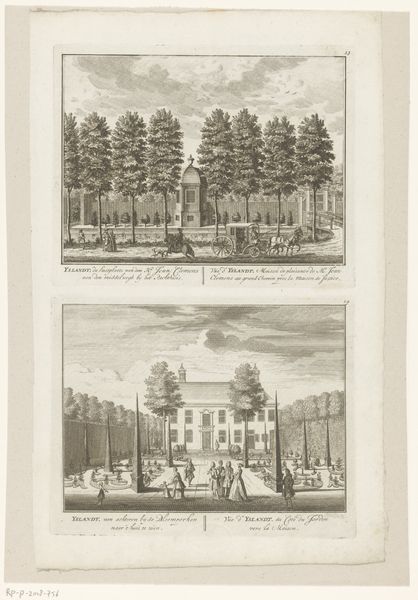
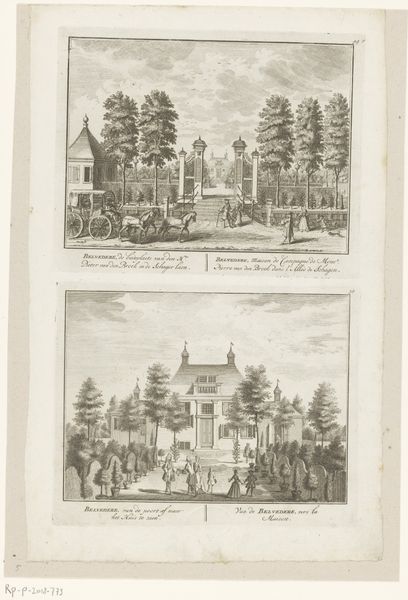
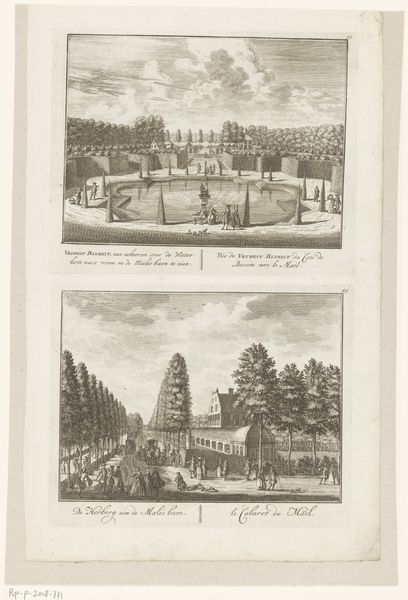
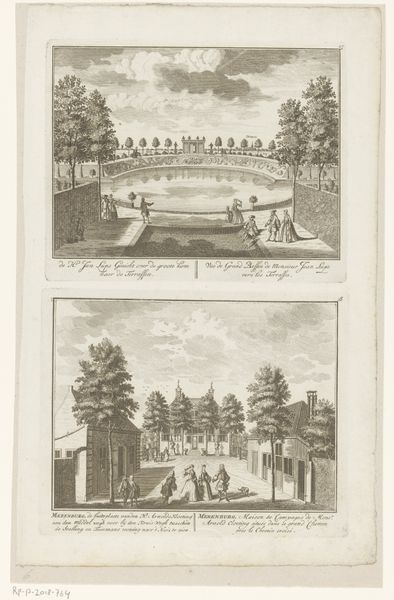
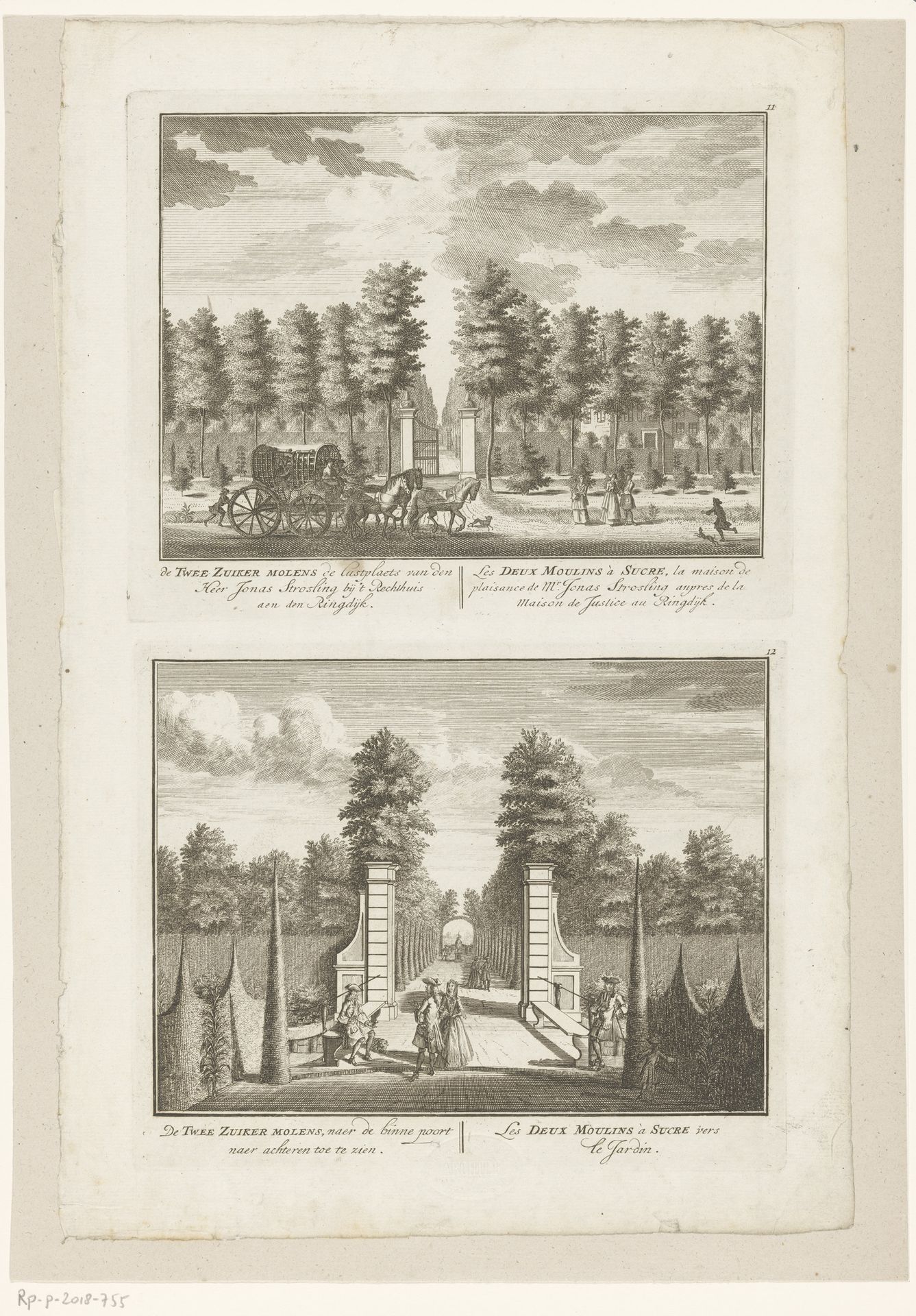
This engraving depicts two views of the De Twee Suikermolens estate. The anonymous artist employed clean, precise lines to define architectural and natural forms. Note how the composition is split horizontally, presenting two distinct perspectives of the estate's entrance. In the upper scene, the carriage and figures are meticulously rendered, creating a sense of depth through careful scaling and placement. The lower view emphasizes symmetry, with the gate framing a central pathway, drawing the eye into the estate's interior. The linear perspective is carefully managed to create a sense of receding space, inviting the viewer into the scene. This structured approach serves not only an aesthetic purpose but also communicates a certain order and control over nature, reflecting the values of the time. The contrast between open and enclosed spaces invites contemplation on accessibility and privilege.
Twee gezichten op de oprijlaan van buitenplaats De Twee Suikermolens 1725 - 1768

Anonymous
@anonymousLocation
RijksmuseumArtwork details
- Medium
- print, engraving
- Dimensions
- height 170 mm, width 214 mm, height 171 mm, width 210 mm
- Location
- Rijksmuseum
- Copyright
- Rijks Museum: Open Domain
Tags
baroque
dutch-golden-age
old engraving style
landscape
cityscape
genre-painting
engraving
Comments
No comments
About this artwork
This engraving depicts two views of the De Twee Suikermolens estate. The anonymous artist employed clean, precise lines to define architectural and natural forms. Note how the composition is split horizontally, presenting two distinct perspectives of the estate's entrance. In the upper scene, the carriage and figures are meticulously rendered, creating a sense of depth through careful scaling and placement. The lower view emphasizes symmetry, with the gate framing a central pathway, drawing the eye into the estate's interior. The linear perspective is carefully managed to create a sense of receding space, inviting the viewer into the scene. This structured approach serves not only an aesthetic purpose but also communicates a certain order and control over nature, reflecting the values of the time. The contrast between open and enclosed spaces invites contemplation on accessibility and privilege.
Comments
No comments