1889
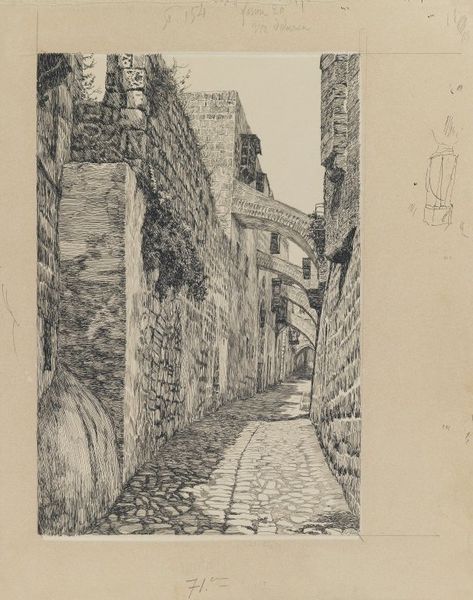
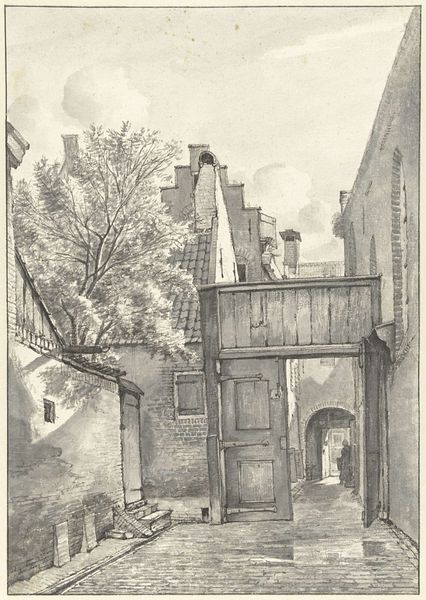
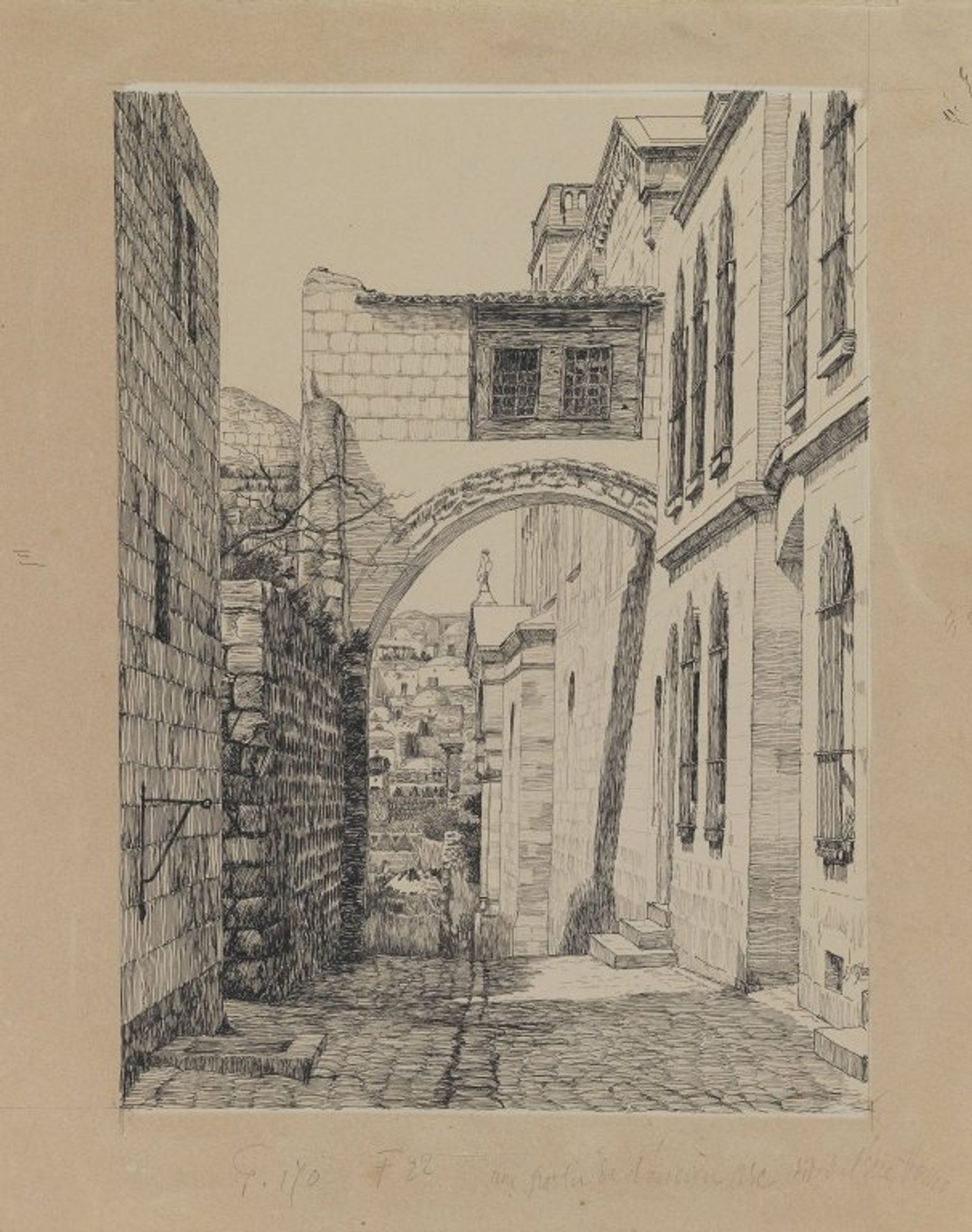
A Part of the Ancient Arch Called Ecce Homo


Listen to curator's interpretation
Curatorial notes
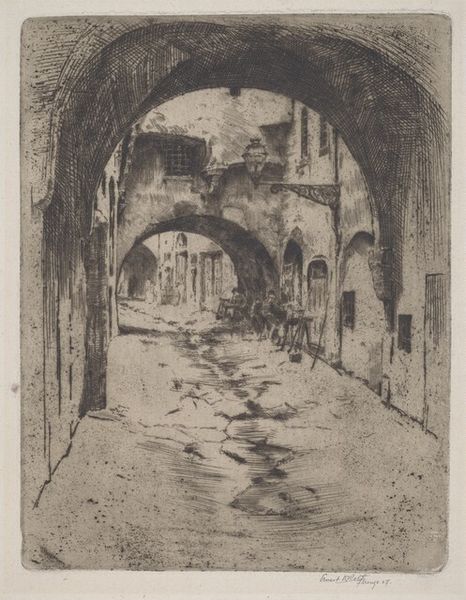
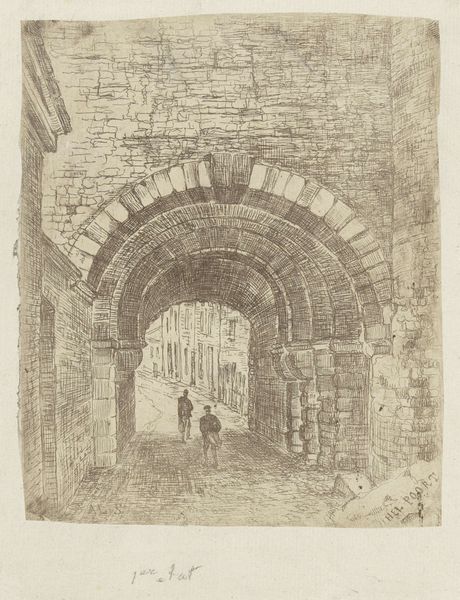
James Tissot’s drawing, A Part of the Ancient Arch Called Ecce Homo, now at the Brooklyn Museum, captures a street scene with remarkable detail using pen and ink. The composition is structured by strong vertical lines of the buildings which create a narrow corridor effect, drawing the eye through an archway. Tissot's intricate linework meticulously renders the texture of stone and brick, conveying a sense of depth and age. The arch itself acts as a framing device, offering a glimpse into the cityscape beyond. The monochromatic palette emphasizes form and shadow, evoking a somber mood. This drawing invites us to consider how architectural spaces can embody historical and spiritual significance. Through careful rendering, Tissot transforms a simple street into a contemplative scene, prompting reflections on the past. The drawing's formal qualities underscore the weight of history embedded within the stones.