print, engraving
#
portrait
#
aged paper
#
weapon
#
baroque
# print
#
book
#
old engraving style
#
traditional media
#
history-painting
#
engraving
Dimensions: height 155 mm, width 105 mm
Copyright: Rijks Museum: Open Domain
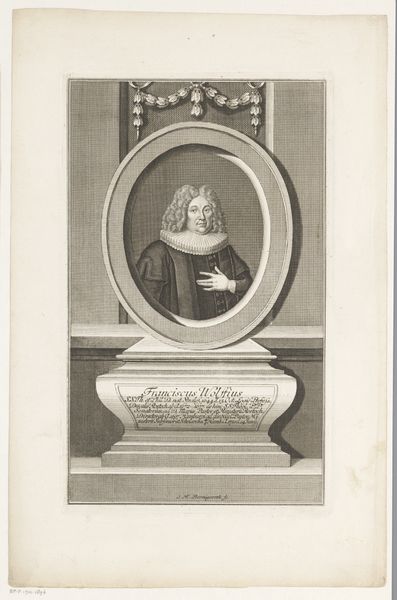
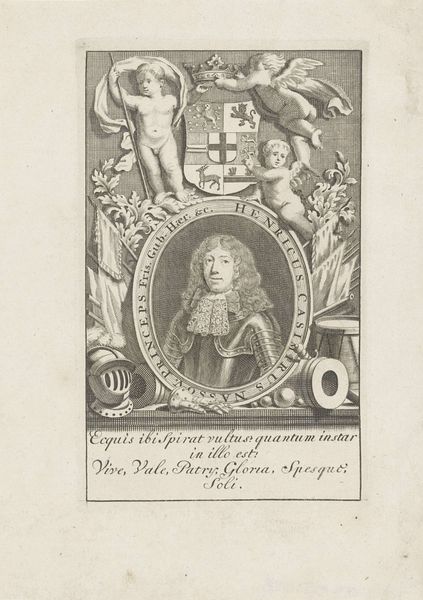
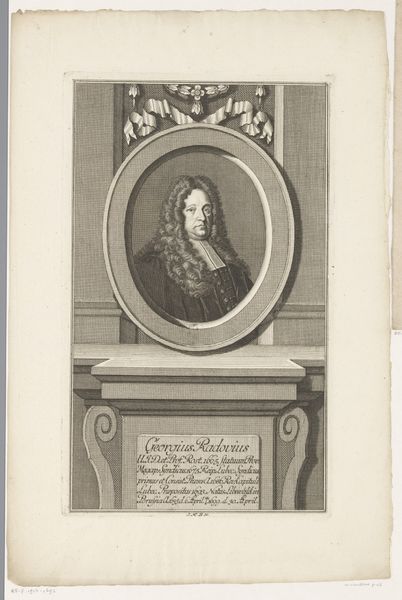
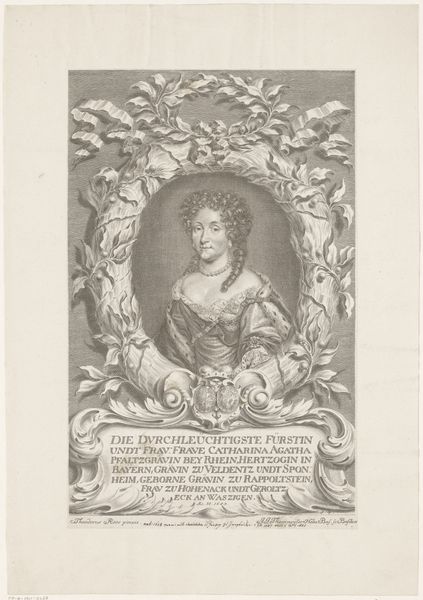
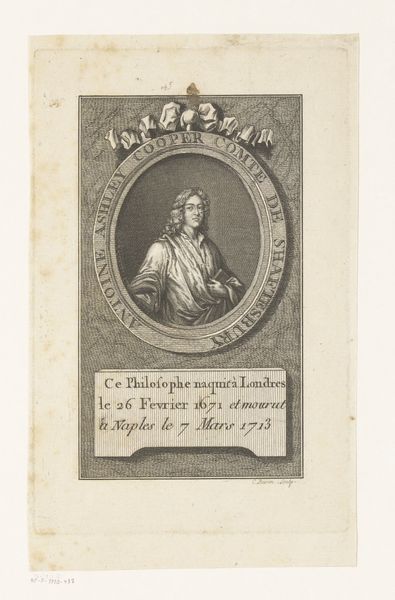
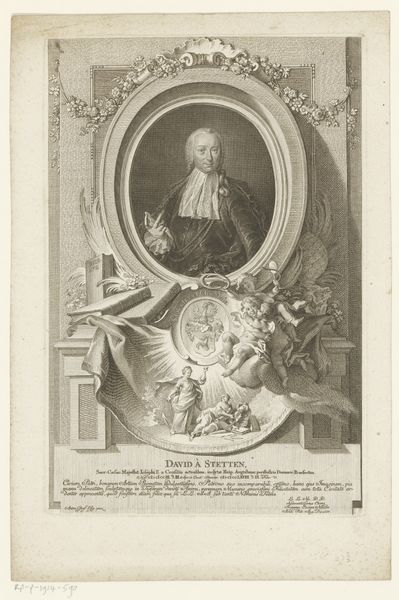
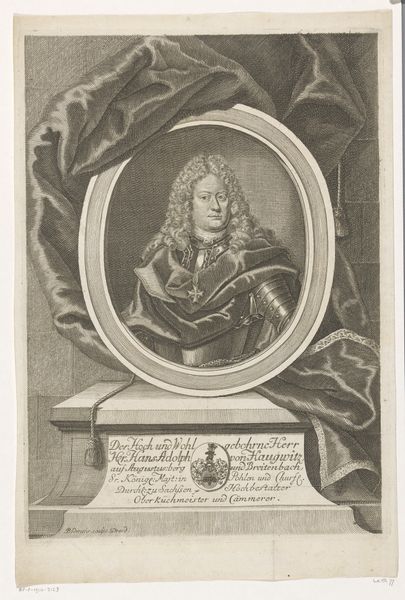
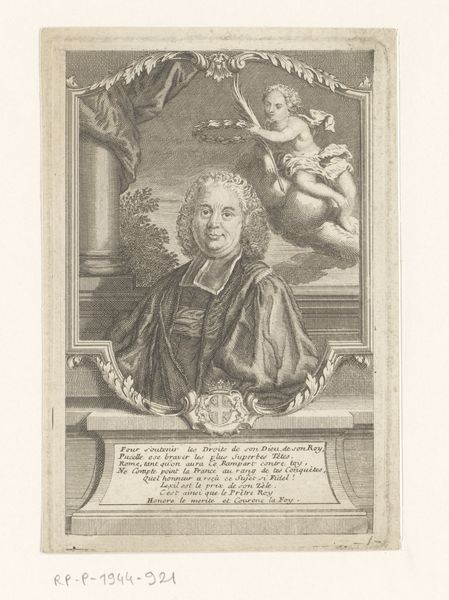
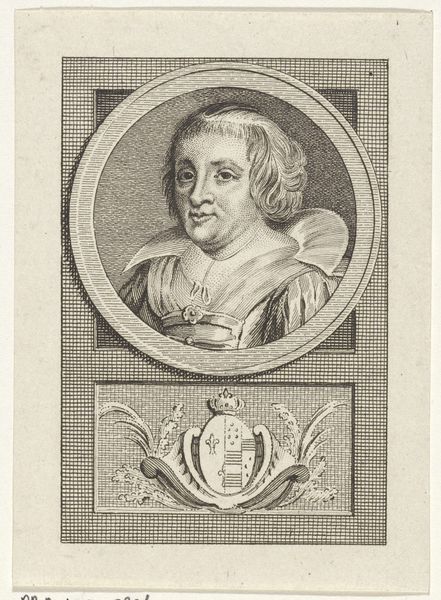
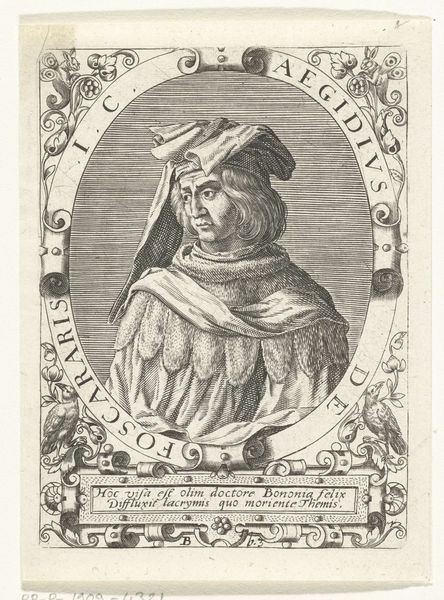
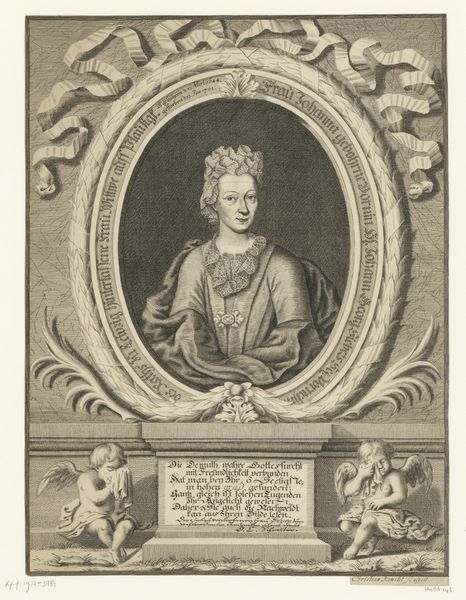
Bernard Picart made this engraving, "Portret van Joachim Faultrier," sometime between 1673 and 1733. Dominating the composition are symbols of learning: books, a globe, and scientific instruments. These aren't merely objects; they're keys that unlock the mind and expand horizons. Consider the globe. It's a direct descendant of the "mappa mundi," those medieval attempts to chart the world, full of real places but also monsters and myths. Here, it speaks of enlightenment, but echoes of the unknown still linger. Globes can be seen frequently throughout the art history. Think of Vermeer’s paintings where globes stand as a symbol of Dutch exploration and scientific discovery. These objects surrounding Faultrier evoke a psychological resonance, a deep-seated human desire to understand and control the world. This echoes our primal urge to map and navigate our environment. This image reminds us that symbols don't simply disappear; they transform, carrying echoes of the past into the present.
Comments
No comments
Be the first to comment and join the conversation on the ultimate creative platform.
 Collect
 React
React Comment
More like this