About this artwork
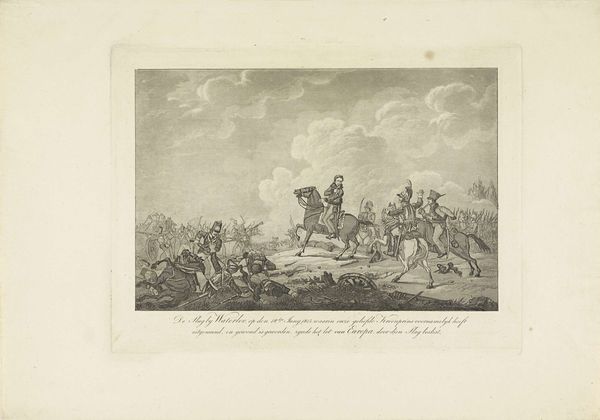
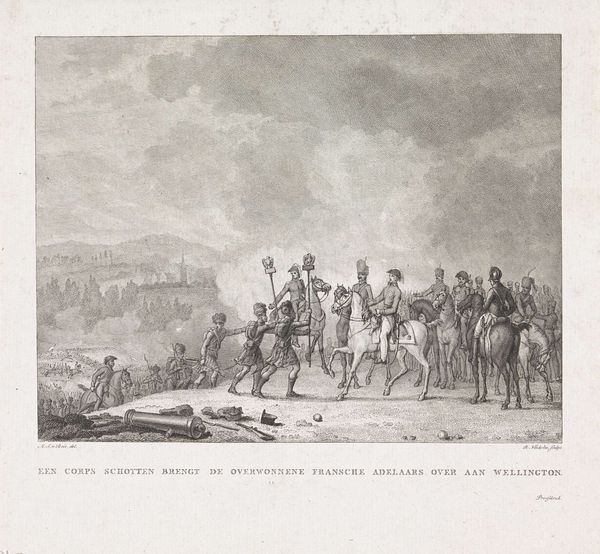
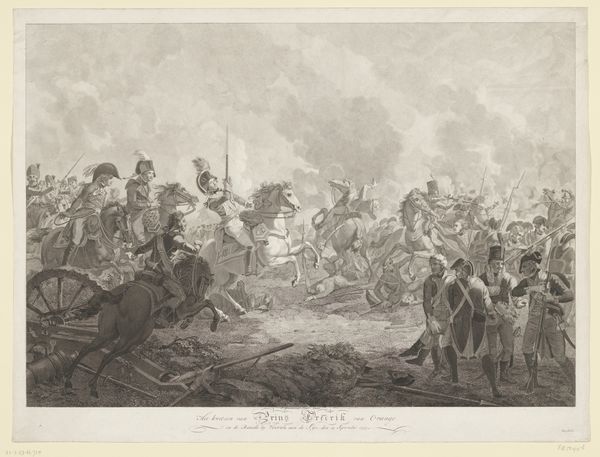
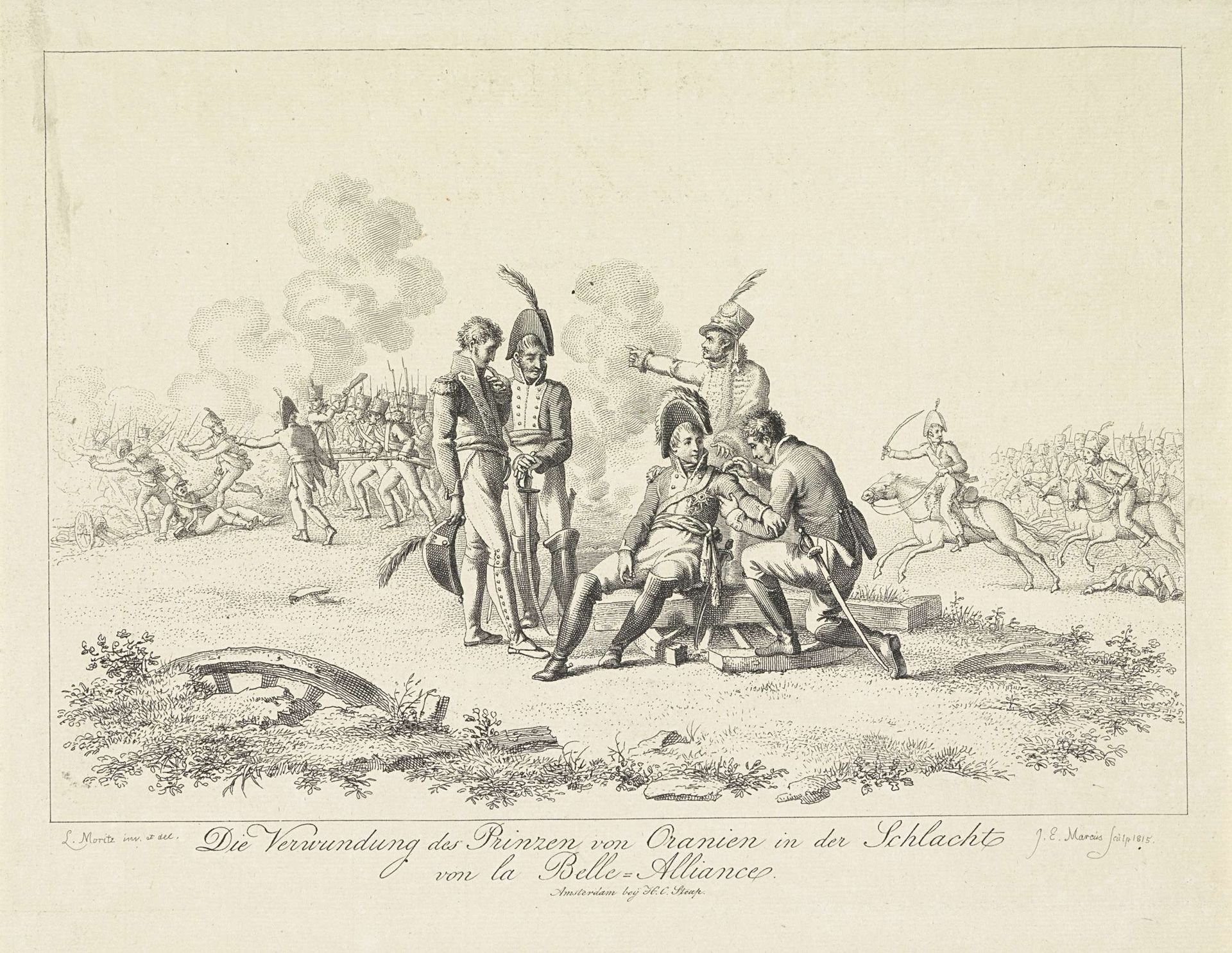
Jacob Ernst Marcus made this print of the Prince of Orange being wounded during the Battle of Waterloo. It's a dramatic scene, but consider the image's public role. Made in the Netherlands after 1815, it depicts a key moment in European history, the defeat of Napoleon, which re-established monarchies and conservative social orders. This image is less about historical accuracy, and more about constructing a heroic narrative around the Prince. The composition guides our gaze to the Prince and his injury. The background action becomes secondary. The print's visual codes reinforce the idea of sacrifice and duty, central to legitimizing the restored monarchy. The print, and others like it, played a crucial role in shaping public memory and national identity. To fully understand the image, historians would use archival sources, political pamphlets, and other visual representations of the period. Art is always contingent upon its social and institutional context.
Prins van Oranje raakt gewond tijdens de slag bij Waterloo, 1815
1815

Jacob Ernst Marcus
1774 - 1826Location
RijksmuseumArtwork details
- Medium
- print, engraving
- Dimensions
- height 245 mm, width 314 mm
- Location
- Rijksmuseum
- Copyright
- Rijks Museum: Open Domain
Tags
Comments
Share your thoughts
About this artwork
Jacob Ernst Marcus made this print of the Prince of Orange being wounded during the Battle of Waterloo. It's a dramatic scene, but consider the image's public role. Made in the Netherlands after 1815, it depicts a key moment in European history, the defeat of Napoleon, which re-established monarchies and conservative social orders. This image is less about historical accuracy, and more about constructing a heroic narrative around the Prince. The composition guides our gaze to the Prince and his injury. The background action becomes secondary. The print's visual codes reinforce the idea of sacrifice and duty, central to legitimizing the restored monarchy. The print, and others like it, played a crucial role in shaping public memory and national identity. To fully understand the image, historians would use archival sources, political pamphlets, and other visual representations of the period. Art is always contingent upon its social and institutional context.
Comments
Share your thoughts