About this artwork
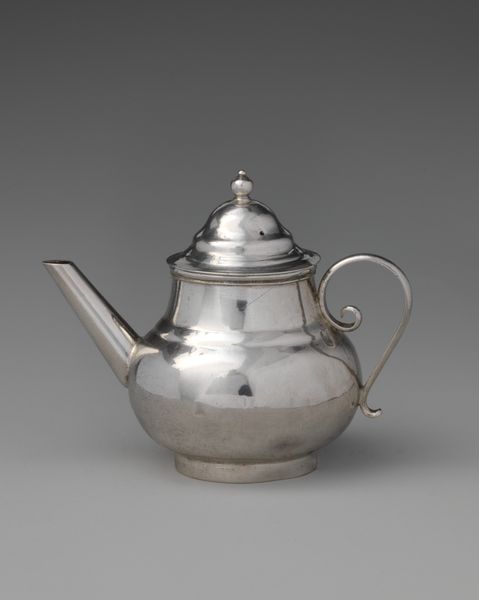
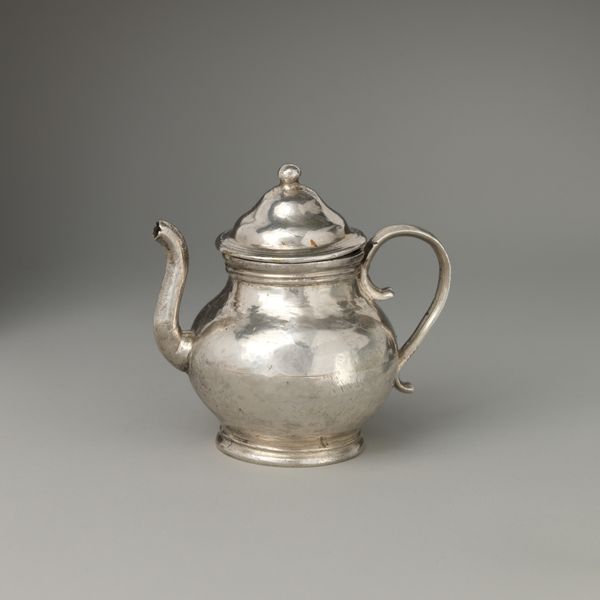
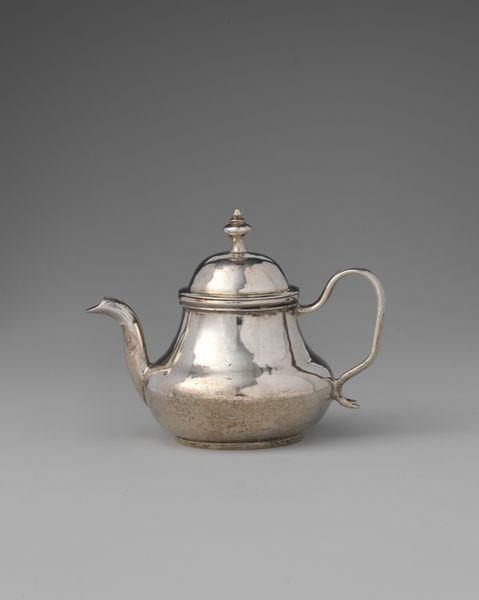
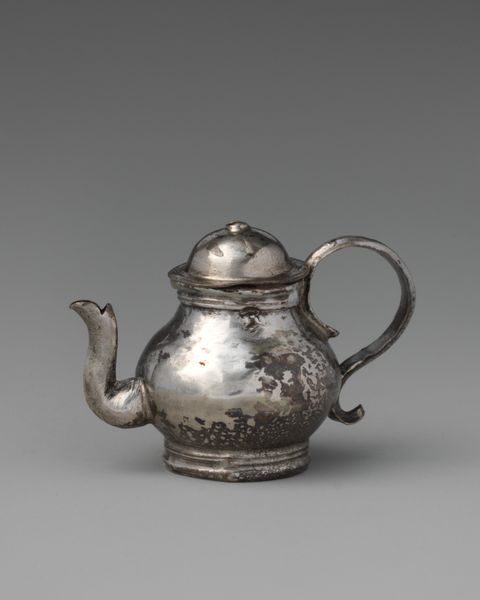
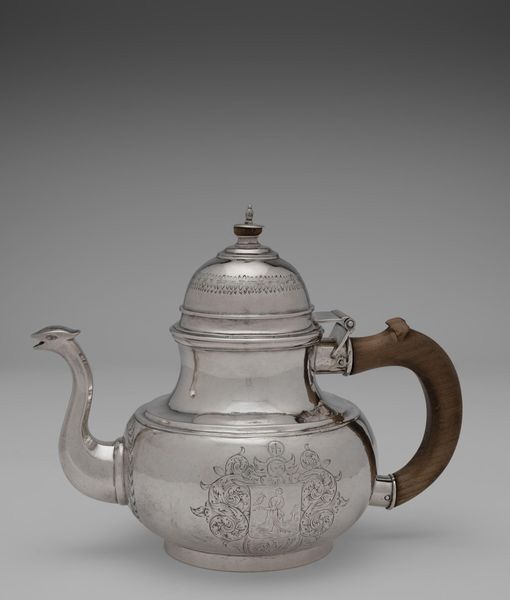
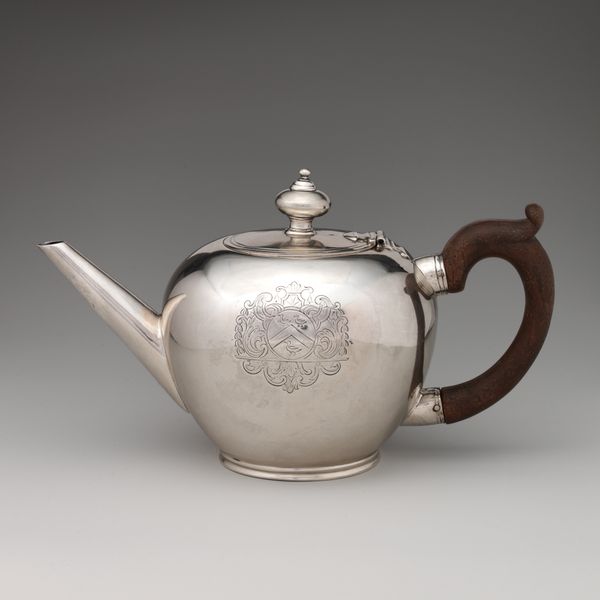
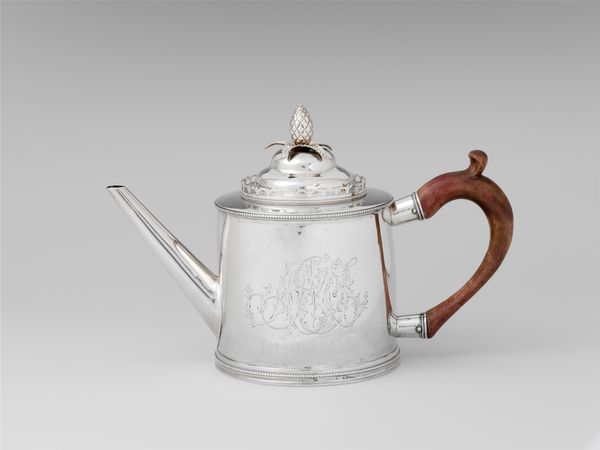
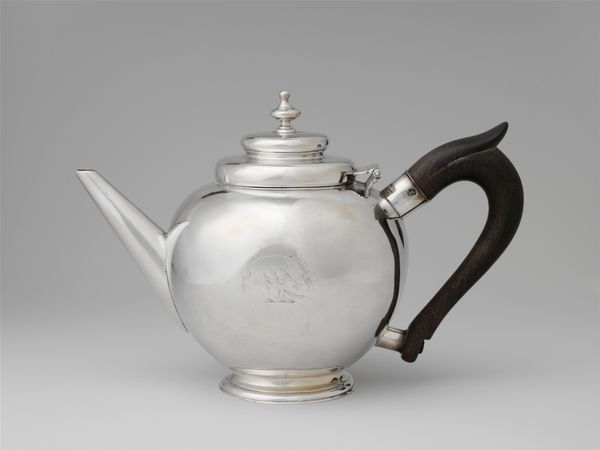
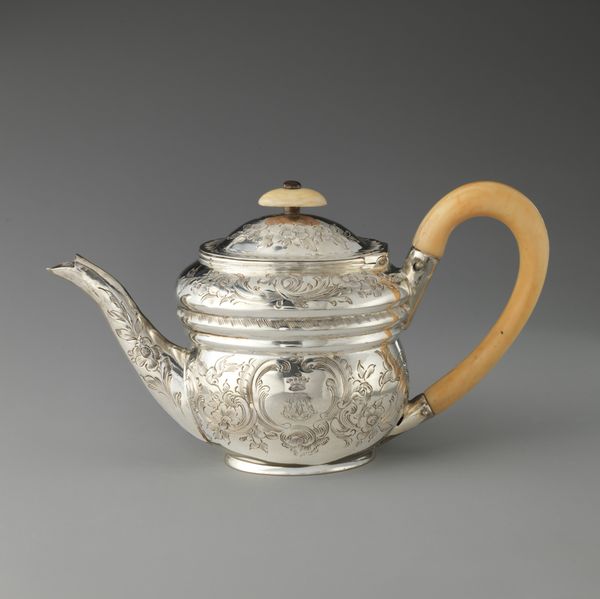
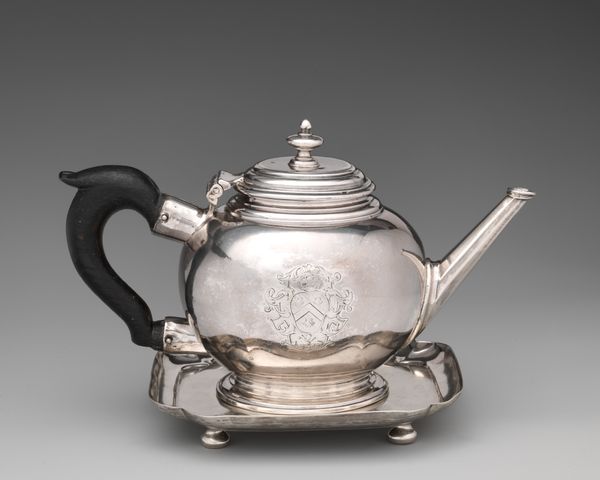
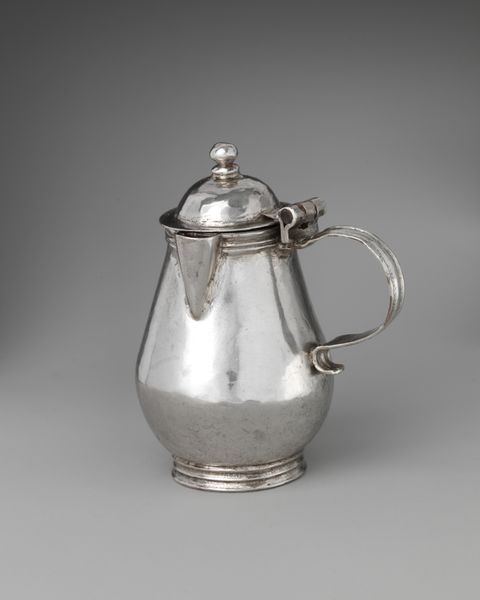
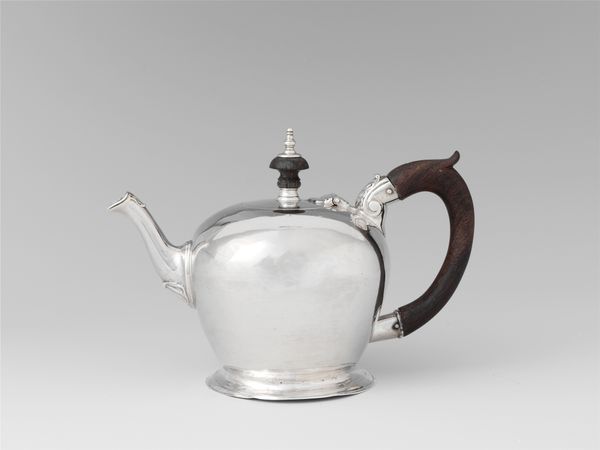
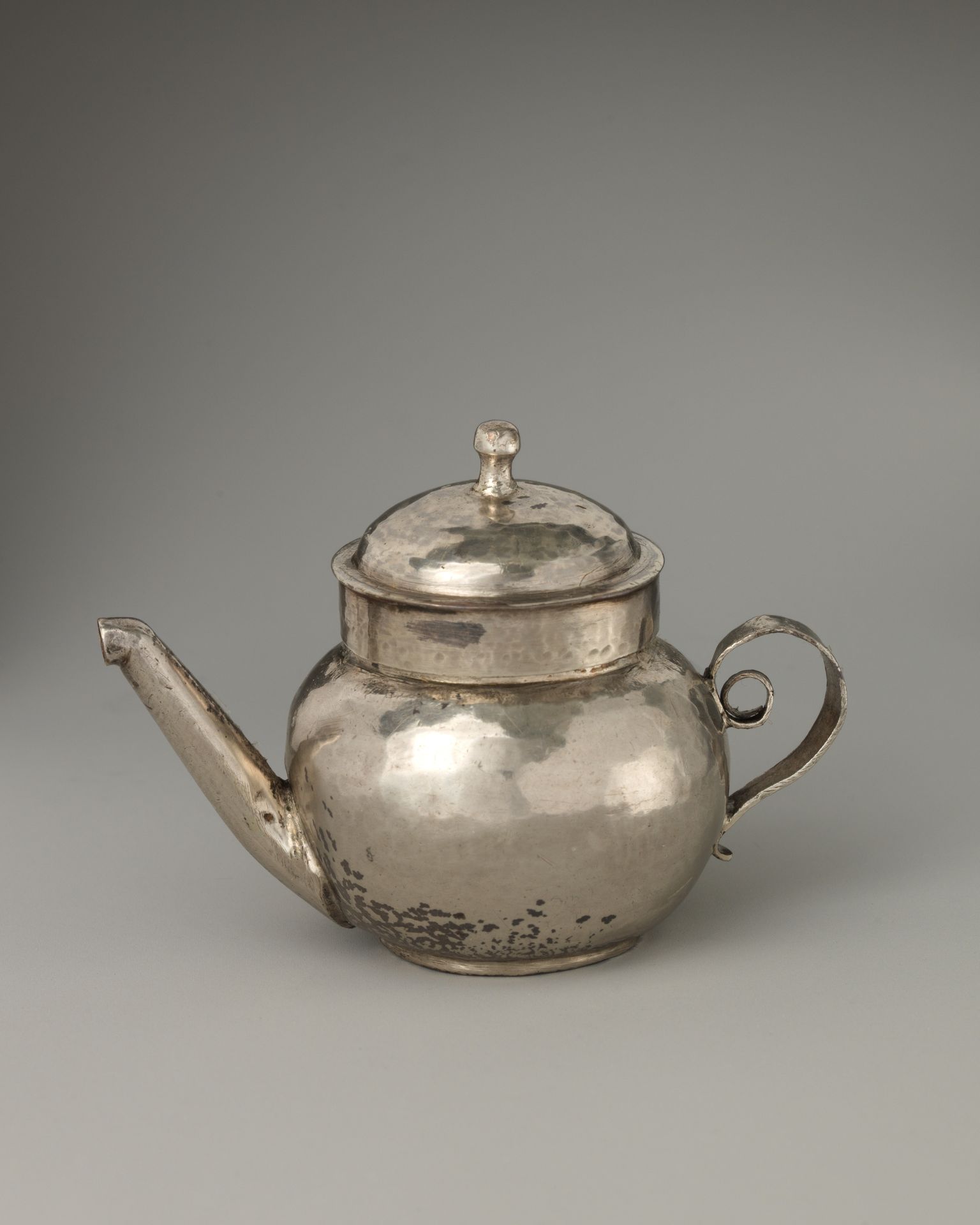
Curator: So, here we have a delicate object: a miniature teapot crafted in 1703. Editor: Immediately, it's the scale that gets me! It whispers of secret rituals and private comforts, doesn't it? Such an intimate size almost imbues it with a personality. Curator: Precisely. Fashioned from silver, this piece represents a confluence of functionality and artistry from a period obsessed with both. We are viewing craftsmanship in silver, yes, a prized material throughout time because of the skilled labor required to mine, shape, and refine it. Editor: Right, and it’s hard to ignore that hand-hammered texture on the body. You can practically feel the artisan's mark – each facet reflecting light just so. It steers away from pure utility; it's a statement. One wonders about the socio-economic context for those enjoying such crafted luxury... Curator: Definitely, it hints at leisure, but I see something more, a dialogue between Eastern and Western tastes, this blending of influences made possible through trade, cultural exchange... a dance around the teapot. The metal's surface bears tiny imperfections, so you realize how human it really is. Editor: Those little imperfections give it soul, I agree. And seeing how worn the silver is in places only increases its quiet power. I’m picturing it used on a traveling set of supplies, tucked away and used to brew up tea on long journies. Curator: In our modern eyes, these art objects bridge the space between practicality and aesthetics in daily life, it offers the simple luxury of tea... Editor: Agreed. Looking closer makes us reflect not just on past artistry, but also about our own everyday experiences with the objects we cherish now.
Miniature teapot with cover
1703


Artwork details
- Medium
- silver, metal, sculpture
- Dimensions
- Height: 1 3/4 in. (4.4 cm)
- Location
- Metropolitan Museum of Art, New York, NY
- Copyright
- Public Domain
Tags
Comments
Share your thoughts
About this artwork
Curator: So, here we have a delicate object: a miniature teapot crafted in 1703. Editor: Immediately, it's the scale that gets me! It whispers of secret rituals and private comforts, doesn't it? Such an intimate size almost imbues it with a personality. Curator: Precisely. Fashioned from silver, this piece represents a confluence of functionality and artistry from a period obsessed with both. We are viewing craftsmanship in silver, yes, a prized material throughout time because of the skilled labor required to mine, shape, and refine it. Editor: Right, and it’s hard to ignore that hand-hammered texture on the body. You can practically feel the artisan's mark – each facet reflecting light just so. It steers away from pure utility; it's a statement. One wonders about the socio-economic context for those enjoying such crafted luxury... Curator: Definitely, it hints at leisure, but I see something more, a dialogue between Eastern and Western tastes, this blending of influences made possible through trade, cultural exchange... a dance around the teapot. The metal's surface bears tiny imperfections, so you realize how human it really is. Editor: Those little imperfections give it soul, I agree. And seeing how worn the silver is in places only increases its quiet power. I’m picturing it used on a traveling set of supplies, tucked away and used to brew up tea on long journies. Curator: In our modern eyes, these art objects bridge the space between practicality and aesthetics in daily life, it offers the simple luxury of tea... Editor: Agreed. Looking closer makes us reflect not just on past artistry, but also about our own everyday experiences with the objects we cherish now.
Comments
Share your thoughts