About this artwork
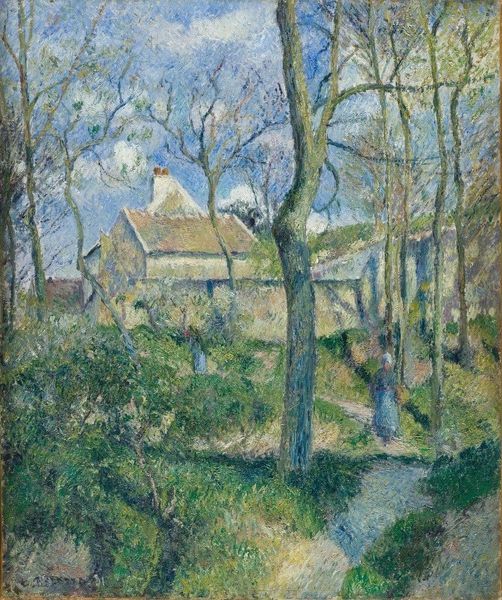
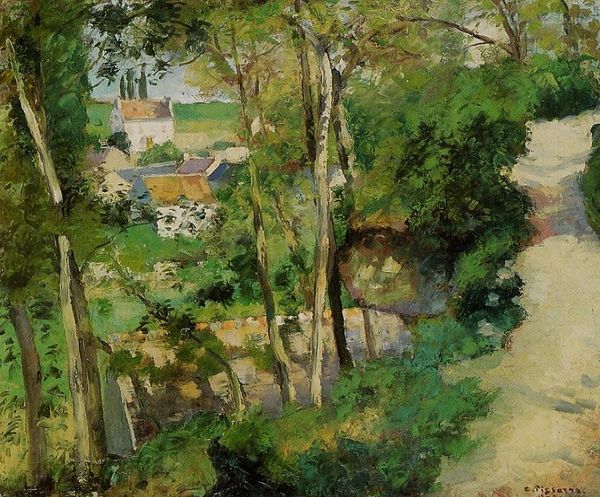
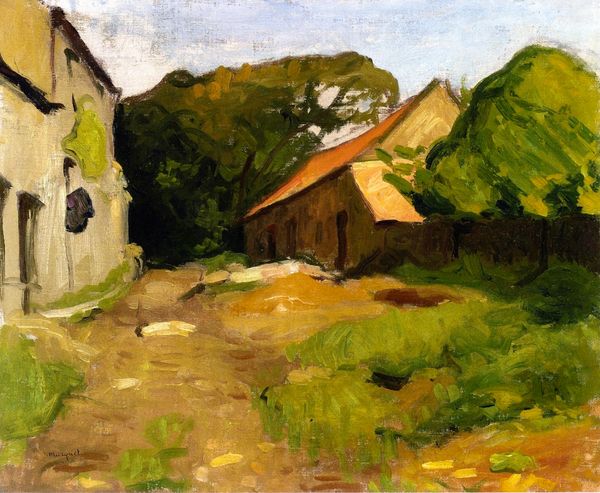
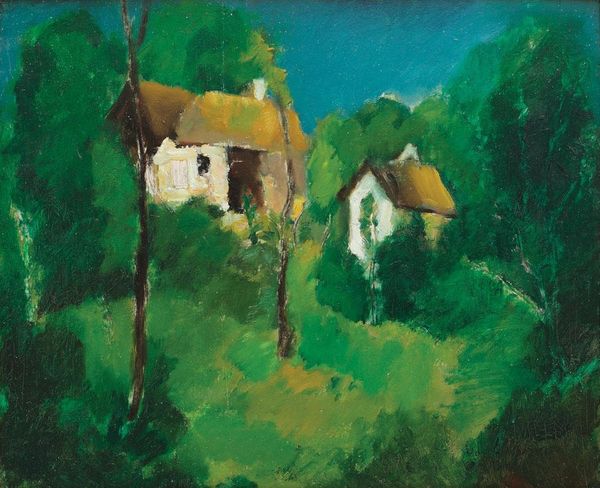
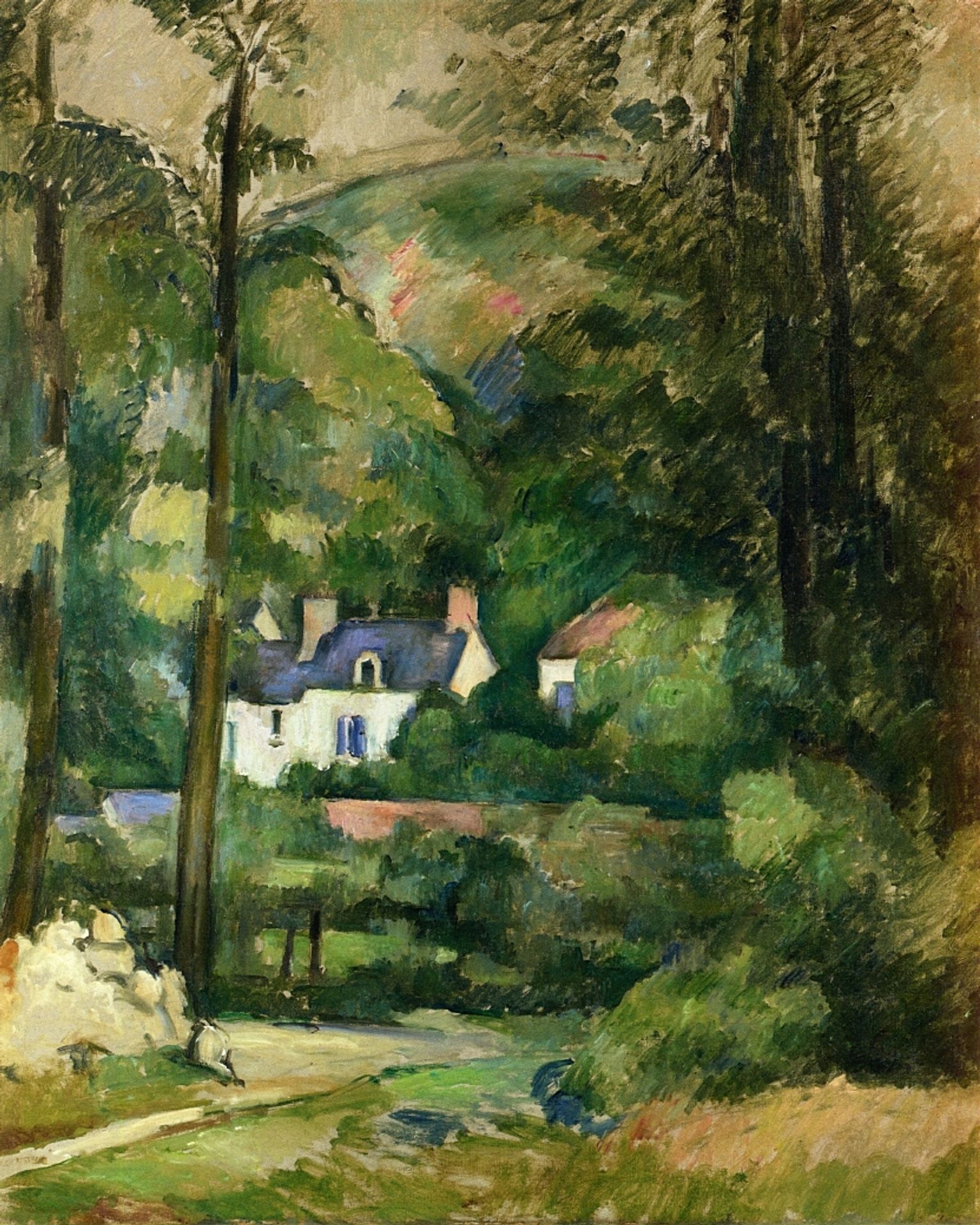
Editor: This is Paul Cézanne's "Houses in the Greenery," painted in 1881. The lush greens and thick application of paint give the scene a really enveloping, almost claustrophobic feeling. What’s your take on this piece? Curator: The "claustrophobic" feeling you're picking up is key, I think. Look at how Cézanne positions these homes *within* nature, not as separate from it. In 1881, what do you think the act of painting rural houses like this, completely enmeshed within an uncivilized nature, might signal about shifting cultural values at that time? Editor: So, almost a commentary on urbanization or… industrialization? Curator: Precisely! Cézanne wasn't just capturing a landscape; he was participating in a dialogue, a conversation about humans' relationship to the natural world. The thick paint, the way the buildings are swallowed by the greenery, suggests an alternative vision—a challenge to the rapid modernization transforming France. What do you make of his color choices in this context? Editor: I guess they further blur the lines between nature and architecture, like one bleeds into the other…It challenges traditional notions of the picturesque landscape. Curator: Exactly! Cézanne presents us not with an idyllic escape, but a powerful integration. This prompts us to rethink conventional aesthetics and consider the sociopolitical weight of something as seemingly simple as a landscape painting. So how does it change your understanding of Impressionism now? Editor: It makes me realize that Impressionism wasn’t *just* about capturing light and color. It could be a medium for social commentary as well. Curator: Yes, challenging our assumptions and uncovering deeper meanings—that's where art history becomes truly transformative!

Artwork details
- Medium
- plein-air, oil-paint, impasto
- Dimensions
- 206 x 165 cm
- Location
- Private Collection
- Copyright
- Public domain
Tags
impressionism
plein-air
oil-paint
landscape
oil painting
impasto
Comments
No comments
About this artwork
Editor: This is Paul Cézanne's "Houses in the Greenery," painted in 1881. The lush greens and thick application of paint give the scene a really enveloping, almost claustrophobic feeling. What’s your take on this piece? Curator: The "claustrophobic" feeling you're picking up is key, I think. Look at how Cézanne positions these homes *within* nature, not as separate from it. In 1881, what do you think the act of painting rural houses like this, completely enmeshed within an uncivilized nature, might signal about shifting cultural values at that time? Editor: So, almost a commentary on urbanization or… industrialization? Curator: Precisely! Cézanne wasn't just capturing a landscape; he was participating in a dialogue, a conversation about humans' relationship to the natural world. The thick paint, the way the buildings are swallowed by the greenery, suggests an alternative vision—a challenge to the rapid modernization transforming France. What do you make of his color choices in this context? Editor: I guess they further blur the lines between nature and architecture, like one bleeds into the other…It challenges traditional notions of the picturesque landscape. Curator: Exactly! Cézanne presents us not with an idyllic escape, but a powerful integration. This prompts us to rethink conventional aesthetics and consider the sociopolitical weight of something as seemingly simple as a landscape painting. So how does it change your understanding of Impressionism now? Editor: It makes me realize that Impressionism wasn’t *just* about capturing light and color. It could be a medium for social commentary as well. Curator: Yes, challenging our assumptions and uncovering deeper meanings—that's where art history becomes truly transformative!
Comments
No comments