About this artwork
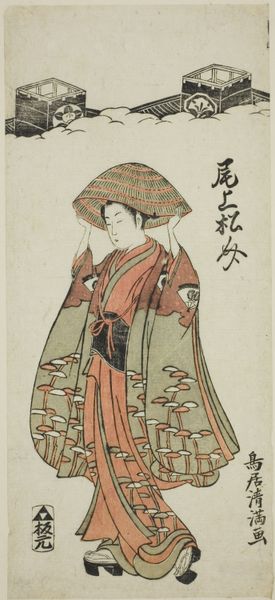
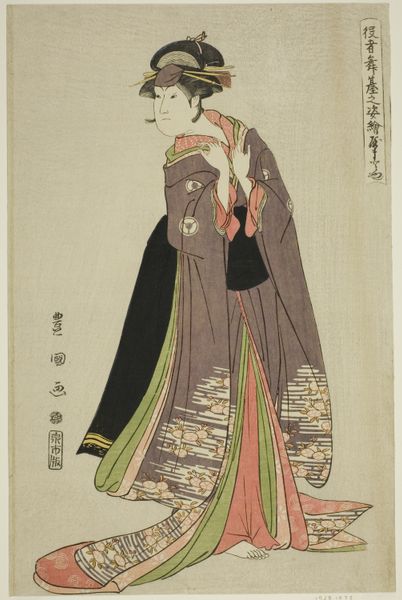
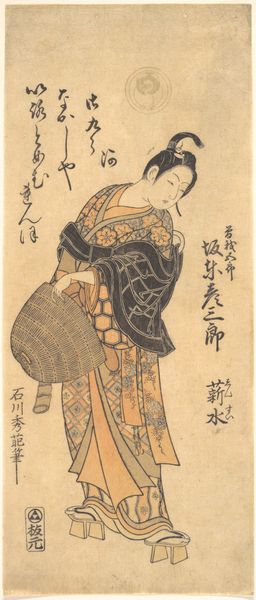
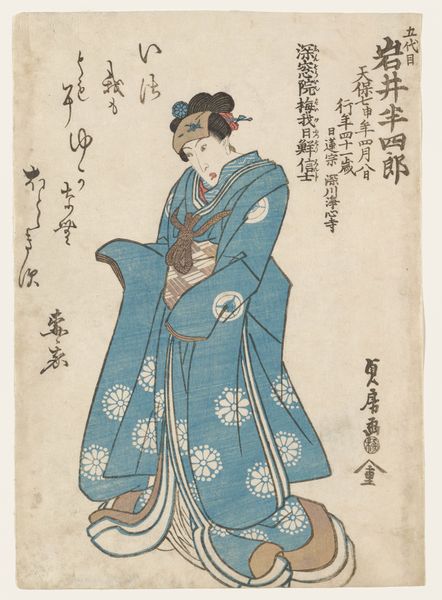
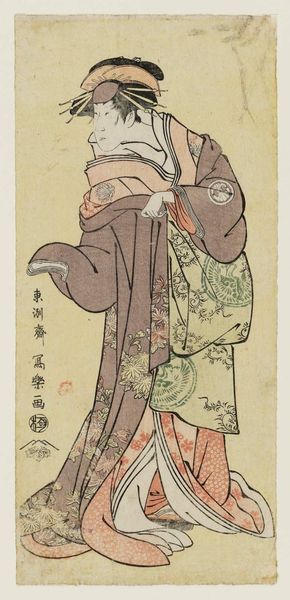
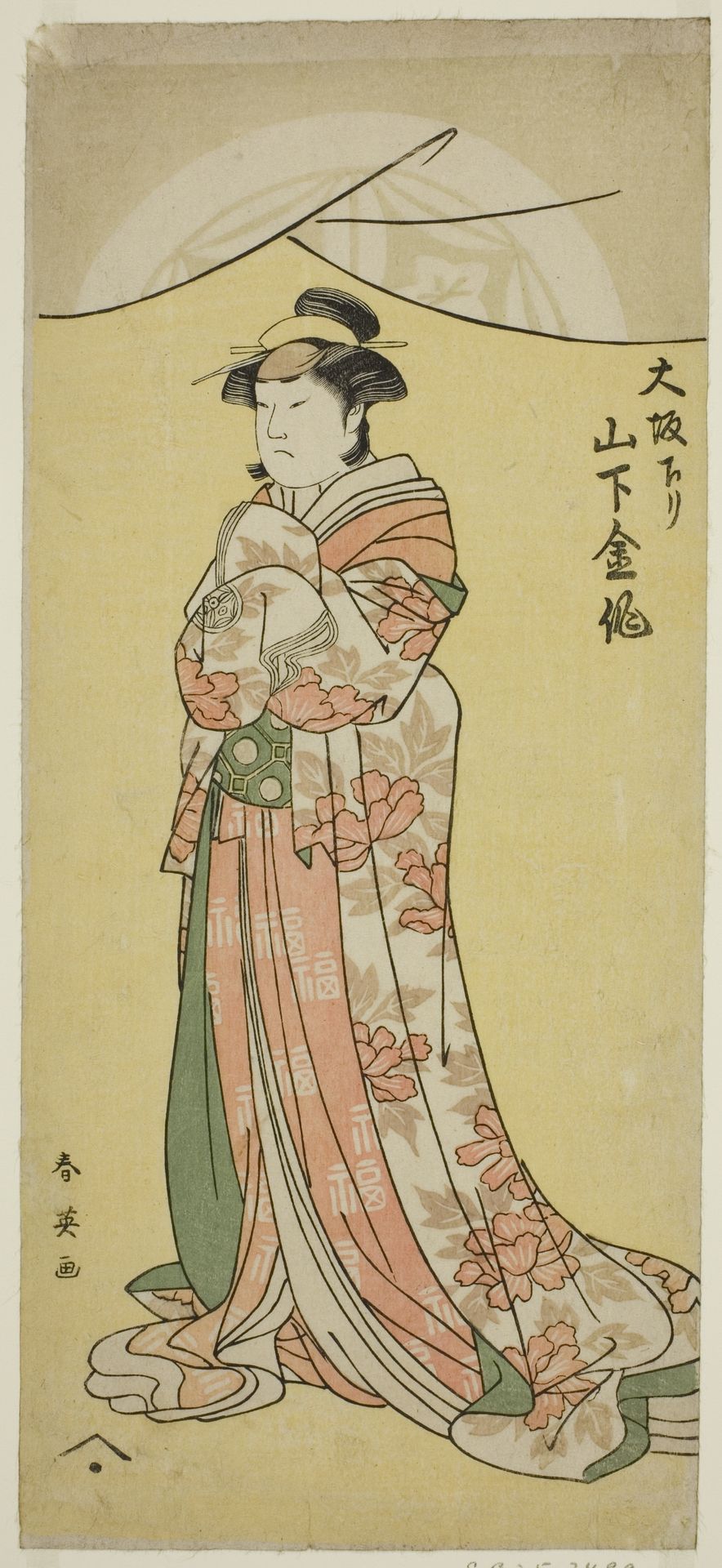
Katsukawa Shun'ei created this woodblock print around 1794; it depicts the actor Yamashita Kinsaku II in the role of a maid. During the Edo period in Japan, societal norms prescribed distinct gender roles, yet Kabuki theater offered a space to play with these boundaries. Here, we see a male actor embodying a female character, a practice known as onnagata. These actors were celebrated for their ability to convincingly portray femininity, often becoming objects of intense public fascination. The detailed rendering of the actor’s costume, with its intricate patterns and multiple layers, speaks to the importance of visual representation in constructing identity. What does it mean to see gender performed, to witness the construction of identity through artifice? This print invites us to consider the fluidity of identity, the power of representation, and the complex interplay between performance and perception in shaping cultural values.
The Actor Yamashita Kinsaku II as the maid Tsumagi in the play "Otokyama O-Edo no Ishizue," performed at the Kiri Theater in the eleventh month, 1794
c. 1794


Artwork details
- Medium
- print, woodblock-print
- Dimensions
- 33 × 14.8 cm (13 × 5 13/16 in.)
- Location
- The Art Institute of Chicago
- Copyright
- Public Domain
Tags
portrait
asian-art
ukiyo-e
figuration
woodblock-print
genre-painting
Comments
Be the first to share your thoughts about this work.
About this artwork
Katsukawa Shun'ei created this woodblock print around 1794; it depicts the actor Yamashita Kinsaku II in the role of a maid. During the Edo period in Japan, societal norms prescribed distinct gender roles, yet Kabuki theater offered a space to play with these boundaries. Here, we see a male actor embodying a female character, a practice known as onnagata. These actors were celebrated for their ability to convincingly portray femininity, often becoming objects of intense public fascination. The detailed rendering of the actor’s costume, with its intricate patterns and multiple layers, speaks to the importance of visual representation in constructing identity. What does it mean to see gender performed, to witness the construction of identity through artifice? This print invites us to consider the fluidity of identity, the power of representation, and the complex interplay between performance and perception in shaping cultural values.
Comments
Be the first to share your thoughts about this work.