About this artwork
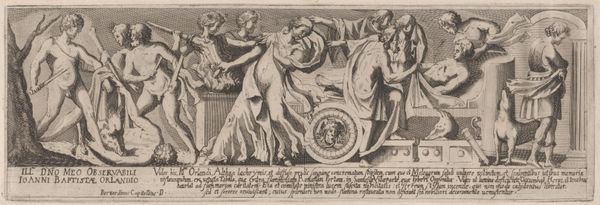
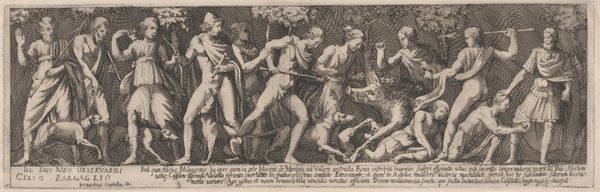
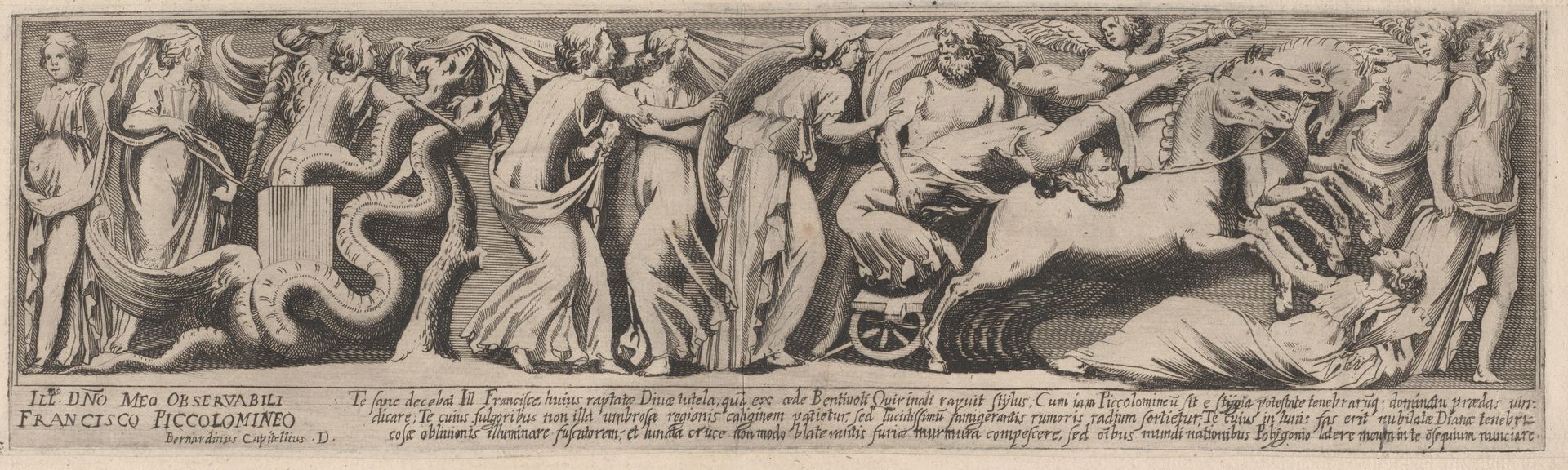
Bernardino Capitelli created this engraving, "The Rape of Persephone," in the 17th century. During this time, artists were captivated by classical mythology, often reinterpreting ancient stories through a contemporary lens. Here, Capitelli presents a dramatic scene from the myth of Persephone, abducted by Hades to become queen of the underworld. The term 'rape' is loaded, especially when considered in light of contemporary understandings of sexual violence and power. How does the artist depict the abduction? Does it glorify the power dynamic, or critique it? This image invites reflection on how the story perpetuates ideas about gender, power, and consent. What does it mean to depict a woman's capture as a moment of mythological significance, and how does that affect our understanding of women's experiences in both historical and contemporary contexts? Ultimately, "The Rape of Persephone" challenges us to confront uncomfortable truths about the stories we tell and the values they uphold.
The Rape of Persephone 1628 - 1638

Bernardino Capitelli
1590 - 1639
The Metropolitan Museum of Art
Metropolitan Museum of Art, New York, NYArtwork details
- Medium
- drawing, print, etching, engraving
- Dimensions
- Sheet (Trimmed): 4 in. × 13 1/2 in. (10.2 × 34.3 cm)
- Location
- Metropolitan Museum of Art, New York, NY
- Copyright
- Public Domain
Tags
drawing
allegory
pen drawing
etching
classical-realism
mannerism
figuration
history-painting
engraving
Comments
No comments
About this artwork
Bernardino Capitelli created this engraving, "The Rape of Persephone," in the 17th century. During this time, artists were captivated by classical mythology, often reinterpreting ancient stories through a contemporary lens. Here, Capitelli presents a dramatic scene from the myth of Persephone, abducted by Hades to become queen of the underworld. The term 'rape' is loaded, especially when considered in light of contemporary understandings of sexual violence and power. How does the artist depict the abduction? Does it glorify the power dynamic, or critique it? This image invites reflection on how the story perpetuates ideas about gender, power, and consent. What does it mean to depict a woman's capture as a moment of mythological significance, and how does that affect our understanding of women's experiences in both historical and contemporary contexts? Ultimately, "The Rape of Persephone" challenges us to confront uncomfortable truths about the stories we tell and the values they uphold.
Comments
No comments