1834 - 1911
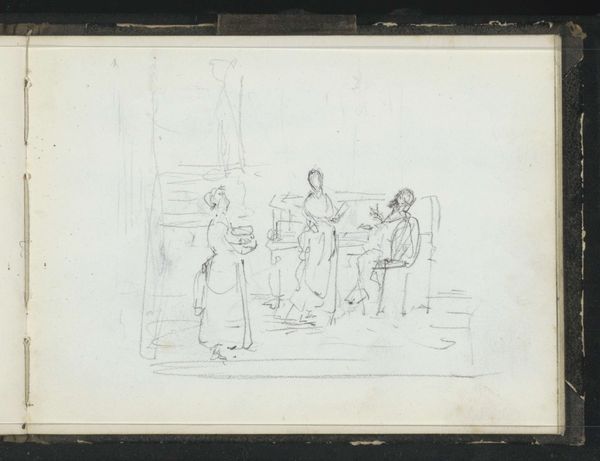
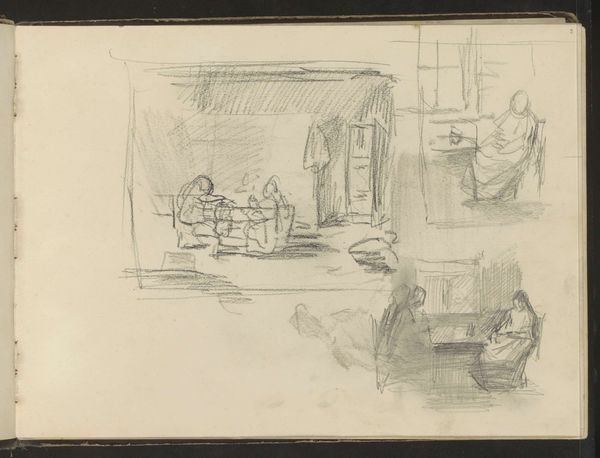
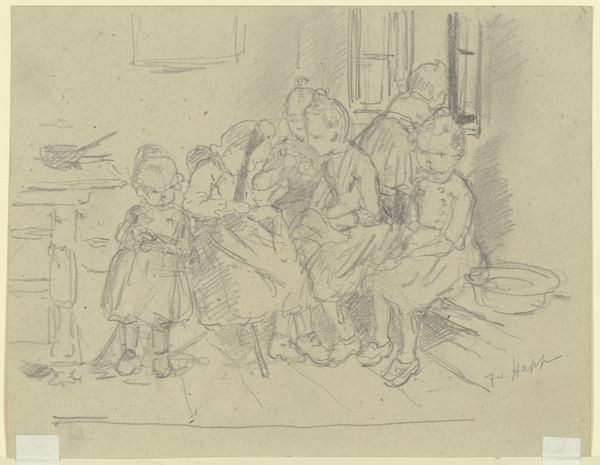
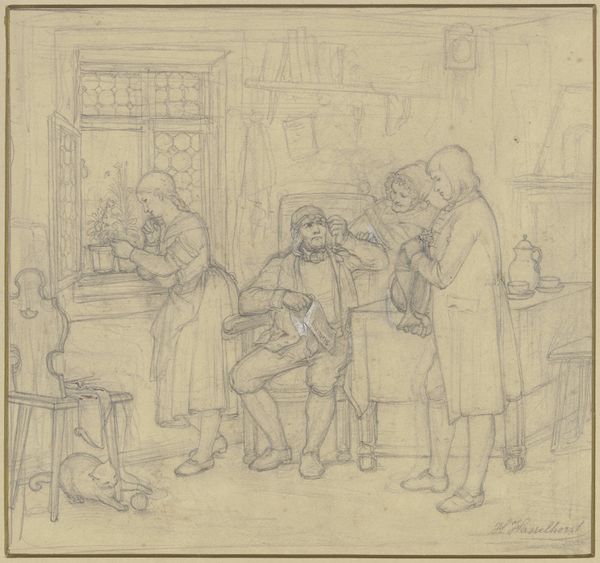
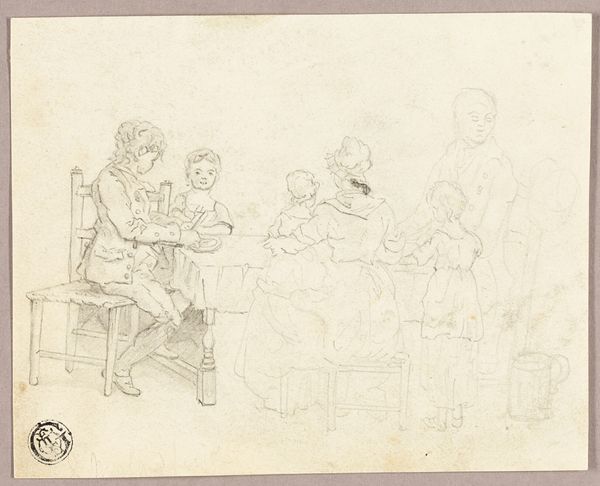
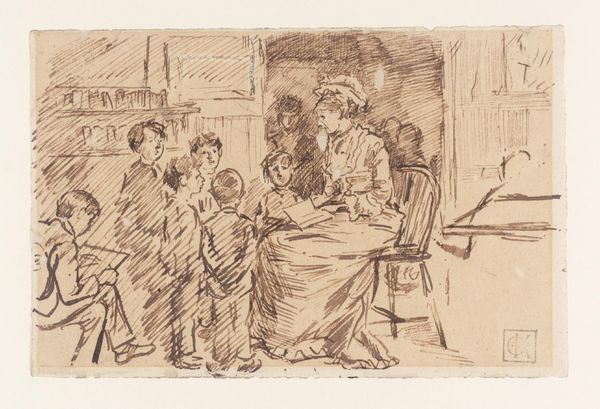
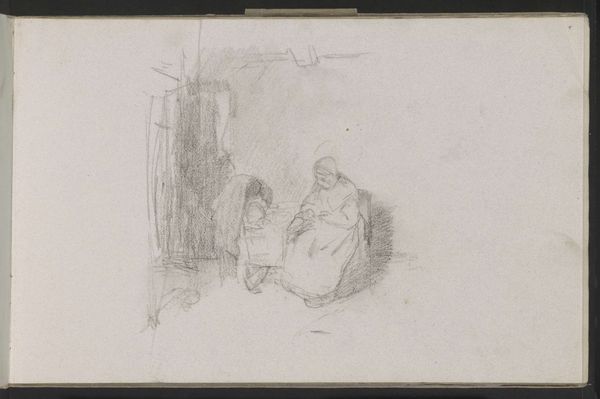
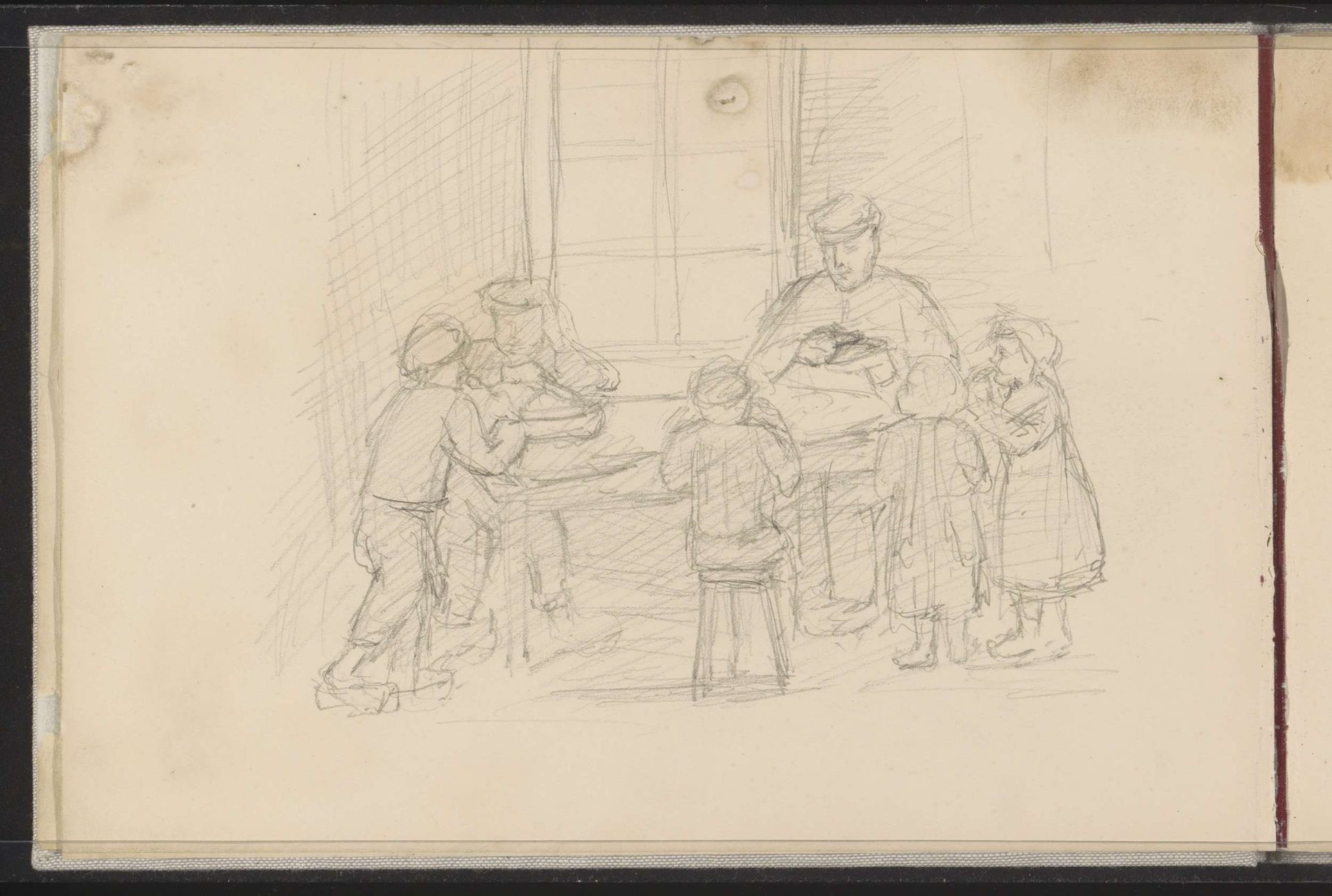
Twee mannen en kinderen rondom een tafel bij een venster

Jozef Israëls
1824 - 1911Location
RijksmuseumListen to curator's interpretation
Curatorial notes
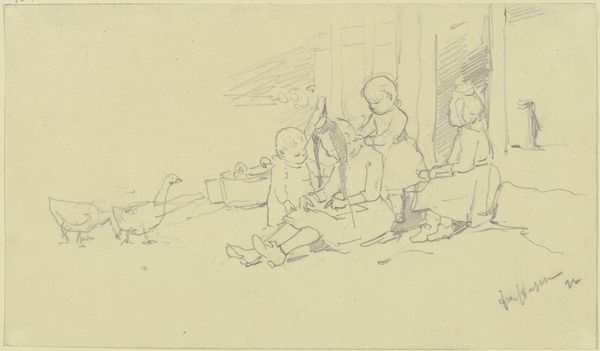
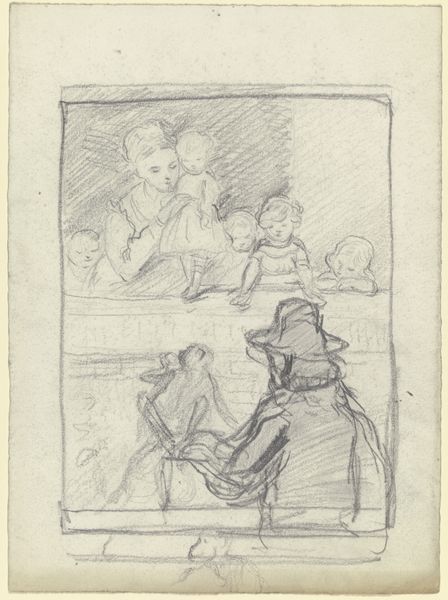
This sketch by Jozef Israëls depicts two men and several children gathered around a table, likely sharing a meal in humble surroundings. The window behind them, though simple, is a powerful symbol. Throughout art history, windows have served as metaphors for perception, knowledge, and the boundary between the internal and external world. Think of Renaissance paintings where light streams through windows, illuminating sacred scenes, or the Dutch Masters who used windows to frame intimate domestic moments. Here, the window could suggest an opening to the outside world, but it may also confine the figures within a space. The act of sharing food around a table is laden with communal meaning, reminiscent of the Last Supper and other shared meals that reinforce social bonds. The recurring image of people gathering to eat transcends eras, linking us to primal instincts and the universal human experience. This simple act, rendered in soft strokes, evokes a profound sense of connection, stirring our collective memory.