About this artwork
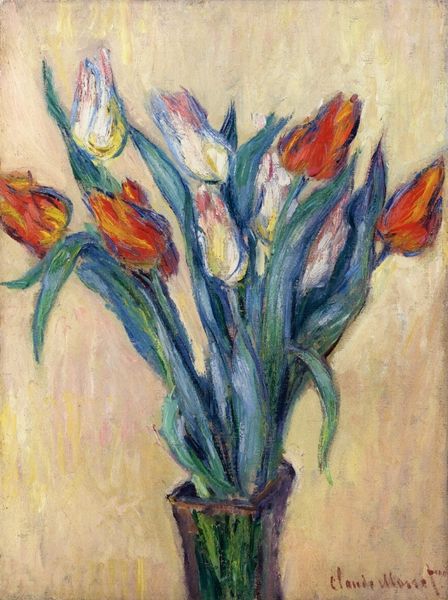
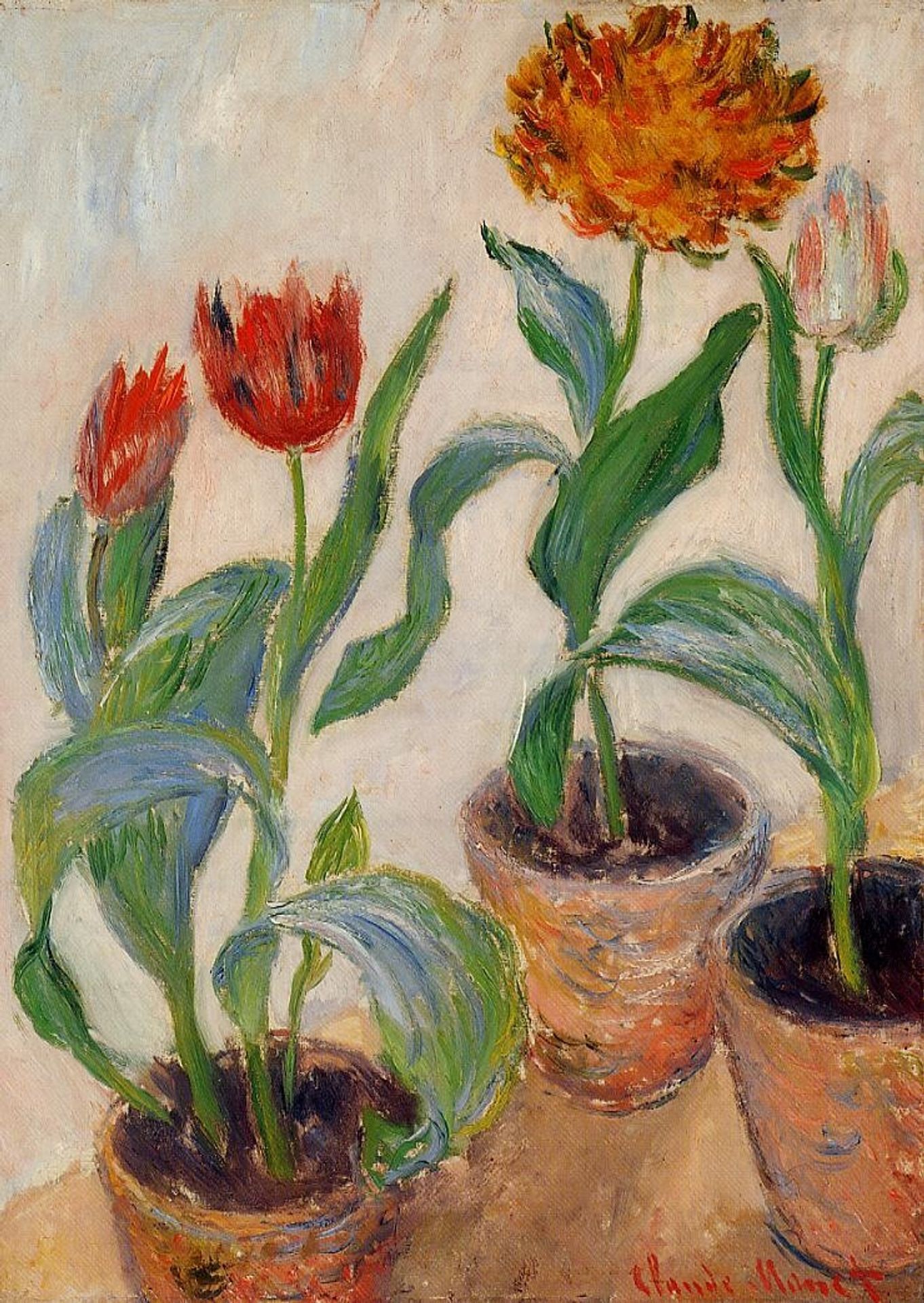
Claude Monet painted "Three Pots of Tulips" using oil paints on canvas. The visible brushstrokes reveal a great deal about Monet's process and intentions. Notice how he builds up layers of paint to capture the fleeting effects of light on the flowers and their terracotta pots. The thickness of the paint adds a tactile quality, almost as if we could reach out and touch the rough texture of the clay or the delicate petals of the tulips. The terracotta pots themselves are significant. They were mass-produced objects, readily available and relatively inexpensive, reflective of a growing consumer culture. Monet elevates these humble, everyday objects through the act of painting, blurring the lines between the industrial and the artistic. By paying attention to the materials, the making, and the social context, we can appreciate the full depth of Monet's artistic vision.

Artwork details
- Medium
- painting, plein-air, oil-paint, impasto
- Copyright
- Public domain
Tags
painting
impressionism
plein-air
oil-paint
landscape
flower
impressionist landscape
oil painting
impasto
Comments
Be the first to share your thoughts about this work.
About this artwork
Claude Monet painted "Three Pots of Tulips" using oil paints on canvas. The visible brushstrokes reveal a great deal about Monet's process and intentions. Notice how he builds up layers of paint to capture the fleeting effects of light on the flowers and their terracotta pots. The thickness of the paint adds a tactile quality, almost as if we could reach out and touch the rough texture of the clay or the delicate petals of the tulips. The terracotta pots themselves are significant. They were mass-produced objects, readily available and relatively inexpensive, reflective of a growing consumer culture. Monet elevates these humble, everyday objects through the act of painting, blurring the lines between the industrial and the artistic. By paying attention to the materials, the making, and the social context, we can appreciate the full depth of Monet's artistic vision.
Comments
Be the first to share your thoughts about this work.