About this artwork
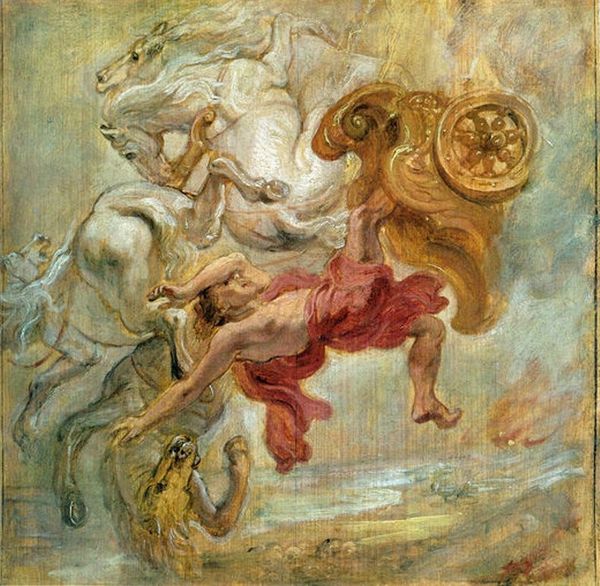
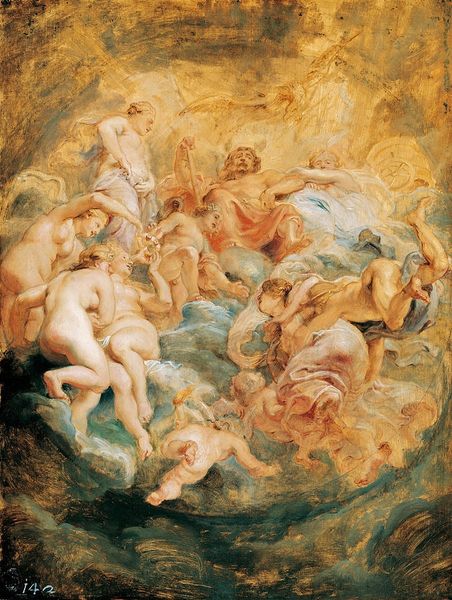
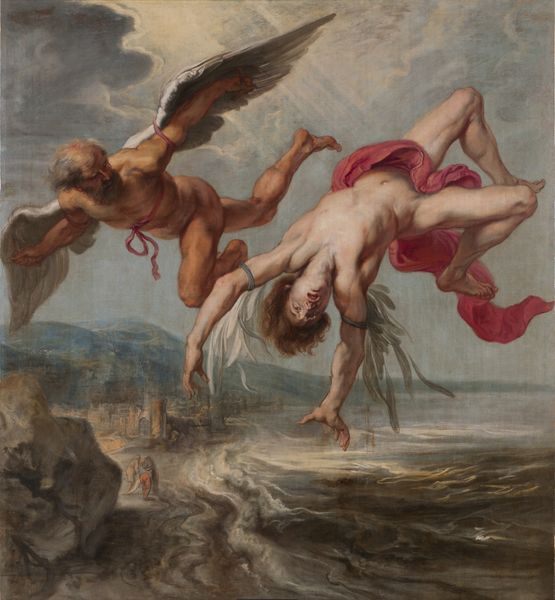
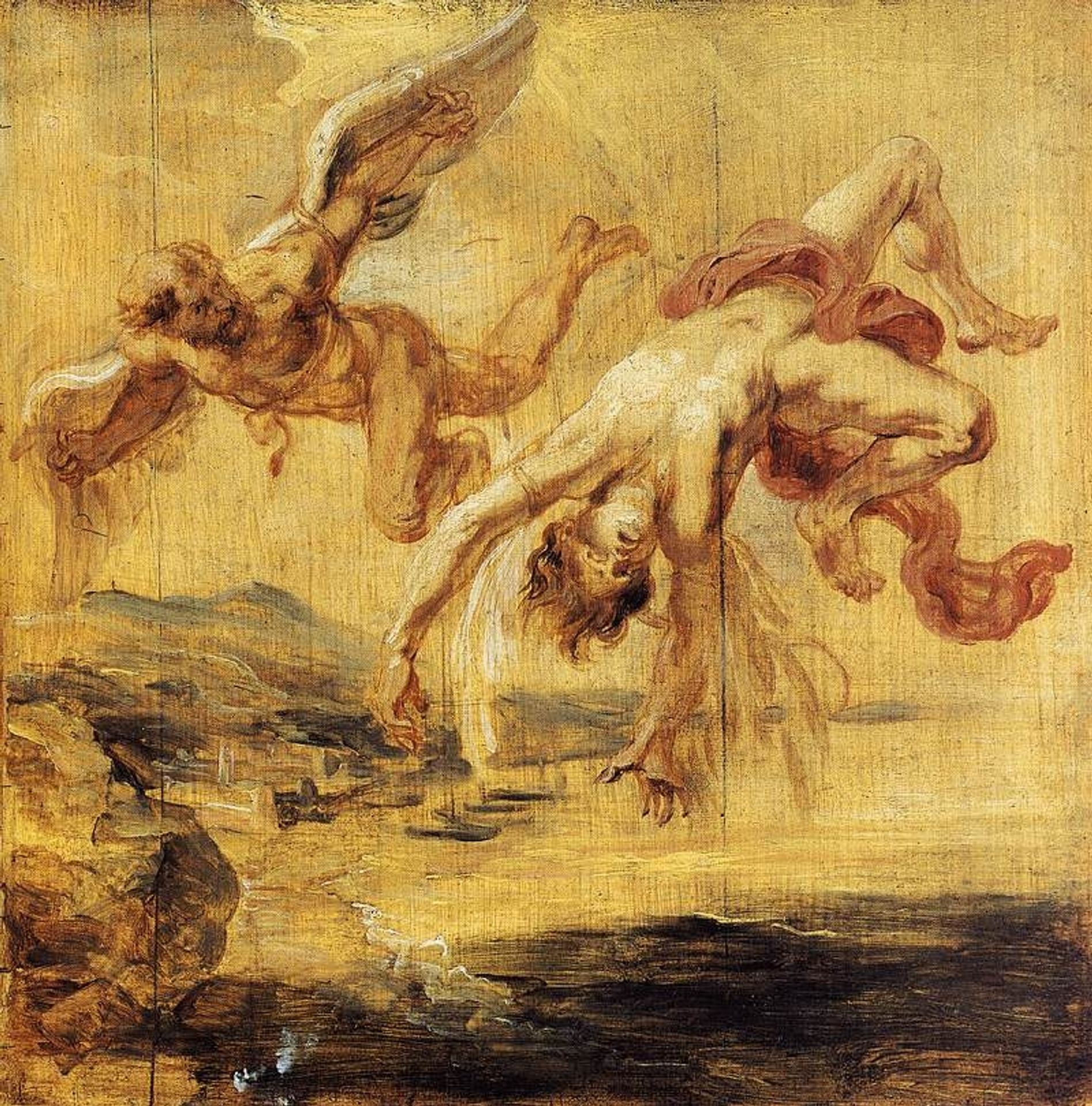
Peter Paul Rubens painted this small oil on panel, The Fall of Icarus, sometime in the early 17th century. It depicts the moment when Icarus plummets into the sea, his homemade wings having failed him. Rubens was a leading figure in the Flemish Baroque, a style embraced in the Catholic regions of the Netherlands. Think about how the mythology of Icarus, a story of hubris and the dangers of overreaching, resonated in a society grappling with its own ambitions. The painting's composition, with Icarus tumbling downwards, conveys a sense of drama and dynamism typical of the Baroque. The loose brushwork and warm color palette also reflect Rubens’s characteristic style. A deeper understanding can be gained by examining period literature, religious texts, and economic data. What emerges is a portrait of an artist and his society that is richly complex.
The Fall of Icarus
1636

Peter Paul Rubens
1577 - 1640Location
Royal Museums of Fine Arts of Belgium, Brussels, BelgiumArtwork details
- Medium
- painting, oil-paint
- Dimensions
- 37 x 37 cm
- Location
- Royal Museums of Fine Arts of Belgium, Brussels, Belgium
- Copyright
- Public domain
Tags
Comments
Share your thoughts
About this artwork
Peter Paul Rubens painted this small oil on panel, The Fall of Icarus, sometime in the early 17th century. It depicts the moment when Icarus plummets into the sea, his homemade wings having failed him. Rubens was a leading figure in the Flemish Baroque, a style embraced in the Catholic regions of the Netherlands. Think about how the mythology of Icarus, a story of hubris and the dangers of overreaching, resonated in a society grappling with its own ambitions. The painting's composition, with Icarus tumbling downwards, conveys a sense of drama and dynamism typical of the Baroque. The loose brushwork and warm color palette also reflect Rubens’s characteristic style. A deeper understanding can be gained by examining period literature, religious texts, and economic data. What emerges is a portrait of an artist and his society that is richly complex.
Comments
Share your thoughts