About this artwork
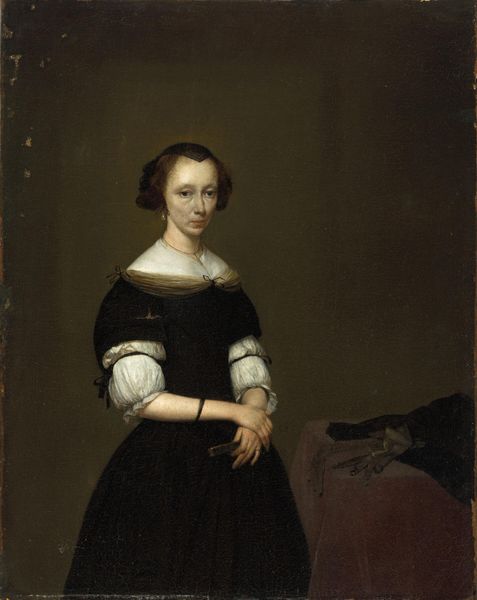
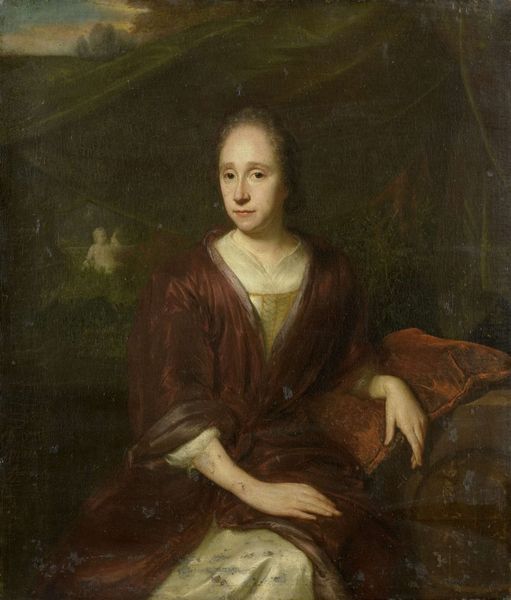
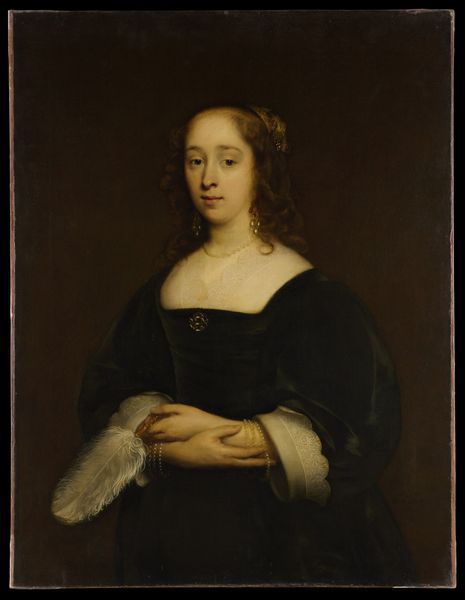
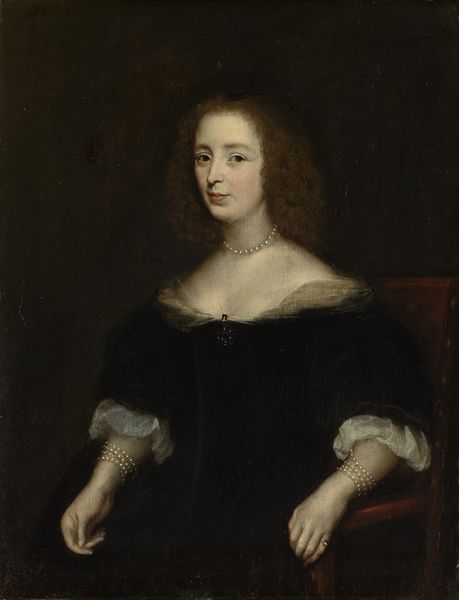
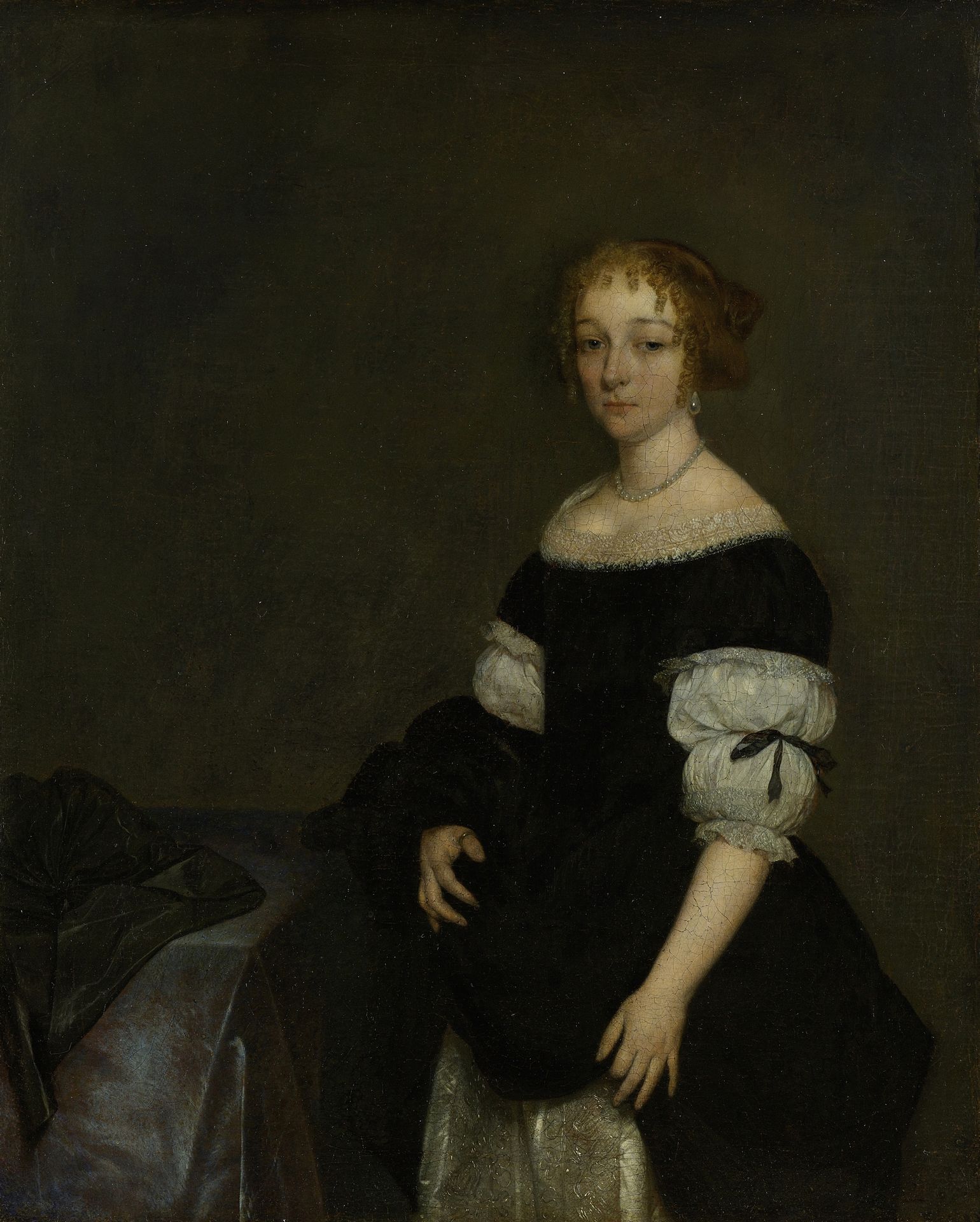
Painted by Gerard ter Borch II, this portrait captures Aletta Pancras in a black dress, standing beside a table draped with fabric. Note the pearls adorning Aletta's neck, symbols of purity and status, they echo the way pearls were seen in Renaissance paintings as allegories of virtue. Consider how this motif has traveled through time. In Botticelli’s "Birth of Venus," pearls emerge from the sea, symbols of Venus's divine beauty. Yet, here, in 17th-century Holland, the pearls speak less of divinity and more of worldly standing, reflecting the shifting values of a rising merchant class. The restrained palette and subdued emotion evoke a sense of introspection. The pearls, while beautiful, also carry a weight, a memory of traditions and expectations. This portrait is a powerful expression of the silent dialogues between past and present. This illustrates how symbols are perpetually evolving and how they are destined to reappear in different contexts.
Aletta Pancras (1649-1707) Wife of François de Vicq
1670

Gerard ter (II) Borch
1617 - 1681Location
RijksmuseumArtwork details
- Medium
- painting, oil-paint
- Dimensions
- height 38.5 cm, width 31.0 cm, thickness 4.3 cm, depth 10 cm
- Location
- Rijksmuseum
- Copyright
- Rijks Museum: Open Domain
Tags
Comments
Share your thoughts
About this artwork
Painted by Gerard ter Borch II, this portrait captures Aletta Pancras in a black dress, standing beside a table draped with fabric. Note the pearls adorning Aletta's neck, symbols of purity and status, they echo the way pearls were seen in Renaissance paintings as allegories of virtue. Consider how this motif has traveled through time. In Botticelli’s "Birth of Venus," pearls emerge from the sea, symbols of Venus's divine beauty. Yet, here, in 17th-century Holland, the pearls speak less of divinity and more of worldly standing, reflecting the shifting values of a rising merchant class. The restrained palette and subdued emotion evoke a sense of introspection. The pearls, while beautiful, also carry a weight, a memory of traditions and expectations. This portrait is a powerful expression of the silent dialogues between past and present. This illustrates how symbols are perpetually evolving and how they are destined to reappear in different contexts.
Comments
Share your thoughts