About this artwork
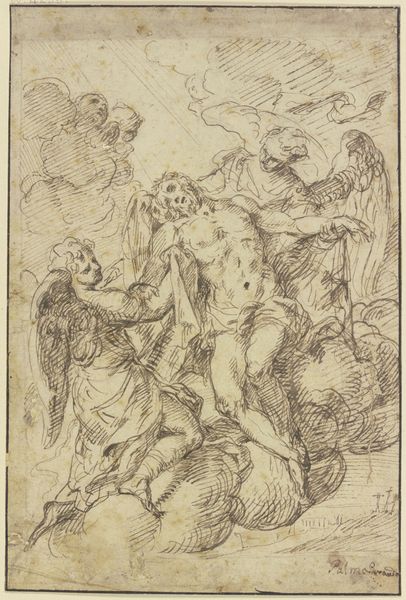
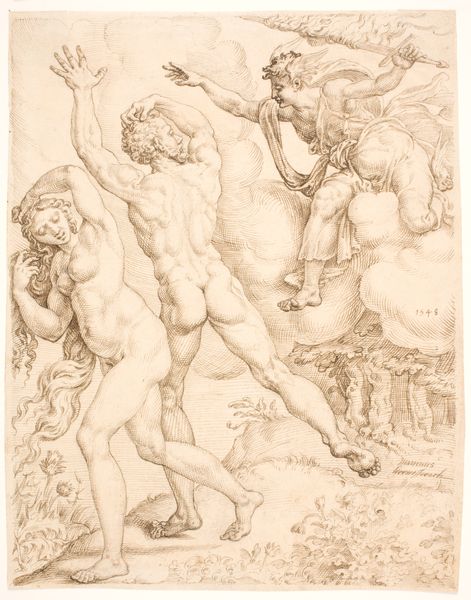
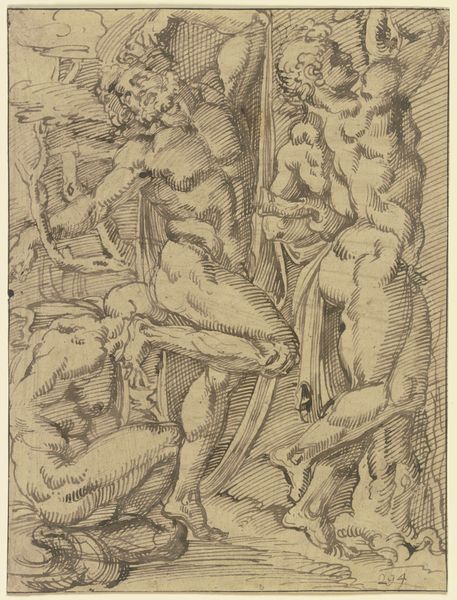
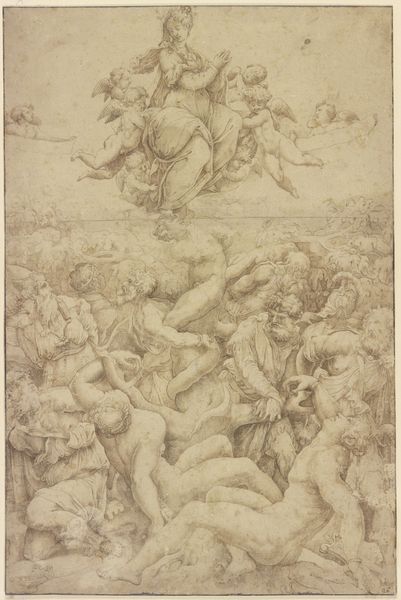
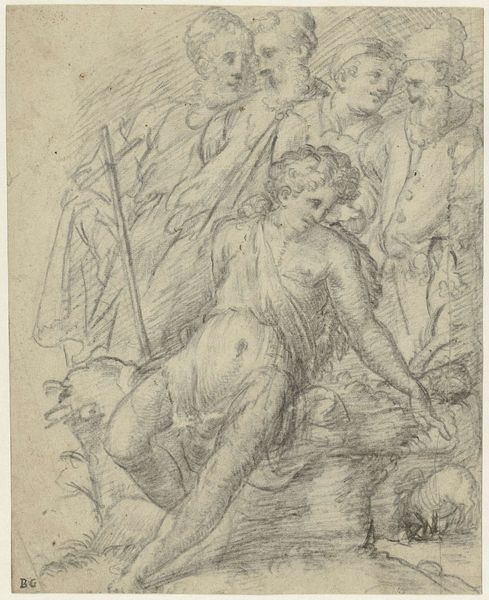
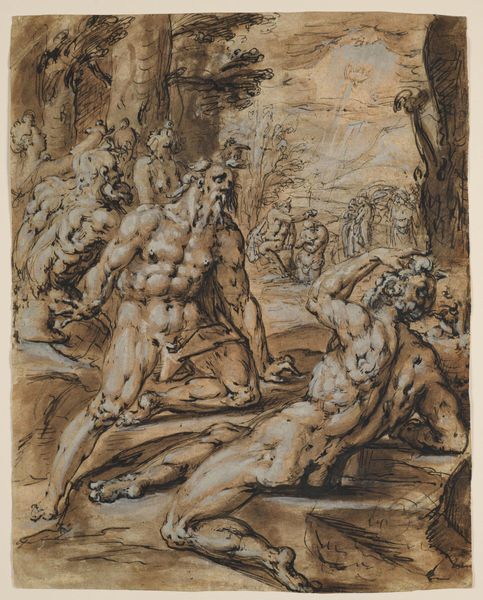
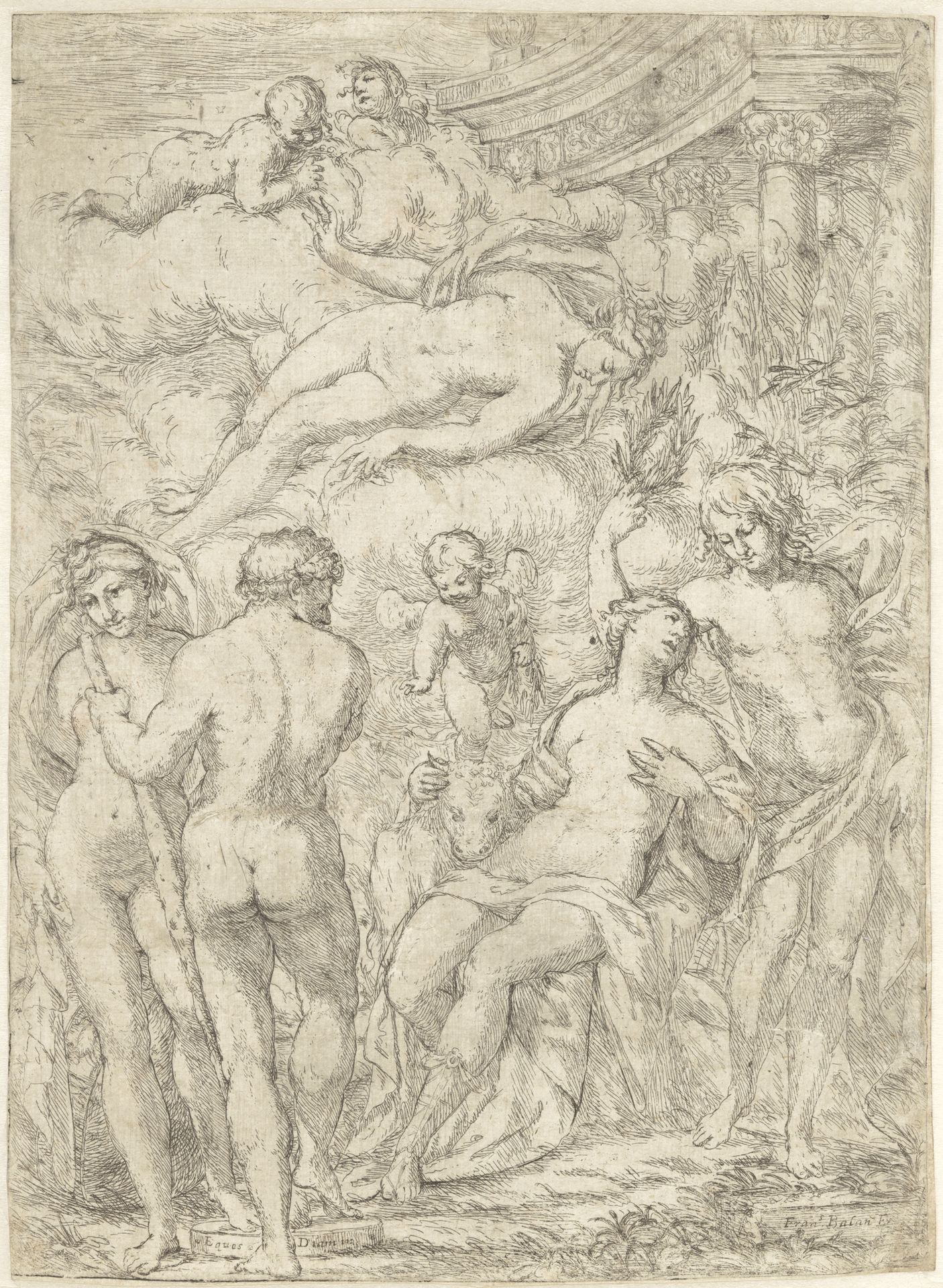
Curator: Good morning! Today we are looking at an ink drawing by Giuseppe Diamantini, a Baroque-era piece titled "Allegory with Mythological Figures," dating from around 1650 to 1705. What catches your eye? Editor: It's intensely classical. All these figures languidly reclining… I'm immediately reminded of a fever dream – like one of those hazy recollections of Renaissance paintings that swim up when you’re ill. It feels almost theatrical, or even hallucinatory! Curator: Hallucinatory...interesting choice of words. Tell me more! Editor: It’s the ethereal quality. The figures blend; it's dreamlike and not entirely grounded. Plus, with allegory and mythology hand-in-hand here, there's a dense symbolic load to unpack. Each figure a potential layer of meaning. It’s potent. And, oh! I spot a rather curious goat-like creature snuggled near the reclined figure. What could it be whispering? Curator: Baroque art did have that inclination to layered, sometimes deliberately obscured symbolism. Diamantini's allegory, composed with such pen and ink, echoes the period’s theatrical flair and classical learnings, while those figures do appear caught in a suspended narrative—ambiguous, certainly inviting multiple readings. The goat might echo the idea of fertility but within an ambiguous context that isn’t clearly joyous. Editor: Absolutely. It’s both alluring and slightly unsettling. Speaking of layers, the density of linework also enhances this complexity. Diamantini has crafted a visual puzzle. There's so much swirling, interwoven, that clarity surrenders to something more evocative and unsettling, particularly those divine, perhaps judgmental figures gazing down. It’s quite a captivating, slightly eerie experience, no? Curator: It is. We both find our particular fascination with those themes present within it. It speaks to our enduring desire to both interpret stories and create new ones, blurring myth with emotional resonance, isn’t it? Editor: I agree entirely, it truly invites endless dialogues, both internal and external, doesn’t it?

Artwork details
- Medium
- drawing, ink, pen
- Dimensions
- height 317 mm, width 230 mm
- Copyright
- Rijks Museum: Open Domain
Tags
drawing
ink drawing
allegory
baroque
pen drawing
classical-realism
figuration
ink
pen work
pen
genre-painting
history-painting
Comments
Be the first to share your thoughts about this work.
About this artwork
Curator: Good morning! Today we are looking at an ink drawing by Giuseppe Diamantini, a Baroque-era piece titled "Allegory with Mythological Figures," dating from around 1650 to 1705. What catches your eye? Editor: It's intensely classical. All these figures languidly reclining… I'm immediately reminded of a fever dream – like one of those hazy recollections of Renaissance paintings that swim up when you’re ill. It feels almost theatrical, or even hallucinatory! Curator: Hallucinatory...interesting choice of words. Tell me more! Editor: It’s the ethereal quality. The figures blend; it's dreamlike and not entirely grounded. Plus, with allegory and mythology hand-in-hand here, there's a dense symbolic load to unpack. Each figure a potential layer of meaning. It’s potent. And, oh! I spot a rather curious goat-like creature snuggled near the reclined figure. What could it be whispering? Curator: Baroque art did have that inclination to layered, sometimes deliberately obscured symbolism. Diamantini's allegory, composed with such pen and ink, echoes the period’s theatrical flair and classical learnings, while those figures do appear caught in a suspended narrative—ambiguous, certainly inviting multiple readings. The goat might echo the idea of fertility but within an ambiguous context that isn’t clearly joyous. Editor: Absolutely. It’s both alluring and slightly unsettling. Speaking of layers, the density of linework also enhances this complexity. Diamantini has crafted a visual puzzle. There's so much swirling, interwoven, that clarity surrenders to something more evocative and unsettling, particularly those divine, perhaps judgmental figures gazing down. It’s quite a captivating, slightly eerie experience, no? Curator: It is. We both find our particular fascination with those themes present within it. It speaks to our enduring desire to both interpret stories and create new ones, blurring myth with emotional resonance, isn’t it? Editor: I agree entirely, it truly invites endless dialogues, both internal and external, doesn’t it?
Comments
Be the first to share your thoughts about this work.