Possibly 1867 - 1869
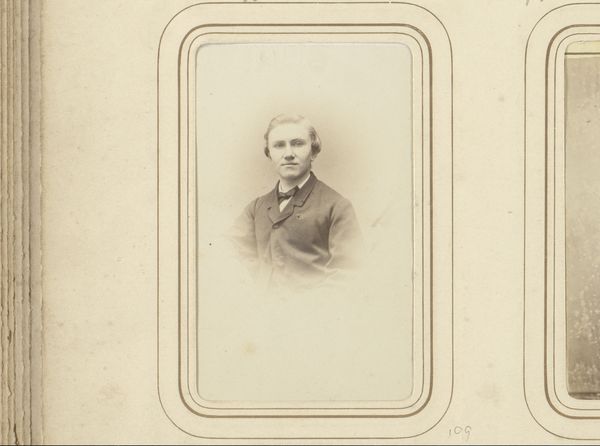
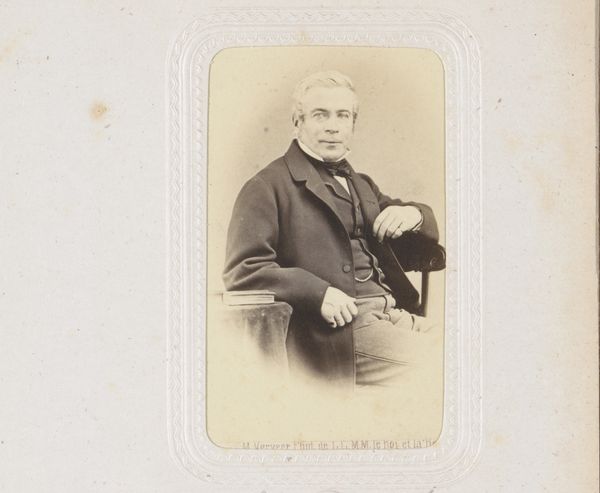
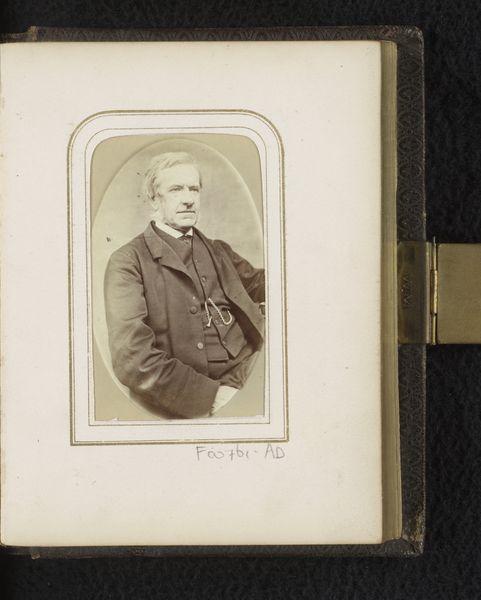
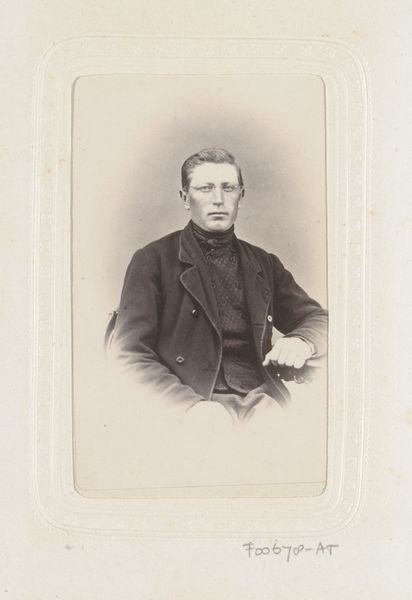
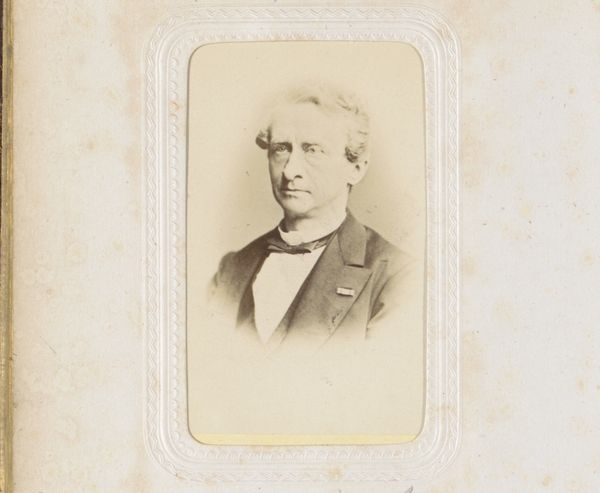
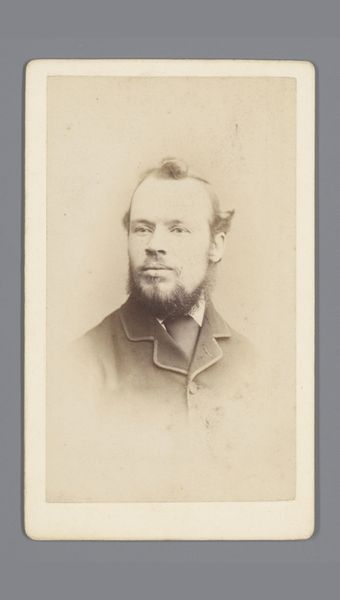
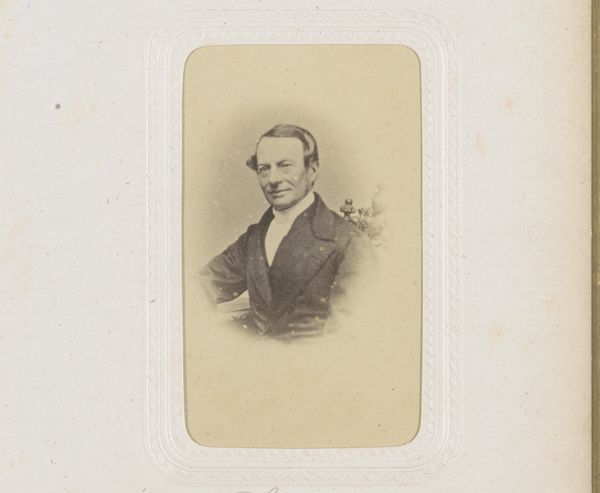
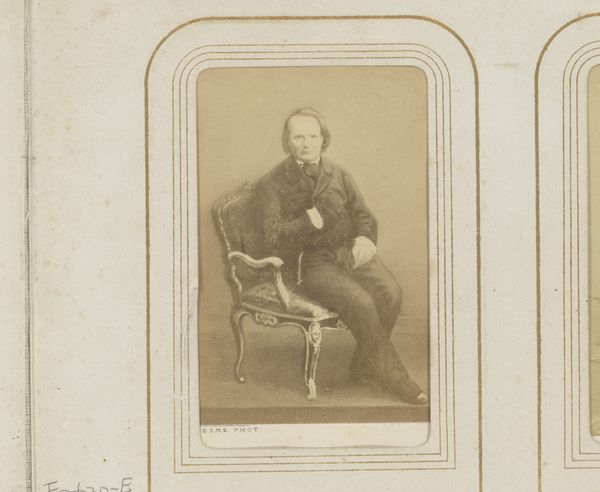
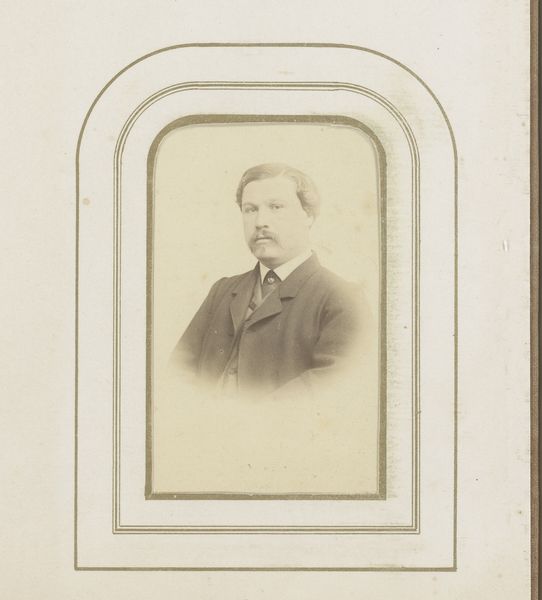
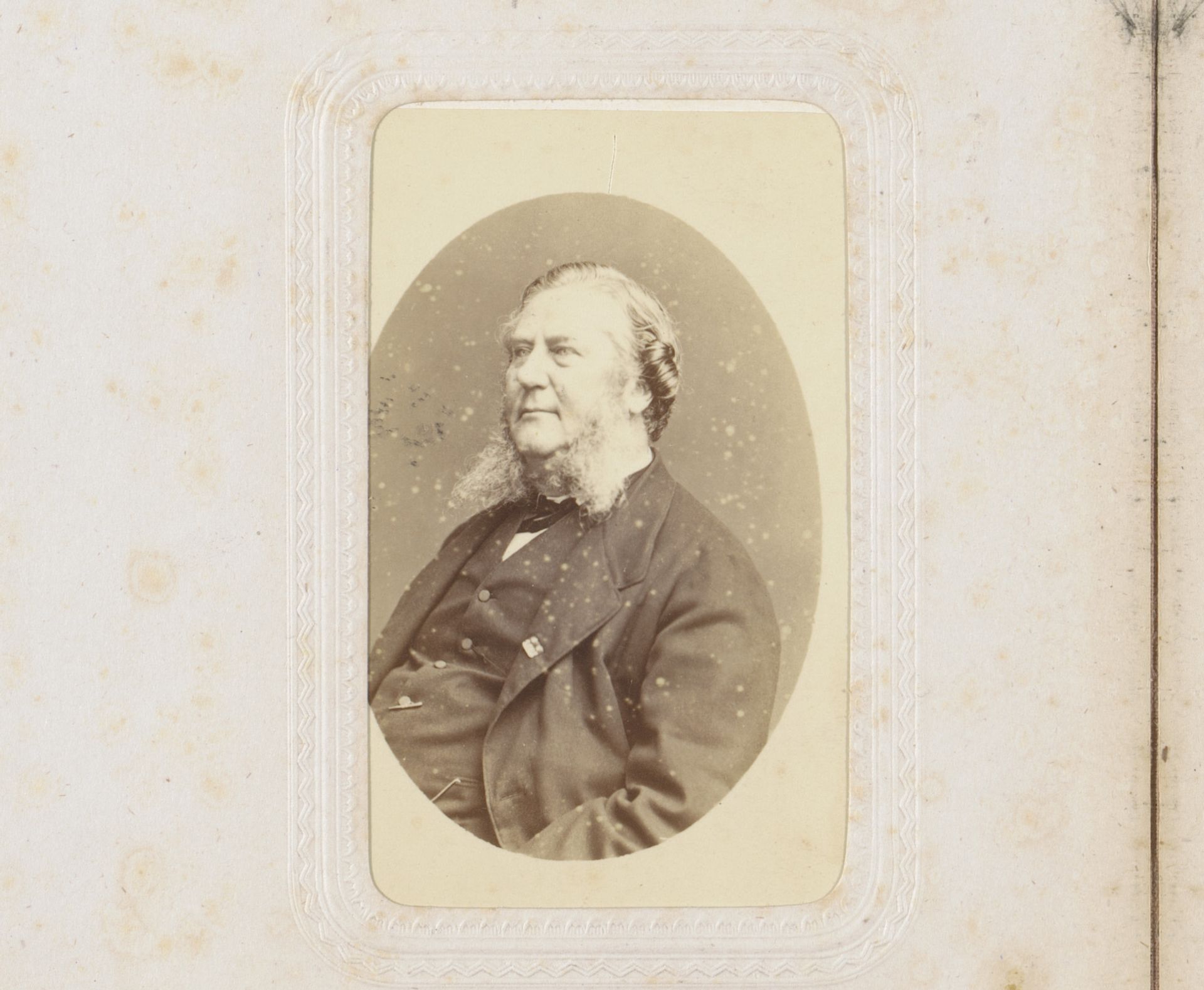
Portret van een zittende man, aangeduid als O.A. Uhlenbeck

Wegner & Mottu
@wegnermottuLocation
RijksmuseumListen to curator's interpretation
Curatorial notes
Editor: Here we have a photographic portrait from possibly between 1867 and 1869, credited to Wegner & Mottu. It's an albumen print, portraying a seated man identified as O.A. Uhlenbeck. It has such a formal, reserved feeling. What stands out to you about this portrait? Curator: Beyond the formal attire, typical of the era, I see a conscious construction of identity through the lens. The sitter’s gaze, averted yet self-assured, and the meticulous detail in his grooming speaks volumes. This isn't just a representation; it's a carefully curated image intended to convey respectability and intellectual weight. Do you notice how the oval format isolates him, almost like a cameo? Editor: Yes, it does lend him an air of importance. Are there other symbolic elements that resonate with the cultural values of the time? Curator: Absolutely. Photography itself was still a relatively new medium, imbued with a sense of almost magical realism. Think of it: to have your image captured and preserved was a powerful statement of presence, status, and legacy. The fact that it is a physical object too – the albumen print – gives it even more resonance with the tactile quality that signifies permanence and inheritance. What feelings do these details evoke for you? Editor: It gives me the sense of looking at someone who’s acutely aware of how he will be perceived, both then and potentially now. There's almost a burden of representation. Curator: Precisely. These early photographic portraits served as powerful visual testaments, laden with cultural significance that we continue to decode. They bridge the gap between the personal and the historical. Editor: It’s amazing to think about how much can be gleaned from one image, even today. Curator: Indeed. It serves as a potent reminder of photography’s role in shaping not only how we see the world, but how we remember it, too.