before 1558
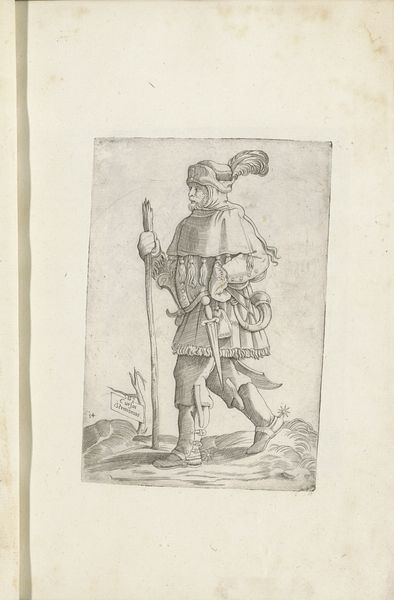
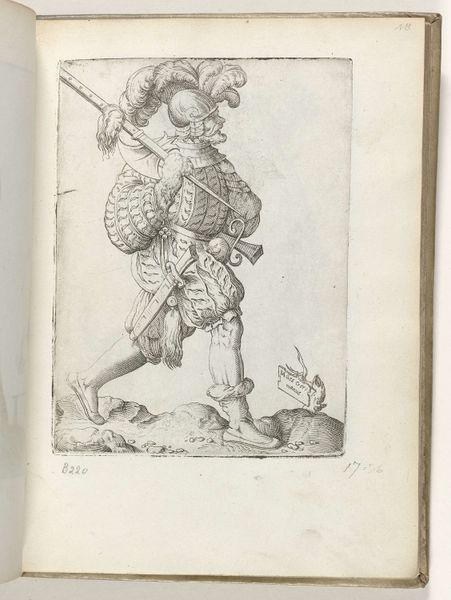
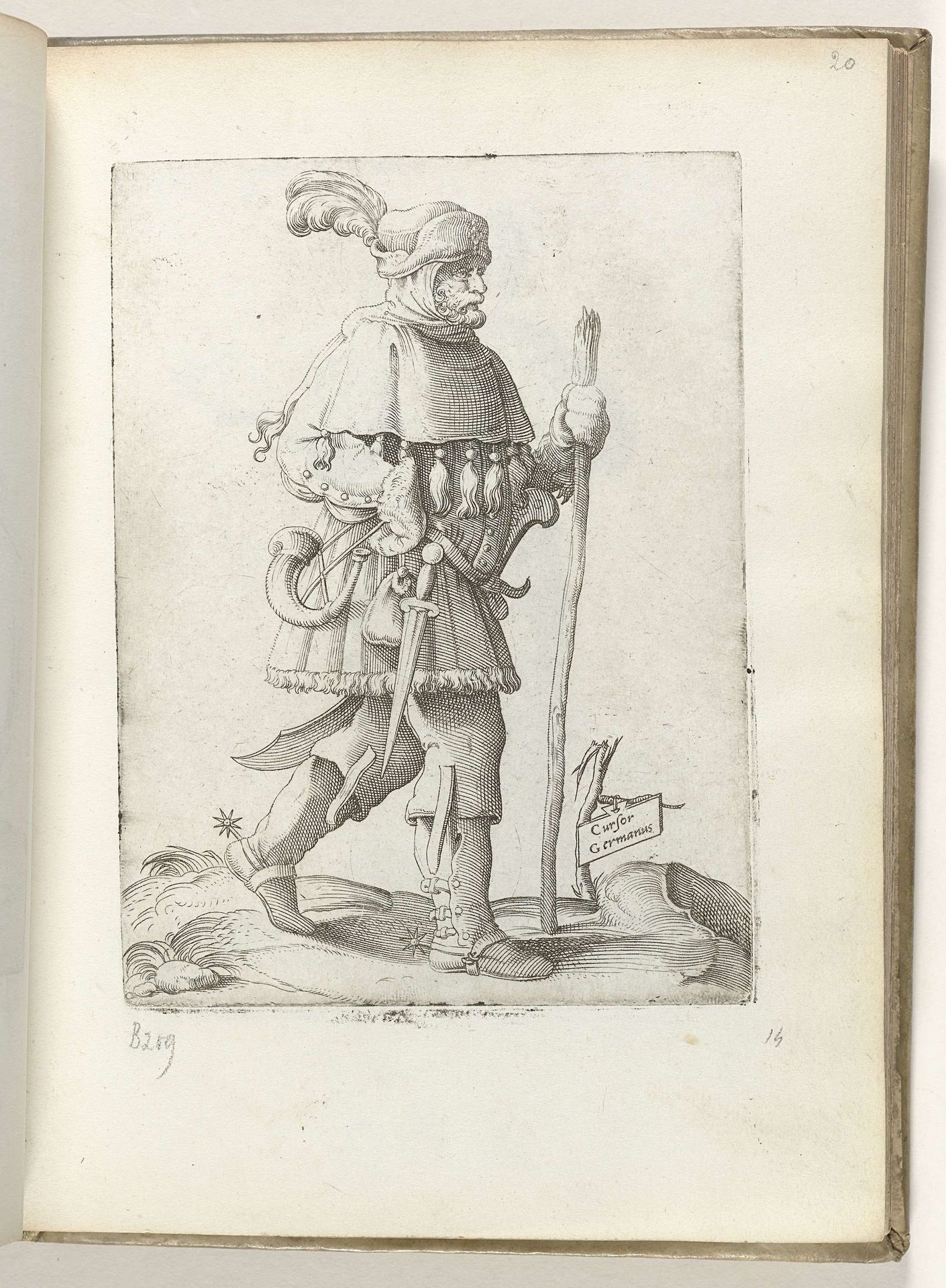
Cursor Germanus

Enea Vico
1523 - 1567Location
RijksmuseumListen to curator's interpretation
Curatorial notes
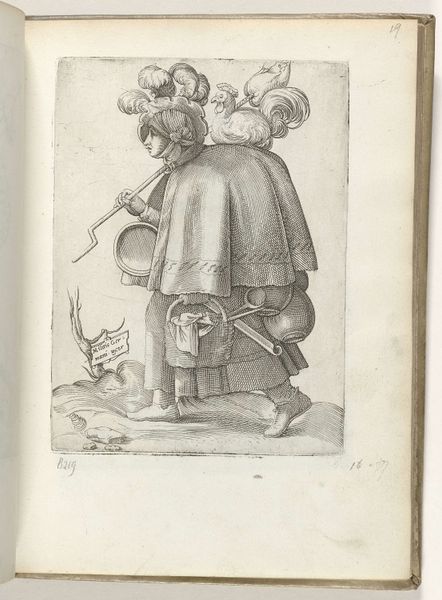
Enea Vico created this engraving, titled "Cursor Germanus," in the mid-16th century. This print, now residing at the Rijksmuseum, offers a fascinating glimpse into the cultural perceptions of German identity during the Renaissance. Vico presents us with a messenger, a "Cursor," adorned with the attire and accoutrements associated with German lands. The image creates meaning through visual codes: consider the figure's fur hat, decorated cape, and the prominent dagger, all signifiers of a specific cultural identity. It was a time when regional stereotypes and cultural distinctions were being solidified in the European imagination. As historians, we can delve into period costume books, travelogues, and other printed sources to further understand the social conditions and biases that shaped this representation. By examining these resources, we can start to unpack the complex interplay between artistic expression, cultural identity, and the politics of imagery in 16th century Europe.