About this artwork
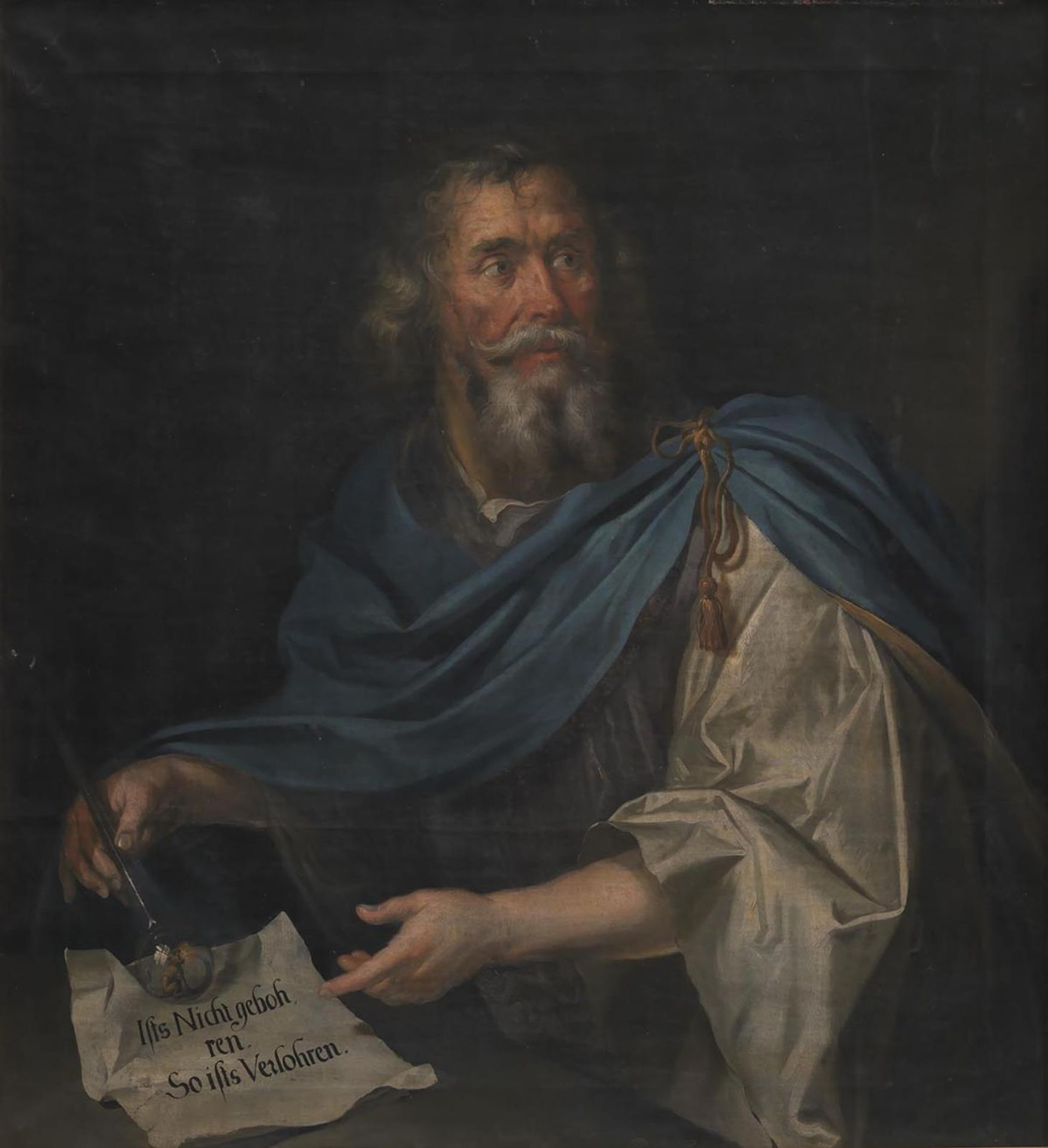
Heinrich Dittmers painted *The Alchemist Lorens Weiskopf* using oil on canvas, sometime in the 17th century. Dittmers situates Weiskopf against a dark background, illuminated, almost heroically, in his alchemic pursuit. The blue robe slung across his shoulders drapes in such a way to give him the appearance of learned nobility, while the quill in his right hand suggests the intellectual labor involved with the arcane science of alchemy. But the paper on the table reads 'Is it not sought, so it is lost,' implying the futility of his work. At the time this was painted, alchemy was seen as a pseudoscience, a mystical pursuit often associated with charlatans. In this way, Dittmers both elevates and critiques his subject, capturing the ambiguity and hubris that accompany the promise of transformative knowledge. What emotions does this tension evoke in you? Does the painting celebrate the pursuit of knowledge, or caution against it?
The Alchemist Lorens Weiskopf
1658 - 1677


Artwork details
- Medium
- oil-paint, canvas
- Dimensions
- 99.5 cm (height) x 91 cm (width) (Netto)
- Location
- SMK - Statens Museum for Kunst
Tags
Comments
Share your thoughts
About this artwork
Heinrich Dittmers painted *The Alchemist Lorens Weiskopf* using oil on canvas, sometime in the 17th century. Dittmers situates Weiskopf against a dark background, illuminated, almost heroically, in his alchemic pursuit. The blue robe slung across his shoulders drapes in such a way to give him the appearance of learned nobility, while the quill in his right hand suggests the intellectual labor involved with the arcane science of alchemy. But the paper on the table reads 'Is it not sought, so it is lost,' implying the futility of his work. At the time this was painted, alchemy was seen as a pseudoscience, a mystical pursuit often associated with charlatans. In this way, Dittmers both elevates and critiques his subject, capturing the ambiguity and hubris that accompany the promise of transformative knowledge. What emotions does this tension evoke in you? Does the painting celebrate the pursuit of knowledge, or caution against it?
Comments
Share your thoughts