About this artwork
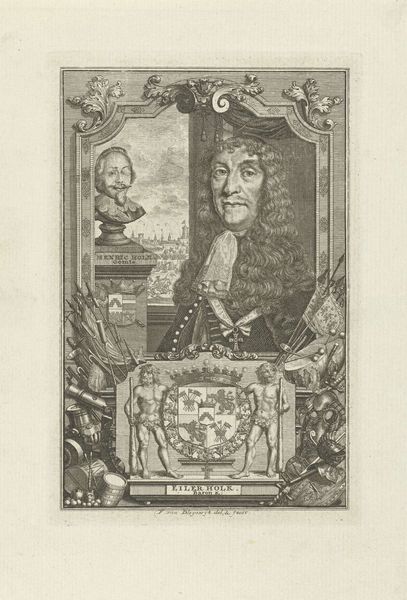
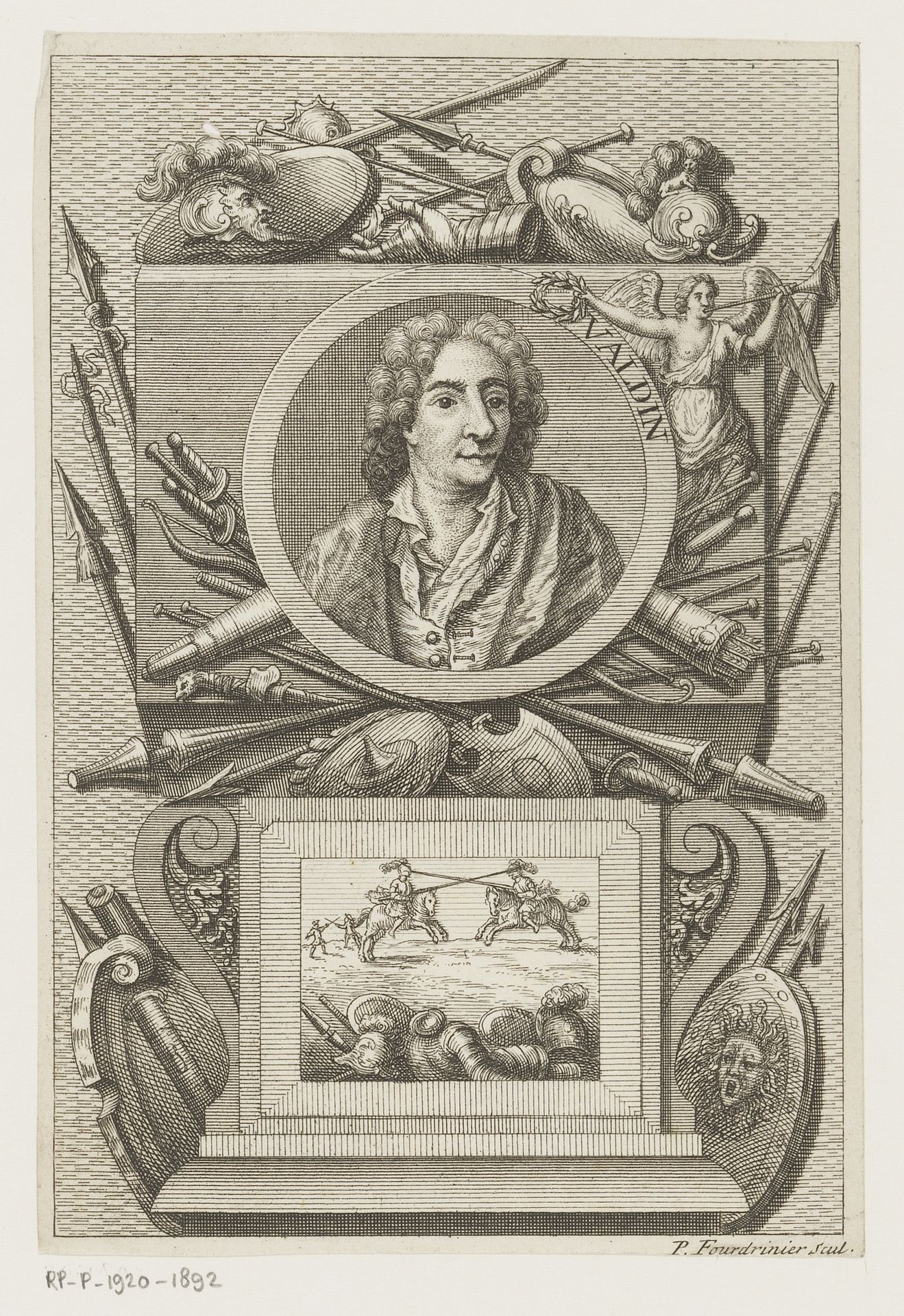
Pierre Fourdrinier created this portrait of an unknown man, possibly named Valdin, in a cartouche of arms in the mid-18th century. During this time, cartouches – ornamental frames – were common in portraiture, often symbolizing status and identity through heraldic elements. But what happens when the identity of the sitter is uncertain? The arsenal of weaponry typically signified power and nobility, yet here it introduces a layer of ambiguity, almost as if the portrait’s purpose is not to celebrate a known figure but to evoke ideas about masculine identity and authority in a broader sense. Look at the bottom panel depicting a jousting match, reinforcing themes of rivalry, skill, and honor expected of men during this era. The detailed engraving offers us a glimpse into the visual language used to construct and communicate identity, inviting us to consider the narratives and values that these symbols once conveyed.
Portret van een onbekende man, mogelijk Valdin, in een cartouche met wapens
1725 - 1763

Artwork details
- Medium
- print, engraving
- Dimensions
- height 163 mm, width 111 mm
- Copyright
- Rijks Museum: Open Domain
Tags
Comments
Share your thoughts
About this artwork
Pierre Fourdrinier created this portrait of an unknown man, possibly named Valdin, in a cartouche of arms in the mid-18th century. During this time, cartouches – ornamental frames – were common in portraiture, often symbolizing status and identity through heraldic elements. But what happens when the identity of the sitter is uncertain? The arsenal of weaponry typically signified power and nobility, yet here it introduces a layer of ambiguity, almost as if the portrait’s purpose is not to celebrate a known figure but to evoke ideas about masculine identity and authority in a broader sense. Look at the bottom panel depicting a jousting match, reinforcing themes of rivalry, skill, and honor expected of men during this era. The detailed engraving offers us a glimpse into the visual language used to construct and communicate identity, inviting us to consider the narratives and values that these symbols once conveyed.
Comments
Share your thoughts